Каталог Sumitomo фрезы со сменными пластинами - страница 35
Навигация
 Каталог Sumitomo инструмент для обработки канавок
 Общий каталог Sumitomo 2019 - 2020
 Каталог Sumitomo модульные системы для револьверных головок токарных станков
 Каталог Sumitomo токарные резцы (державки) для внутреннего точения
 Общий каталог Sumitomo 2018 - 2019
 Каталог Sumitomo монолитные фрезы
- H001
- H002
- H003
- H004
- H005
- H006
- H007
- H008
- H009
- H010
- H011
- H012
- H013
- H014
- H015
- H016
- H017
- H018
- H019
- H020
- H021
- H022
- H023
- H024
- H025
- H026
- H027
- H028
- H029
- H030
- H031
- H032
- H033
- H034
- H035
- H036
- H037
- H038
- H039
- H040
- H041
- H042
- H043
- H044
- H045
- H046
- H047
- H048
- H049
- H050
- H051
- H052
- H053
- H054
- H055
- H056
- H057
- H058
- H059
- H060
- H061
- H062
- H063
- H064
- H065
- H066
- H067
- H068
- H069
- H070
- H071
- H072
- H073
- H074
- H075
- H076
- H077
- H078
- H079
- H080
- H081
- H082
- H083
- H084
- H085
- H086
- H087
- H088
- H089
- H090
- H091
- H092
- H093
- H094
- H095
- H096
- H097
- H098
- H099
- H100
- H101
- H102
- H103
- H104
- H105
- H106
- H107
- H108
- H109
- H110
- H111
- H112
- H113
- H114
- H115
- H116
- H117
- H118
- H119
- H120
- H121
- H122
- H123
- H124
- H125
- H126
- H127
- H128
- H129
- H130
- H131
- H132
- H133
- H134
- H135
- H136
- H137
- H138
- H139
- H140
- H141
- H142
- H143
- H144
- H145
- H146
- H147
- H148
- H149
- H150
- H151
- H152
- H153
- H154
- H155
- H156
- H157
- H158
- H159
- H160
- H161
- H162
- H163
- H164
- H165
- H166
- H167
- H168
- H169
- H170
- H171
- H172
- H173
- H174
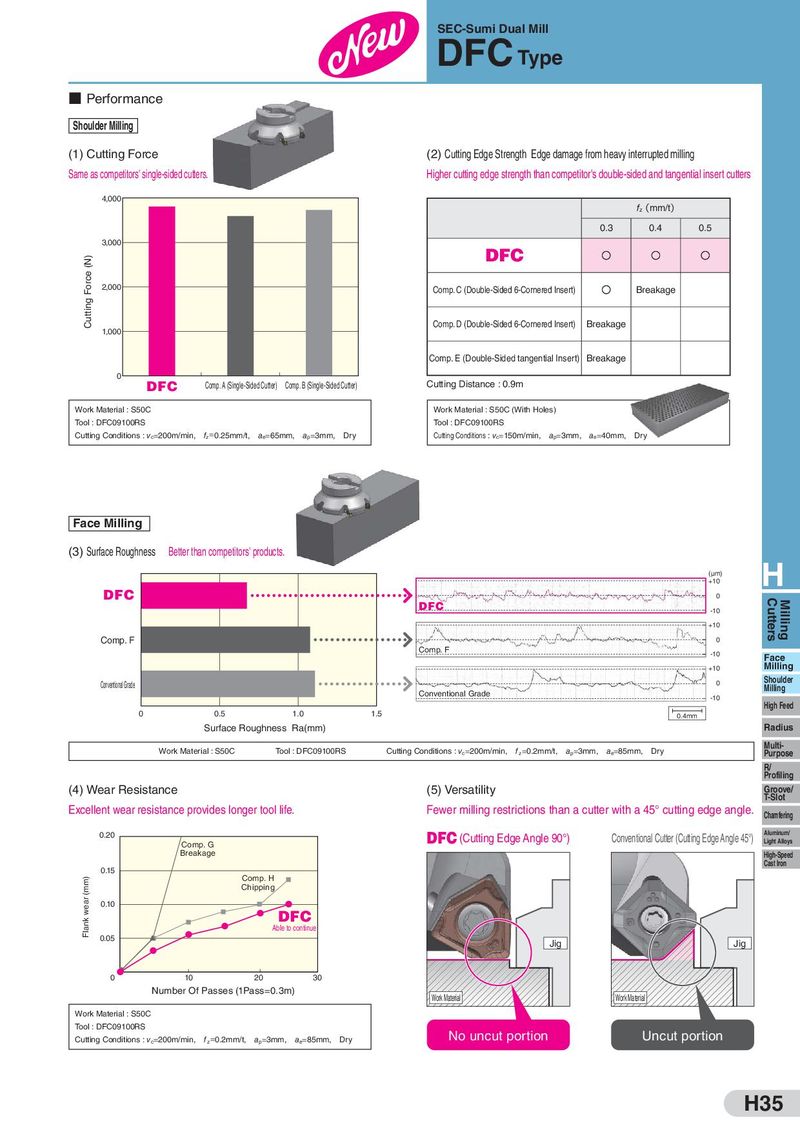
■ Performance
Shoulder Milling
(1) Cutting Force (2) Cutting Edge Strength Edge damage from heavy interrupted milling
Same as competitors' single-sided cutters. Higher cutting edge strength than competitor's double-sided and tangential insert cutters 4,000
| fz `(`mm/t`)` | |||
| 0.3 | 0.4 | 0.5 | |
| DFC | `○` | `○` | `○` |
| Comp. C (Double-Sided 6-Cornered Insert) | `○` | Breakage | |
| Comp. D (Double-Sided 6-Cornered Insert) | Breakage | ||
| Comp. E (Double-Sided tangential Insert) | Breakage | ||
| Cutting Distance : 0.9m | |||
| Work Material : S50C (With Holes) Tool : DFC09100RS Cutting Conditions:vc=150m/min, ap=3mm, | ae=40mm, | Dry |
3,000
1,000
0
Face Milling
(3) Surface Roughness Better than competitors' products.
DFC
Comp. F
Conventional Grade
0 0.5 1.0
Surface Roughness Ra(mm) Work Material : S50C Tool : DFC09100RS
(4) Wear Resistance
Excellent wear resistance provides longer tool life. 0.20 Comp. G Breakage 0.15 Comp. H ■ Chipping
| 0.10 | ■ | D | |
| ■ | D | DFC |
■ D Able to continue F D 0.05 ■
D D■F
| 0 | 10 | 20 | 30 | ||
| Number Of Passes (1Pass=0.3m) | |||||
| Work Material : S50C | |||||
| Tool : DFC09100RS |
| Cutting Conditions : v =200m/min, | f =0.2mm/t, | a =3mm, | a =85mm, | Dry | |
| c | z | p | e |
H
(μ m) +10 0
DFC
-10 +10 0 Comp. F -10 Face Milling +10 Shoulder 0 Milling Conventional Grade -10 High Feed 1.5 0.4mm Radius Multi-
Cutting Conditions : vc=200m/min, f z=0.2mm/t, ap=3mm, a e=85mm, Dry Purpose
R/ Profiling (5) Versatility Groove/ T-Slot
Fewer milling restrictions than a cutter with a 45° cutting edge angle. Chamfering
DFC (Cutting Edge Angle 90°) Conventional Cutter (Cutting Edge Angle 45°) Aluminum/
Light Alloys High-Speed Cast Iron
Jig Jig
Work Material Work Material