Каталог Sumitomo фрезы со сменными пластинами - страница 120
Навигация
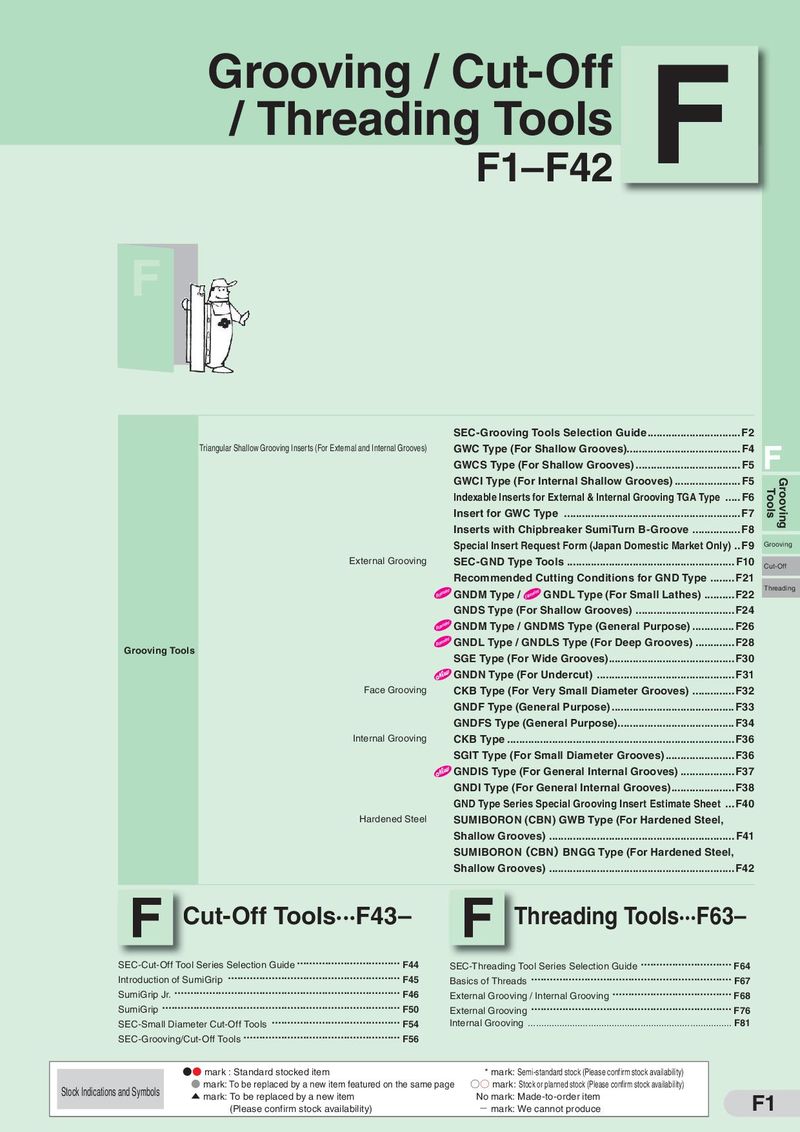 Каталог Sumitomo инструмент для обработки канавок
 Общий каталог Sumitomo 2019 - 2020
 Каталог Sumitomo модульные системы для револьверных головок токарных станков
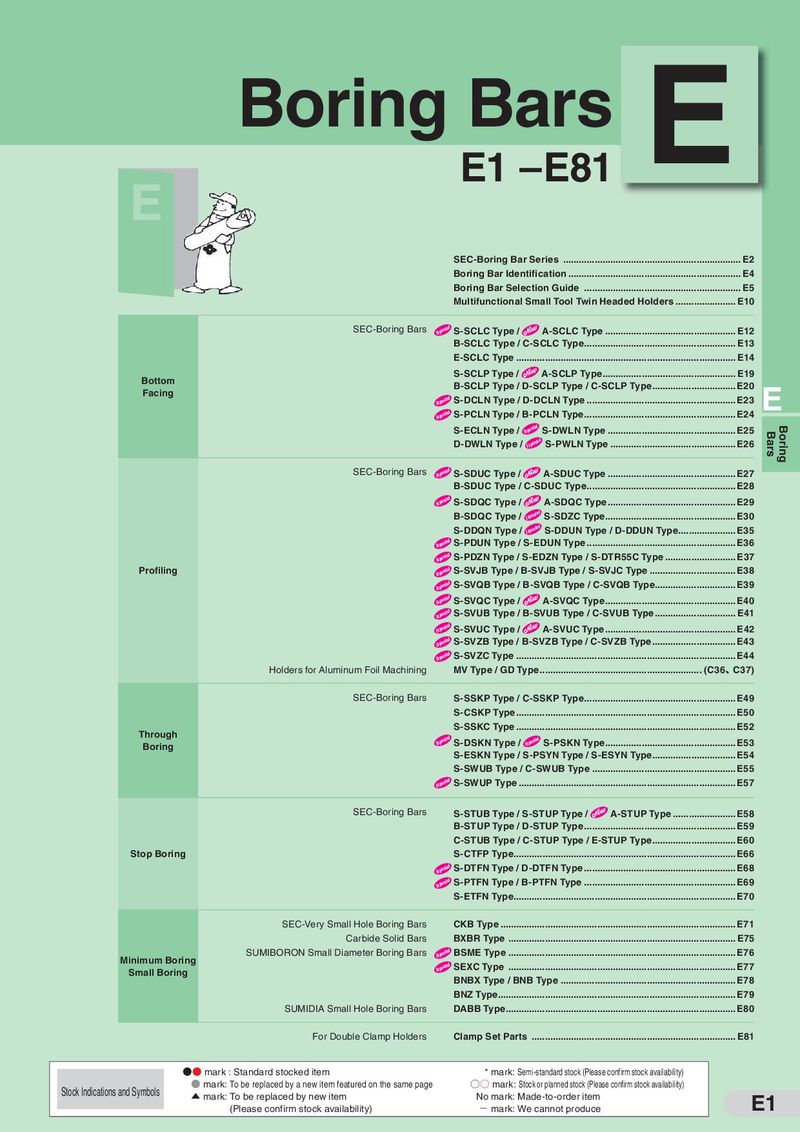 Каталог Sumitomo токарные резцы (державки) для внутреннего точения
 Общий каталог Sumitomo 2018 - 2019
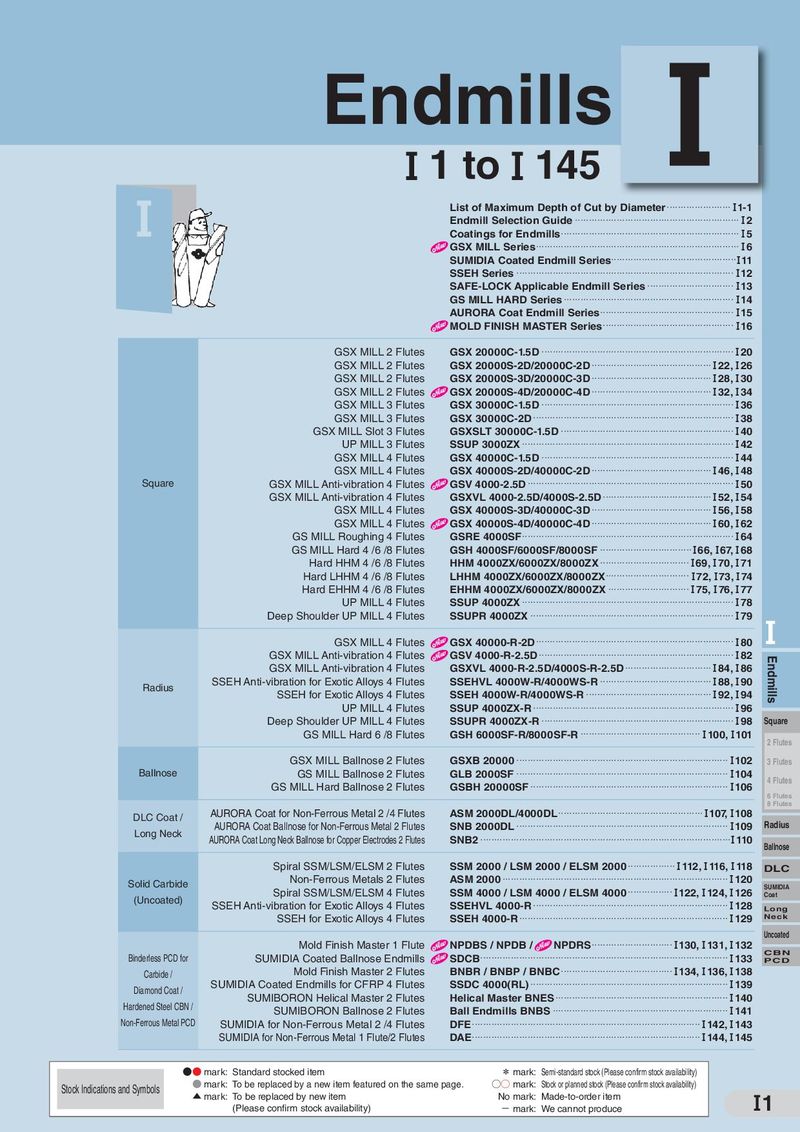 Каталог Sumitomo монолитные фрезы
- H001
- H002
- H003
- H004
- H005
- H006
- H007
- H008
- H009
- H010
- H011
- H012
- H013
- H014
- H015
- H016
- H017
- H018
- H019
- H020
- H021
- H022
- H023
- H024
- H025
- H026
- H027
- H028
- H029
- H030
- H031
- H032
- H033
- H034
- H035
- H036
- H037
- H038
- H039
- H040
- H041
- H042
- H043
- H044
- H045
- H046
- H047
- H048
- H049
- H050
- H051
- H052
- H053
- H054
- H055
- H056
- H057
- H058
- H059
- H060
- H061
- H062
- H063
- H064
- H065
- H066
- H067
- H068
- H069
- H070
- H071
- H072
- H073
- H074
- H075
- H076
- H077
- H078
- H079
- H080
- H081
- H082
- H083
- H084
- H085
- H086
- H087
- H088
- H089
- H090
- H091
- H092
- H093
- H094
- H095
- H096
- H097
- H098
- H099
- H100
- H101
- H102
- H103
- H104
- H105
- H106
- H107
- H108
- H109
- H110
- H111
- H112
- H113
- H114
- H115
- H116
- H117
- H118
- H119
- H120
- H121
- H122
- H123
- H124
- H125
- H126
- H127
- H128
- H129
- H130
- H131
- H132
- H133
- H134
- H135
- H136
- H137
- H138
- H139
- H140
- H141
- H142
- H143
- H144
- H145
- H146
- H147
- H148
- H149
- H150
- H151
- H152
- H153
- H154
- H155
- H156
- H157
- H158
- H159
- H160
- H161
- H162
- H163
- H164
- H165
- H166
- H167
- H168
- H169
- H170
- H171
- H172
- H173
- H174
SEC-WaveBall
WBMR
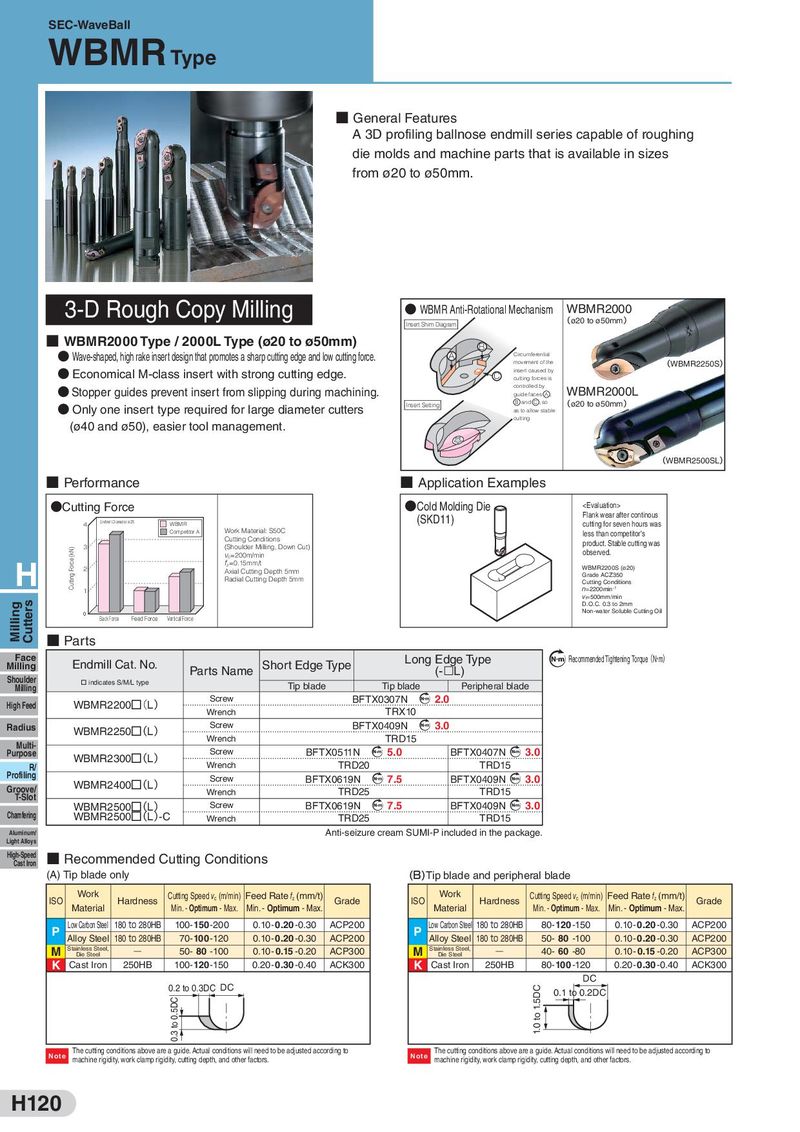
- General Features A 3D profiling ballnose endmill series capable of roughing die molds and machine parts that is available in sizes from ø20 to ø50mm.
3-D Rough Copy Milling WBMR Anti-Rotational Mechanism WBMR2000
(ø20 to ø50mm) Insert Shim Diagram
- WBMR2000 Type / 2000L Type (ø20 to ø50mm)
B
- Wave-shaped, high rake insert design that promotes a sharp cutting edge and low cutting force. A
Circumferential movement of the (WBMR2250S)
- Economical M-class insert with strong cutting edge. insert caused by
C cutting forces is
| ● Stopper guides prevent insert from slipping during machining. | controlled by | WBMR2000L |
| guide faces A , | ||
| ● | B and C , so | (ø20 to ø50mm) |
Only one insert type required for large diameter cutters Insert Setting as to allow stable cutting (ø40 and ø50), easier tool management.
(WBMR2500SL)
- Performance
- Application Examples
●Cutting Force ●Cold Molding Die
<Evaluation> (SKD11) Flank wear after continous
| 4 | Endmill Diameter ø25 | WBMR | cutting for seven hours was | |
| Competitor A | Work Material: S50C | less than competitor's |
Cutting Conditions product. Stable cutting was 3 (Shoulder Milling, Down Cut) observed. c=200m/min
H z=0.15mm/t
| 2 | WBMR2200S (ø20) | |
| Axial Cutting Depth 5mm | ||
| Grade ACZ350 | ||
| Radial Cutting Depth 5mm | Cutting Conditions | |
| 1 | =2200min-1 | |
| f =500mm/min | ||
| D.O.C. 0.3 to 2mm | ||
| 㻜 | Non-water Soluble Cutting Oil | |
| Vertical Force Feed Force Back Force |
- Parts
| Face | Long Edge Type | Recommended Tightening Torque(N・m) | ||
| Endmill Cat. No. | N m |
| Milling | Parts Name Short Edge Type | (-£L) | |
| Shoulder | ¨ |
Milling indicates S/M/L type Tip blade Tip blade Peripheral blade
□( ) Screw BFTX0307N N m 2.0
| High Feed | WBMR2200 | L | ||
| Wrench | TRX10 |
| Radius | □( | ) | N m 3.0 BFTX0409N Screw | |
| WBMR2250 | L | |||
| TRD15 Wrench | ||||
| Multi- | ||||
| Purpose | □( | ) | N m 3.0 BFTX0407N N m 5.0 BFTX0511N Screw | |
| WBMR2300 | L |
R/ Wrench TRD20 TRD15
Profiling □( ) Screw BFTX0619N 7.5 BFTX0409N 3.0
WBMR2400 L N m N m
| Groove/ | Wrench | TRD25 | TRD15 |
| T-Slot |
WBMR2500□(L) Screw BFTX0619N 7.5 BFTX0409N 3.0
□( ) N m N m
Chamfering WBMR2500 L -C Wrench TRD25 TRD15
Aluminum/ Anti-seizure cream SUMI-P included in the package. Light Alloys High-Speed Recommended Cutting Conditions Cast Iron
(A) Tip blade only (B)Tip blade and peripheral blade
Work Cutting Speed v (m/min) Feed Rate f (mm/t) Work Cutting Speed v (m/min) Feed Rate f (mm/t)
ISO Hardness c z Grade ISO Hardness c z Grade
| Material | Min. - Optimum - Max. | Min. - Optimum - Max. | Material | Min. - Optimum - Max. | Min. - Optimum - Max. | ||
| Low Carbon Steel 180 to 280HB | 100-150 -200 | 0.10- 0.20 -0.30 | ACP200 | Low Carbon Steel 180 to 280HB | 80-120 -150 | 0.10- 0.20 -0.30 | ACP200 |
P to P to
| Alloy Steel 180 | 280HB | 70-100 -120 | 0.10- 0.20 -0.30 | ACP200 | Alloy Steel 180 | 280HB | 50- 80 -100 | 0.10- 0.20 -0.30 | ACP200 | ||||
| M | Stainless Steel, | Q | 50- 80 -100 | 0.10- 0.15 -0.20 | ACP300 | M | Stainless Steel, | Q | 40- 60 -80 | 0.10- 0.15 -0.20 | ACP300 | ||
| Die Steel | Die Steel | ||||||||||||
| K | Cast Iron | 250HB | 100-120 -150 | 0.20-0.30 -0.40 | ACK300 | K | Cast Iron | 250HB | 80-100 -120 | 0.20-0.30 -0.40 | ACK300 |
DC 0.2 to 0.3DC DC 0.1 to 0.2DC
The cutting conditions above are a guide. Actual conditions will need to be adjusted according to The cutting conditions above are a guide. Actual conditions will need to be adjusted according to
Note machine rigidity, work clamp rigidity, cutting depth, and other factors. Note machine rigidity, work clamp rigidity, cutting depth, and other factors.