Модульные инструментальные системы линейки KM4X Kennametal 2017 - страница 135
Навигация
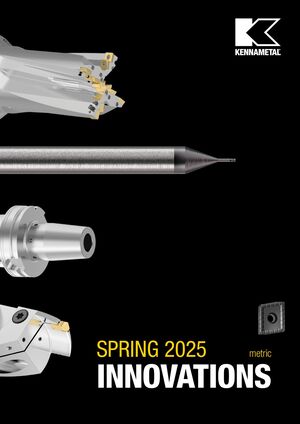 Новинки Kennametal - весна 2025
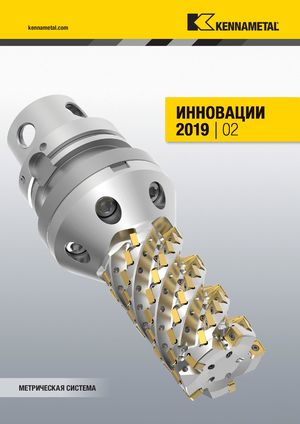 Каталог Kennametal инновации 2019.2
 Инновационные токарные пластины с покрытиями KENGold CVD и PVD Kennametal 2025
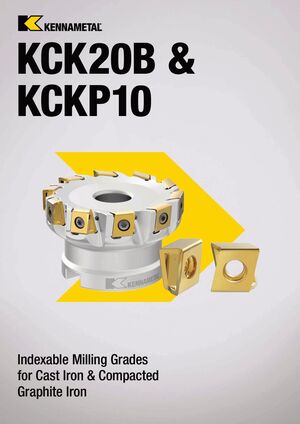 Сменные фрезерные пластины сплавов KCK20B и KCKP10 Kennametal 2024
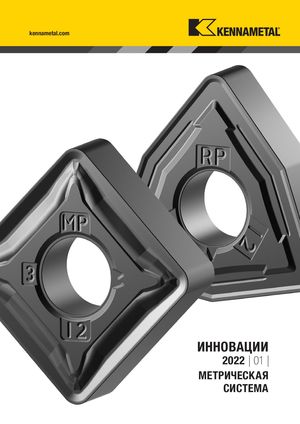 Каталог Kennametal инновации 2022.1
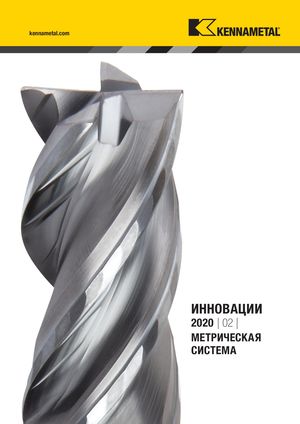 Каталог Kennametal инновации 2020.2
- __KMT_KM4X_COVER_EN_Covers_EN_in
- KMT_KM4X_Catalog_A000_A001_EN
- KMT_KM4X_Catalog_A002_A003_EN
- KMT_KM4X_Catalog_A004_A005_EN
- KMT_KM4X_Catalog_A006_A007_EN
- KMT_KM4X_Catalog_A008_A009_EN
- KMT_KM4X_Catalog_A010_A011_EN
- KMT_KM4X_Catalog_B000_B001_EN
- KMT_KM4X_Catalog_B002_B003_EN
- KMT_KM4X_Catalog_B004_B005_EN
- KMT_KM4X_Catalog_B006_B007_EN
- KMT_KM4X_Catalog_B008_B009_EN
- KMT_KM4X_Catalog_B010_B011_EN
- KMT_KM4X_Catalog_B012_B013_EN
- KMT_KM4X_Catalog_B014_B015_EN
- KMT_KM4X_Catalog_B016_B017_EN
- KMT_KM4X_Catalog_B018_B019_EN
- KMT_KM4X_Catalog_B020_B021_EN
- KMT_KM4X_Catalog_B022_B023_EN
- KMT_KM4X_Catalog_B024_B025_EN
- KMT_KM4X_Catalog_B026_B027_EN
- KMT_KM4X_Catalog_B028_B029_EN
- KMT_KM4X_Catalog_B030_B031_EN
- KMT_KM4X_Catalog_B032_B033_EN
- KMT_KM4X_Catalog_B034_B035_EN
- KMT_KM4X_Catalog_B036_B037_EN
- KMT_KM4X_Catalog_B038_B039_EN
- KMT_KM4X_Catalog_B040_B041_EN
- KMT_KM4X_Catalog_B042_B043_EN
- KMT_KM4X_Catalog_B044_B045_EN
- KMT_KM4X_Catalog_B046_B047_EN
- KMT_KM4X_Catalog_B048_B049_EN
- KMT_KM4X_Catalog_B050_B051_EN
- KMT_KM4X_Catalog_B052_B053_EN
- KMT_KM4X_Catalog_B054_B055_EN
- KMT_KM4X_Catalog_B056_B057_EN
- KMT_KM4X_Catalog_B058_B059_EN
- KMT_KM4X_Catalog_B060_B061_EN
- KMT_KM4X_Catalog_B062_B063_EN
- KMT_KM4X_Catalog_B064_B065_EN
- KMT_KM4X_Catalog_B066_B067_EN
- KMT_KM4X_Catalog_B068_B069_EN
- KMT_KM4X_Catalog_B070_B071_EN
- KMT_KM4X_Catalog_B072_B073_EN
- KMT_KM4X_Catalog_B074_B075_EN
- KMT_KM4X_Catalog_B076_B077_EN
- KMT_KM4X_Catalog_B078_B079_EN
- KMT_KM4X_Catalog_B080_B081_EN
- KMT_KM4X_Catalog_B082_B083_EN
- KMT_KM4X_Catalog_B084_B085_EN
- KMT_KM4X_Catalog_C000_C001_EN
- KMT_KM4X_Catalog_C002_C003_EN
- KMT_KM4X_Catalog_C004_C005_EN
- KMT_KM4X_Catalog_C006_C007_EN
- KMT_KM4X_Catalog_C008_C009_EN
- KMT_KM4X_Catalog_C010_C011_EN
- KMT_KM4X_Catalog_C012_C013_EN
- KMT_KM4X_Catalog_C014_C015_EN
- KMT_KM4X_Catalog_C016_C017_EN
- KMT_KM4X_Catalog_C018_C019_EN
- KMT_KM4X_Catalog_C020_C021_EN
- KMT_KM4X_Catalog_C022_C023_EN
- KMT_KM4X_Catalog_C024_C025_EN
- KMT_KM4X_Catalog_C026_C027_EN
- KMT_KM4X_Catalog_C028_C029_EN
- KMT_KM4X_Catalog_C030_C031_EN
- KMT_KM4X_Catalog_C032_C033_EN
- KMT_KM4X_Catalog_C034_C035_EN
- KMT_KM4X_Catalog_C036_C037_EN
- KMT_KM4X_Catalog_C038_C039_EN
- KMT_KM4X_Catalog_C040_EN
- __KMT_KM4X_COVER_EN_Covers_EN_in
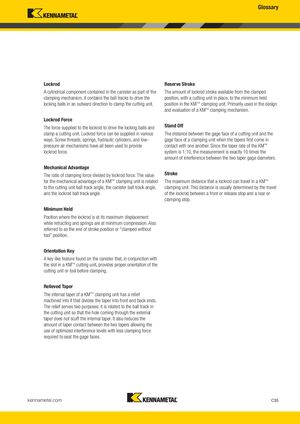
Словарь терминов
Цилиндрический вал
Цилиндрический компонент, расположенный внутри патрона, входящий в состав механизма зажима. Содержит дорожки для шариков, которые направляют запирающие шарики наружу для зажима державки резца.
Сила цилиндрического вала
Сила, прикладываемая к цилиндрическому валу для направления запирающих шариков и зажима державки резца. Может создаваться различными способами: резьбовыми соединениями, пружинами, гидравлическими цилиндрами и низконапорными пневматическими механизмами.
Механическое преимущество
Отношение силы зажима к силе цилиндрического вала. Значение механического преимущества механизма зажима KM™ зависит от угла дорожки шариков державки резца, угла дорожки шариков патрона и угла дорожки шариков цилиндрического вала.
Минимальное удерживаемое положение
Положение, при котором цилиндрический вал находится на максимальном расстоянии при отводе, а пружины сжаты минимально. Также называется положением конца хода или положением «зажато без инструмента».
Ключ ориентации
Элемент в виде шпонки, расположенный на патроне, который совместно со слотом державки резца KM™ обеспечивает правильную ориентацию державки или инструмента перед зажимом.
Конус с разрезом
Внутренний конус механизма зажима KM™ имеет механически обработанный разрез, который разделяет конус на переднюю и заднюю части. Разрез выполняет две функции: связан с дорожкой шариков в державке, так чтобы отверстие во внешнем конусе не царапало внутренний конус, и снижает площадь контакта между конусами, позволяя использовать оптимальные уровни натяга с меньшей требуемой силой зажима.
Резерв хода
Величина хода цилиндрического вала, доступного от зажатого положения с установленной державкой резца до минимального удерживаемого положения в механизме зажима KM™. Используется при проектировании и оценке механизма зажима KM™.
Высота установки
Расстояние между калибровочной поверхностью державки резца и калибровочной поверхностью механизма зажима при первом контакте конусов. Поскольку скорость конусности системы KM™ составляет 1:10, измерение составляет ровно в 10 раз величину натяга между двумя диаметрами калибровочного конуса.
Ход
Максимальное расстояние, на которое может перемещаться цилиндрический вал в механизме зажима KM™. Это расстояние обычно определяется перемещением цилиндрического вала между передним упором отпускания и задним упором зажима.