Техническая информация Sumitomo - страница 3
Навигация
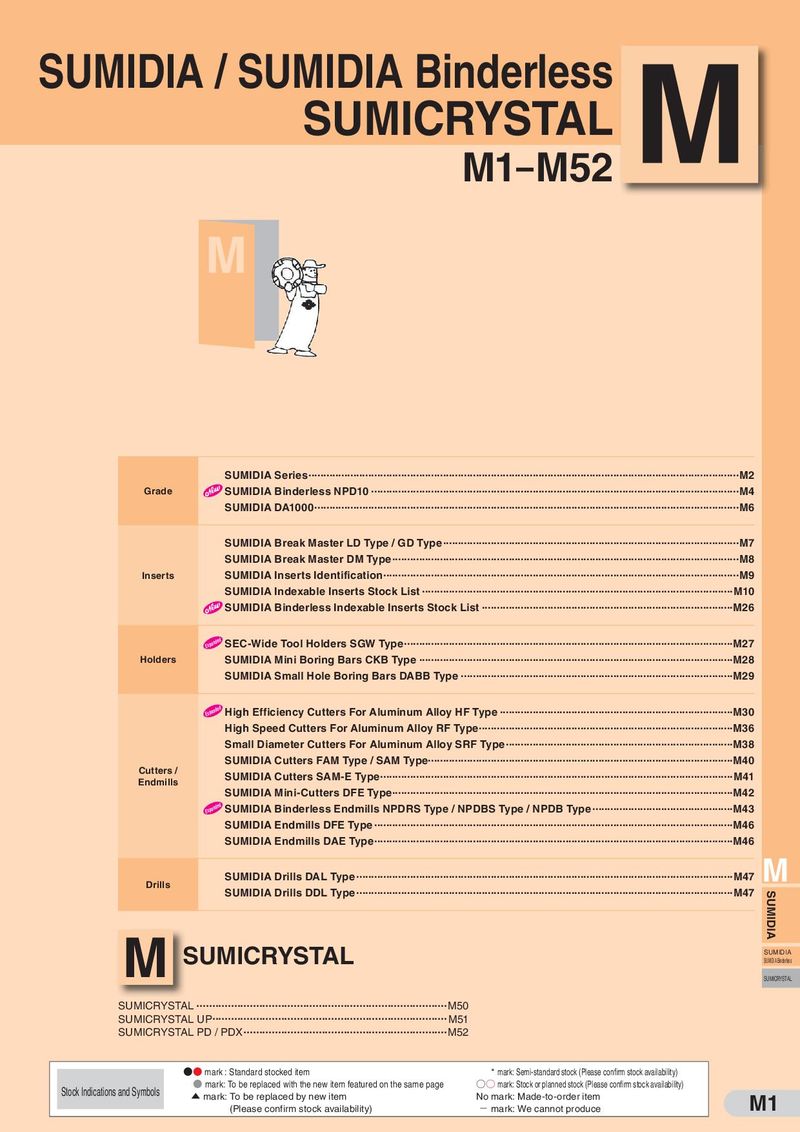 Каталог Sumitomo пластины с алмазными вставками Sumidia
 Общий каталог Sumitomo 2019 - 2020
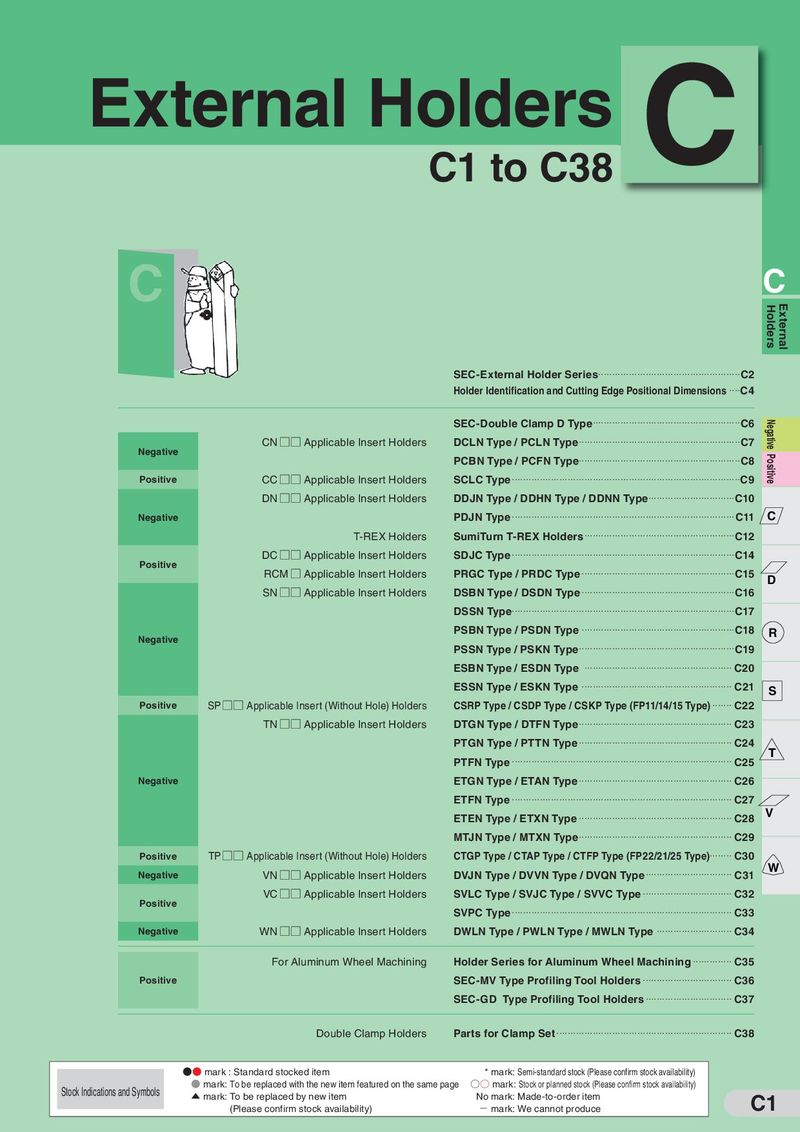 Каталог Sumitomo токарные резцы (державки) для наружного точения
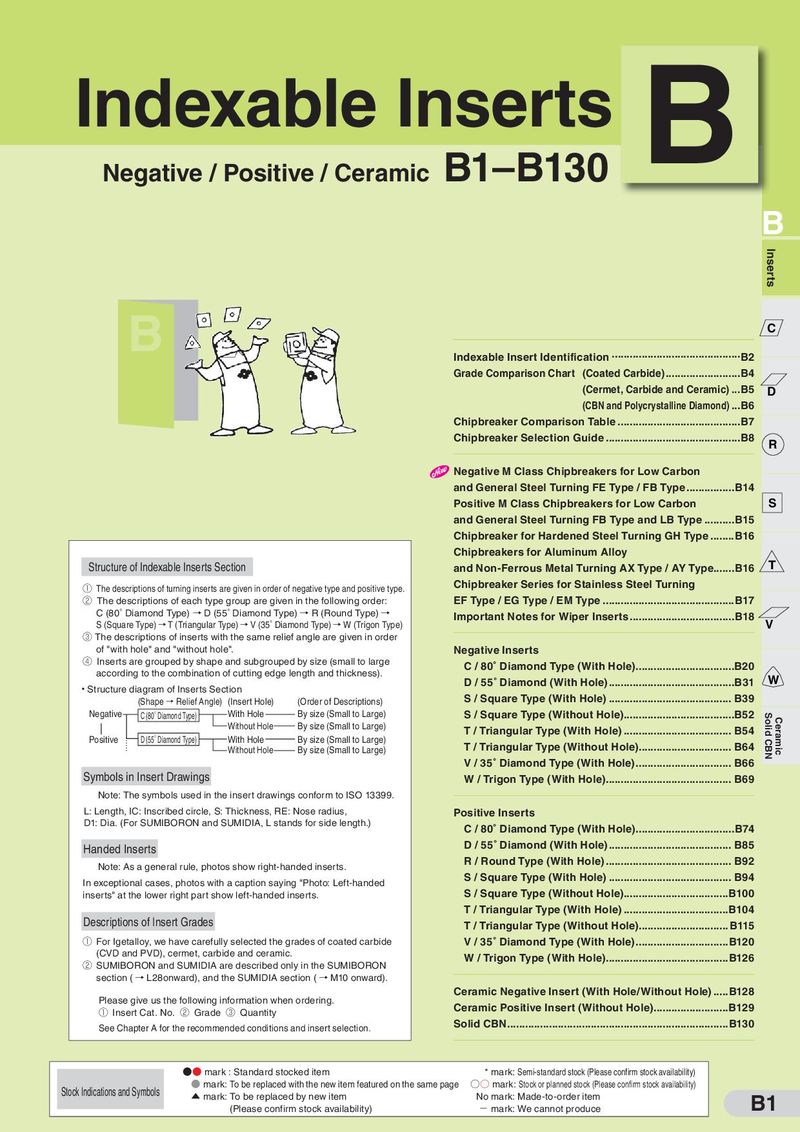 Каталог Sumitomo твердосплавные пластины
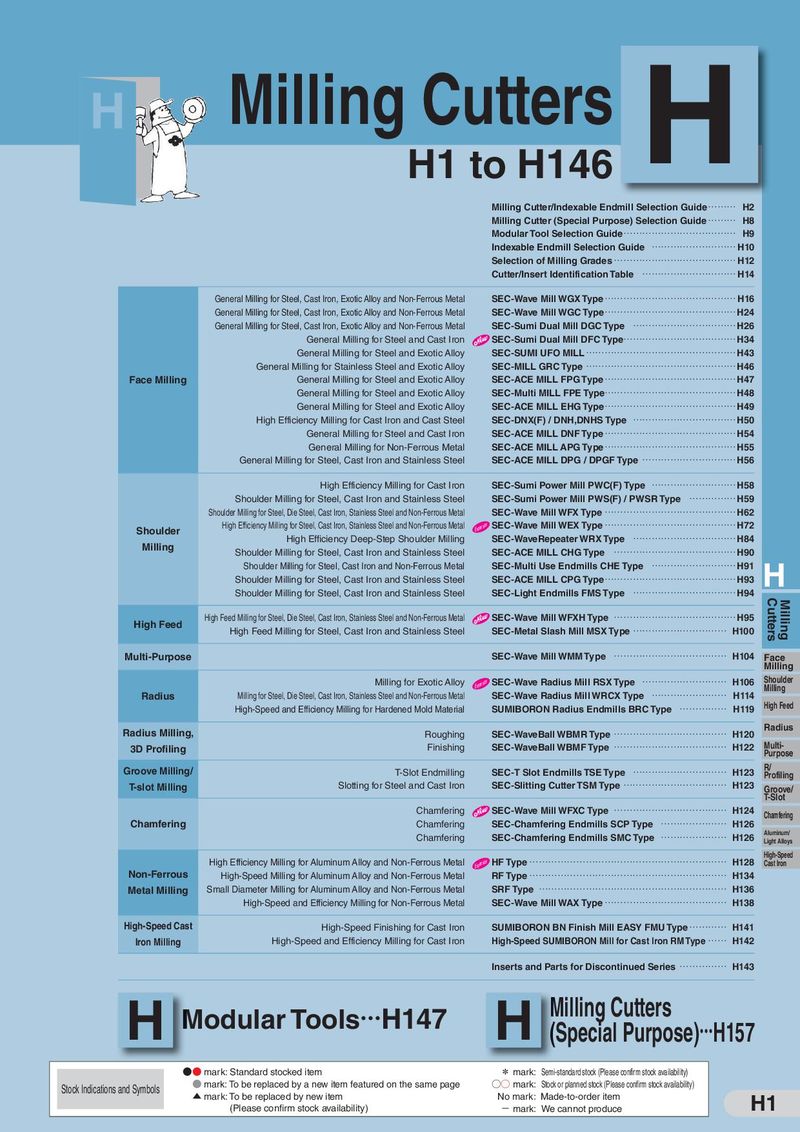 Каталог Sumitomo фрезы со сменными пластинами
 Каталог Sumitomo пластины с режущей кромкой-моноалмаз Sumicristal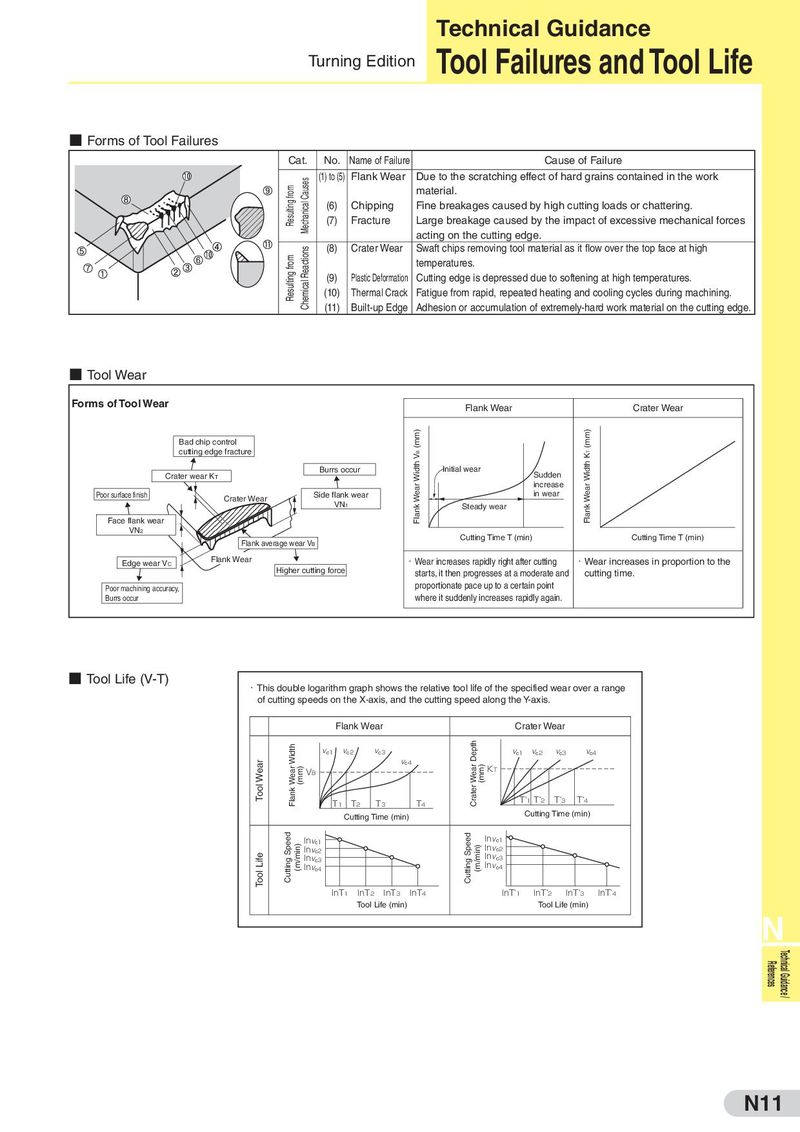
Tool Failures and Tool Life
- Forms of Tool Failures
| Cat. | No. | Name of Failure | Cause of Failure |
| from Causes | (1) to (5) | Flank Wear | Due to the scratching effect of hard grains contained in the work material. |
| Resulting Mechanical | (6) (7) | Chipping Fracture | Fine breakages caused by high cutting loads or chattering. Large breakage caused by the impact of excessive mechanical forces actingon the cuttingedge. |
| from eactions | (8) | Crater Wear | Swaft chips removing tool material as it flow over the top face at high temperatures. |
| Resulting Chemical R | (9) (10) (11) | Plastic Deformation Thermal Crack Built-upEdge | Cutting edge is depressed due to softening at high temperatures. Fatigue from rapid, repeated heating and cooling cycles during machining. Adhesion or accumulation of extremely-hard work material on the cuttingedge. |
- Tool Wear Forms of Tool Wear
Flank Wear Crater Wear
Bad chip control cutting edge fracture Burrs occur Initial wear Crater wear K Sudden T increase
Poor surface finish Side flank wear in wear
Crater Wear VN1 Steady wear Face flank wear VN2
Cutting Time T (min) Cutting Time T (min) Flank average wear VB
| Flank Wear | ・ Wear increases rapidly right after cutting | ・ Wear increases in proportion to the | ||
| Edge wear VC | ||||
| Higher cutting force | starts, it then progresses at a moderate and | cutting time. |
Poor machining accuracy, proportionate pace up to a certain point Burrs occur where it suddenly increases rapidly again.
- Tool Life (V-T)
・ This double logarithm graph shows the relative tool life of the specified wear over a range of cutting speeds on the X-axis, and the cutting speed along the Y-axis.
Flank Wear Crater Wear
| vc1 vc2 | vc3 | v 1 | v 2 | v 3 | v 4 | ||
| c | c | c | c | ||||
| vc4 | |||||||
| V | KT | ||||||
| B | |||||||
| T T | T | T | T' | T' | T' | T' | |
| 1 | 2 | 3 | 4 | ||||
| 1 2 | 3 | 4 | |||||
| Cutting Time (min) | Cutting Time (min) | ||||||
| In | Inv | ||||||
| v 1 | c1 |
In c In v v 2 c2 In c Inv v 3 c3 In c Inv v 4 c4 c
InT1 InT2 InT3 InT4 InT'1 InT'2 InT'3 InT'4
Tool Life (min) Tool Life (min) N