Основной каталог Kyocera 2021 - 2022 - страница 833
Навигация
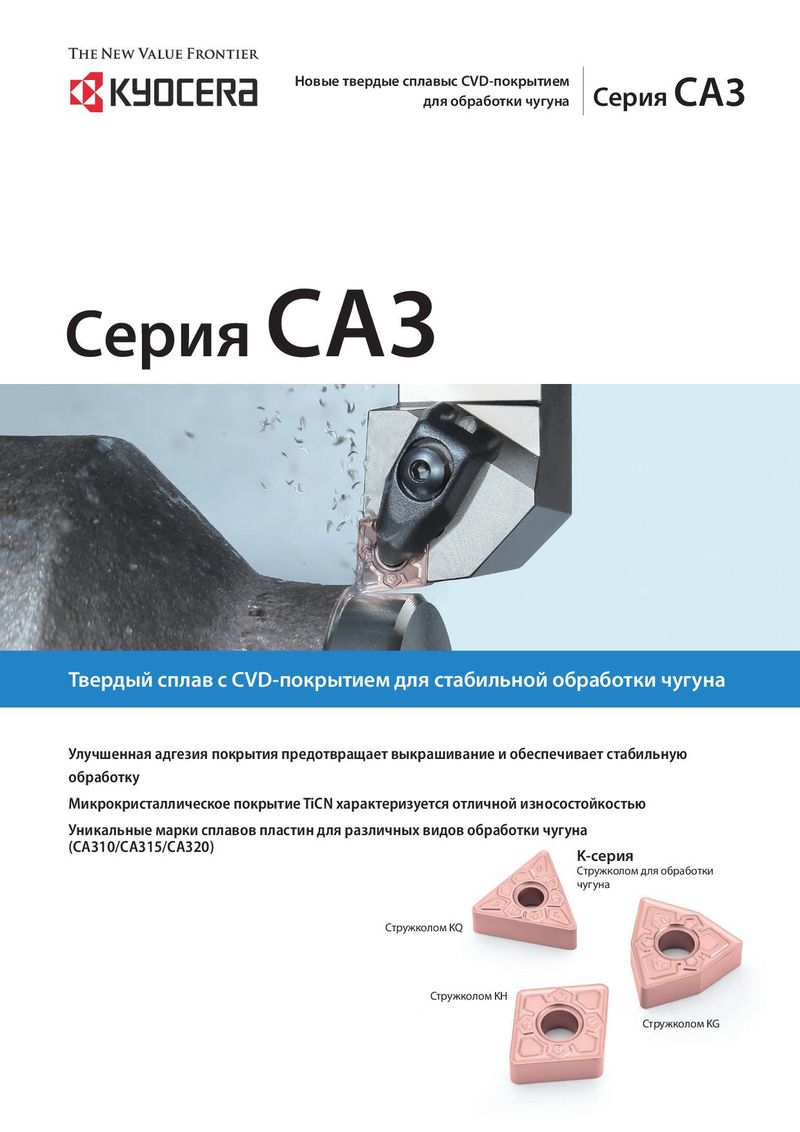 Каталог Kyocera пластины с CVD покрытием для обработки чугуна
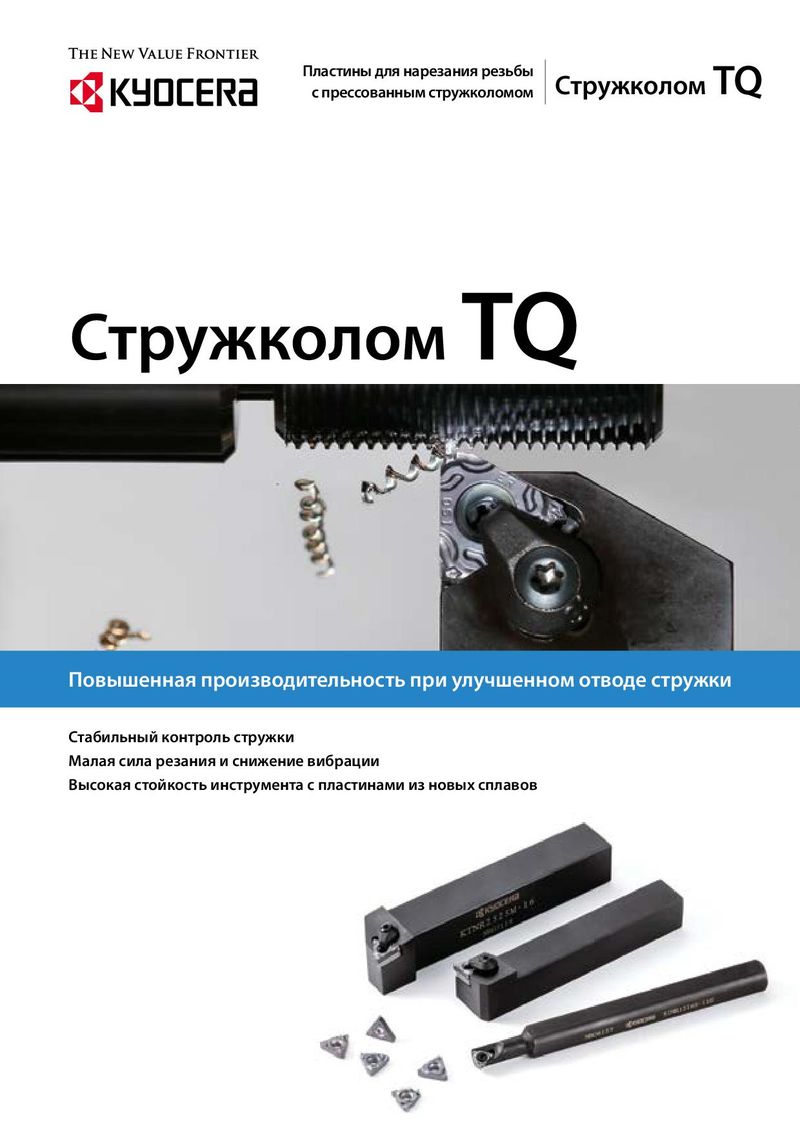 Каталог Kyocera пластины TQ для нарезания резьбы c прессованным стружколомом
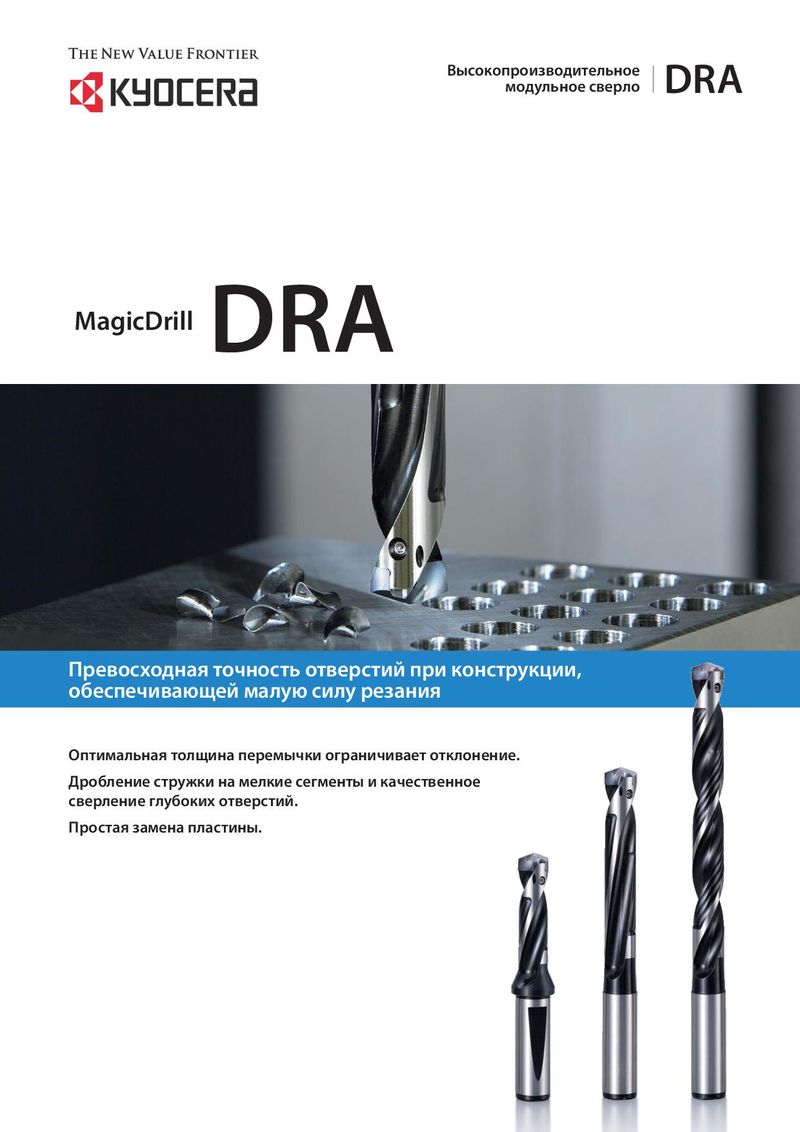 Каталог Kyocera высокопроизводительные модульные сверла DRA
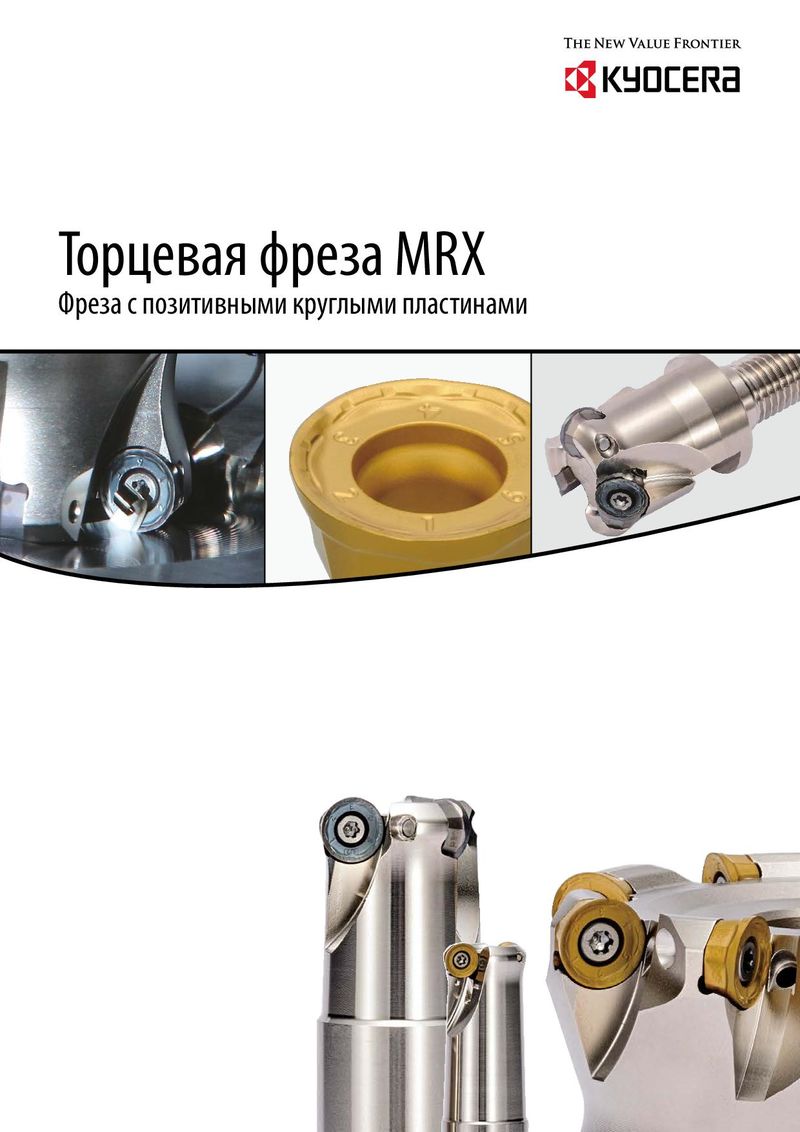 Каталог Kyocera фрезы MRX с позитивными круглыми пластинами
 Каталог Kyocera пластины с CVD покрытием для обработки стали
 - Cover
- Chapter Overview
- Contents
- Introduction
- Introduction
- Negative-Chipbreaker
- Positive-Chipbreaker
- Page Guide
- Cermet / coated carbide / carbide lineup
- Negative inserts 80° Rhombic
- 55° Rhombic
- 55° Parallelogramm
- Round
- 90° Square
- 90° Square
- 60° Triangle
- 35° Rhombic
- 80° Trigon
- Small double sided tools
- 80° Rhombic
- 55° Rhombic
- 55° Rhombic
- 70° Rhombic
- Round
- 90° Square
- 90° Square
- 60° Triangle
- 60° Triangle
- 35° Rhombic
- 35° Rhombic
- 80° Trigon
- Bearing machining Round / Square-Type
- Inserts for back turning TKFB
- ABS / ABW
- Ceramic lineup
- Negative inserts 80° Rhombic
- 55° Rhombic
- 75° Rhombic
- Round
- 90° Square
- 60° Triangle
- 35° Rhombic
- Positive inserts Round
- Square
- Triangle
- Inserts for high hardened roll
- Grooving inserts
- CBN Lineup
- Introduction
- Solid bar EZB-NB
- GMN
- GDGS
- Grooving inserts GBA
- 80° Trigon
- 35° Rhombic
- 60° Triangle
- 55° Rhombic
- Positive inserts 80° Rhombic
- 60° Triangle / Solid
- 90° Square / Solid
- Round / Solid
- 80° Rhombic / Solid
- 80° Trigon
- 35° Rhombic
- 60° Triangle
- 90° Square
- 55° Rhombic
- Negative inserts 80° Rhombic
- PCD Lineup
- Introduction
- Milling inserts Available inserts
- VNBR-NB
- VNGR-NB
- Solid bar EZB-NB
- TKF
- GMGW
- GMN
- GDGS
- GV/GVF
- Grooving inserts GBA/TGF
- 80° Trigon
- 35° Rhombic
- 60° Triangle
- 90° Square
- 55° Rhombic
- Positive inserts 80° Rhombic
- 80° Trigon
- 35° Rhombic
- 60° Triangle
- 55° Rhombic
- Negative inserts 80° Rhombic
- Introduction
- Toolholders for general purpose
- CN insert DCLN/DCLN-JCT/PCLN
- DN insert DDJN/DDJN-JCT/DDHN
- PDJN/PDHN
- SN insert DSBN/PSBN/PSKN
- PSSN/PSDN
- TN insert DTGN/PTGN/PTFN
- WTJN/WTKN/WTEN
- VN insert DVLN/DVPN/DVVN
- MVLN/MVVN
- PVLN/PVPN/PVVN
- RC insert PRGC/PRXC
- RN insert PRGN
- WN Insert DWLN/DWLN-JCT/PWLN/WWLN
- Toolholders for ceramic inserts
- Selection guide for ceramic inserts
- RN insert CRSN/CRDN
- SN insert CSRN/CS-N/CSKN/CSYN/CSSN/CSDN
- EN insert CELN
- DN insert CDJN
- CN insert CCLN
- TN insert CTJN/CTUN
- Toolholders for CBN inserts
- CNMN insert CCRN-A/CCLN-A
- RNMN insert CRSN-A/CRDN-A
- SNMN insert CSRN-A/CSKN-A/CSSN-A/CSDN-A
- TNMN insert CTJN-A/CTUN-A
- Toolholders for bearing machining
- RCMT insert PRGC-BE
- SNMF insert CBSN
- Recommended cutting conditions
- Introduction
- Toolholders for back turning
- TKFB insert TKFB
- KTKF / KTKF Goose-neck holder
- ABS15 insert AABS-40F/SABS-40F
- ABW15 insert AABW-40F/SABW-40F
- ABW23 insert AABW-50F/SABW-50F
- Goose-neck toolholders
- DC insert SDJC
- VP insert SVLP
- External toolholders
- CC insert ACLC-FF
- SCLC
- SCLC-FF/SCLC-FFJCT
- DC insert ADJC-FF
- SDJC-FF
- SDJC-FFJCT
- SDJC
- SDLC-FF
- SDXC
- SDNC-F
- SDNC
- DP insert SDLP-FF
- TC/TP insert STGC
- STGP
- VB/VC insert AVJB-FF/SVJB-FF/SVJB-FFJCT/SVJB/SVPB/SVVB
- SVJC-FF/SVLC-FF
- SVPC-FF/SVVC
- VP insert SVJP-FF/SVJP-FFJCT/SVLP-FF/SVPP-FF
- External sleeve holders
- CC insert S...SCLC
- DC insert S...SDUC/S...SDLC
- VB/VC insert S...SVUB/S...SVUC
- Toolholders for small double sided tooling
- CN insert SCLN-FF (without offset)
- DN insert SDLN-FF (without offset)
- TN insert STLN-FF (without offset)
- Toolholders for double sided tooling for automatic lathes
- CN insert PCLN-FF (without offset)
- TN insert PTLN-FF (without offset)
- Recommended cutting conditions
- Introduction
- Solid tip bars for micro boring
- System Tip-Bars VNB type
- VNBX-S
- TWB
- STW/S-STW
- TWBT
- Dynamic-Bars
- CC insert A/S-SCLC-AE
- CP insert A-SCLP-AE
- DC insert A-SDUC-AE
- JC insert C-SJLC
- TC insert A-STLC-AE
- TB/TP insert S-STLB-AE
- VB/VC/VP insert A-SVJP-AE/A-SVJC-AE/A-SVJB-AE
- WB/WP insert S-SWUB-AE/A-SWUP-AE
- Borings bars (screw clamp / top clamp)
- SP insert S-SSKP/S-CSKP
- TP insert S-CTUP
- Bearing machining
- RPMT insert SRCP-B
- SNMF insert CBSN-B
- AD Bars
- CN insert HA-PCLN
- DN insert HA-PDUN
- TN insert HA-PTFN
- CC insert HA-SCLC
- DC insert HA-SDUC
- Boring adapter for AD Bars AD type with dampener system
- Boring bars for negative type inserts
- CN insert A-DCLN
- DN insert S-PDUN/A-PDUN (11)
- SN insert A-DSKN
- TN insert A-DTFN
- WN insert S-PWLN/A-PWLN
- Boring bars for ceramic inserts
- Boring bars for CBN inserts
- Technical information
- Applicable sleeves
- Introduction
- External grooving
- GBA type GBA
- KGB/KGBS
- GBF-KGBF-JCT
- TGF type TGF
- S-KGBF
- KTGF-F/KTGF/S-KTGF
- KGD
- KGD-JCT (Integral type)
- KGD (Integral type for automatic lathes)
- KGD (Integral type)
- KGDF S separate type
- GMGW type GMGW
- GH/GHU/GA type GH/GHU/GA
- GM/GMN/GMM/GMG/GMGA/FGG type GM/GMN/GMM/GMG/GMGA/FGG
- Internal grooving
- KGIA
- GIA type GIA
- GMM/GMG/GMGA type GMM/GMG/GMGA
- GH/GHU type GH/GHU
- GBA type KIGBA
- GDM type GDM
- GV type GV
- SIGE-WH-90 carbide shank bar (for automatic lathe; with coolant hole)
- SIGE-WH carbide shank bar (with coolant hole)
- SIGE-EH Excellent Bar (with coolant hole)
- GE/GER type GE/GER
- GC type GC
- VNG type VNG
- GMM
- Face grooving
- KGDF-Z (Integral type)
- GDFM/GDFMS type GDFM/GDMFS
- TWFG/TWFGT small diameter face grooving (Twin-Bars) TWFG
- VNFG type VNFG
- KGDF 0° separate type
- KGDF 90 separate type
- FTK type FTK
- GMM/GMG/GMGA type GMM/GMG/GMGA
- FMM/FMN type FMM/FMN
- GIFV (A/B/C)
- GFV\AA
- GVF type GVF
- Grooving
- Introduction
- Small diameter cut-off
- TKF type TKF
- KTKF
- KTKF-JCT
- KTKFS
- TKFS type TKFS
- KTKF-S
- KGD type
- GDM/GDMS/GDG type GDM/GDMS/GDG
- KGD (Integral type for automatic lathe)
- KGDS (for sub spindle tooling)
- KGD-JCT (Integral type)
- KGD (Integral type)
- KGD-JCT (Integral type for automatic lathe)
- KGD-JCT
- KGDS separate type
- KGM type
- GMM/GMN/GMR/GML type GMM/GMN/GMR/GMLw
- KGM/KGM-T/KGMM/KGMS
- 1-edge cut-off inserts
- TKN/TK type TKN/TK
- KTKB-SS/KTKB-S
- Toolblocks
- KTKH-S (Integral type)
- Introduction
- Threading inserts
- Metric External threading / 60° full profile
- Internal threading / 60° full profile
- Unified External threading / 60° full profile
- Internal threading / 60° full profile
- Parallel pipe, Whitworth External threading
- Internal threading
- Tapered pipe External threading / 55° full profile
- Internal threading / 55° full profile
- American national tapered pipe External threading
- Internal threading
- 60° type (Partial profile/M, UN) External threading
- Internal threading
- 55° type (Partial profile/G, R, Rc, W) External threading
- Internal threading
- 30° type (Trapezoidal) External threading
- Internal threading
- Threading toolholders
- External toolholders KTN/KTNS/KTN-JCT
- S-KTN
- Internal toolholders SIN/CIN
- Multipurpose threading tools
- TKFT for small parts machining TKFT
- KTKF
- TTX for small parts machining TTX
- KTTX/S-KTTX
- TT for external and internal threading TT
- KTT (external)
- KITG (internal)
- System Bar for micro internal threading VNT
- TPGB for internal threading TPGB
- S-STWP/S-STWP-E
- Recommended cutting conditions
- Depth of cut and number of passes
- Applicable toolholders and inserts
- Threading methods
- Threading methods and basic profiles
- Thread types
- Introduction
- MagicDrill DRA
- SF-DRA 12 DC
- SF-DRA 8 DC
- SF-DRA 5 DC
- SF-DRA 3 DC
- Flanged shank SF SF-DRA 1.5 DC
- Chamfering attachment for SS-DRA CH\-DRA
- SS-DRA 8 DC
- SS-DRA 5 DC
- SS-DRA 3 DC
- Straight shank SS SS-DRA 1.5 DC
- Recommended cutting conditions
- MagicDrill DRC
- Straight shank SS SS-DRC 3 DC
- SS-DRC 5 DC
- SS-DRC 8 DC
- Chamfering attachment for SS-DRC CH\-DRC
- Flanged shank SF SF-DRC 3 DC
- SF-DRC 5 DC
- SF-DRC 8 DC
- Recommended cutting conditions
- MagicDrill DRV
- Chamfering attachment for DRV CH\-DRV
- DRV 6 DC
- DRV 5 DC
- DRV 4 DC
- DRV 3 DC
- Toolholder DRV DRV 2 DC
- Recommended cutting conditions
- Adjustable sleeve (DRV/DRZ/DRX)
- MagicDrill DRZ
- Toolholder DRZ DRZ 2 DC
- DRZ 3 DC
- DRZ-CR
- Recommended cutting conditions
- MagicDrill DRS
- MagicDrill DRX
- Trouble shooting (DRV / DRX / DRZ / DRX)
- Lathe installation DRX/DRZ
- MagicDrill DRW
- Introduction
- Introduction
- ISO identification
- MFPN Series MFPN66
- MFK / MFK-SF
- MOF45 OFMT
- Lead angle 15°
- MSRS15 SPMT
- Lead angle 0°/ 2°
- MEW LOMU/LOGT
- MEC/MECX BDGT/BDMT
- MEWH LOMU/LOGT
- MEV TOMT
- MECH/MECHT BDMT
- MECH/MECHT MECHT
- MFWN WNEU/WNMU/WNGT
- MFSN88 SNMU
- MFLN90 LOGU
- MSRS90 SPMT
- MSR / MSR-BT50 APMT
- DMC/DMC-SX/DMC-H NDCT/NDCW/NDMM
- MFAH ENET
- MEAS KCGT
- High feed cutter
- MFH Series SOMT/LOGU/LPGT
- MFH Series MFH Mini
- MFH Series MFH Micro
- Multi-Function end mill
- Applicable inserts GOMT/JOMT
- Slott mill
- Ball-nose / radius type cutters
- MRF/MRFW RDFG
- MRW ROMU
- MRX RDMT/RDGT/RPMT/RPGT
- Other applications
- MCSE (chamfering end mill)
- Square-type inserts MEF (bolt countersink end mill)
- S type inserts METS (T-Slot mill)
- MVG (ring grooving end milll for M/C)
- GVR/GVFR
- MGI (grooving end mill for M/C)
- Grooving GVR/GVFR
- Other inserts
Lead angle 0°/ 2°Lead angle 0°/ 2°Lead angle 0°/ 2° MEC/MECXMEC/MECX
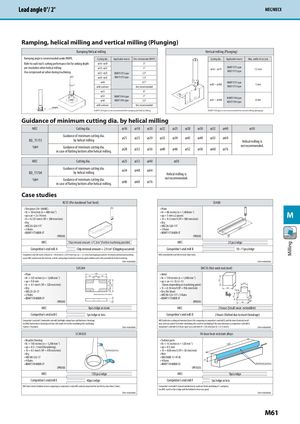
Ramping, helical milling and vertical milling (Plunging)
Ramping/Helical milling Vertical milling (Plunging)
| Ramping angle is recommended under RMPX. | Cutting dia. | Applicable inserts | Max. ramping angle (RMPX) | Cutting dia. | Applicable inserts | Max. width of cut (ae) |
| Refer to each tool’s cutting performance list for sinking depth | ø16~ø18 | 3° | ||||
| per revolution when helical milling. | ø19~ø21 | 5° | BDMT11T3 type | |||
| ø16 ~ ø19 | 1.5 mm | |||||
| Use compressed air when during machining. | BDGT11T3 type | |||||
| ø22~ø25 | BDMT11T3 type | 2.5° | ||||
| ø28~ø32 | BDGT11T3 type | 1.5° | ||||
| ø40 | 0.7° | BDMT11T3 type | ||||
| ø20 ~ ø160 | 5 mm | |||||
| ø50 and over | Not recommended | BDGT11T3 type | ||||
| ø25 | 8° | |||||
| ø32 | BDMT1704 type | 5° | ||||
| BDMT1704 type | ||||||
| ø40 | BDGT1704 type | 2.5° | ø25 ~ ø160 | 8 mm |
BDGT1704 type ø50 and over Not recommended RMPX BDMT1103 type is not recommended for ramping and helical milling. BDMT1103 type is not recommended for vertical milling (plunging).
Guidance of minimum cutting dia. by helical milling
| MEC | Cutting dia. | ø16 | ø18 | ø20 | ø22 | ø25 | ø28 | ø30 | ø32 | ø50 ø40 | ||
| Guidance of minimum cutting dia. | ø | ø | ø | ø | ø | ø | ø | ø | ø | |||
| by helical milling | 21 | 25 | 29 | 33 | 39 | 45 | 49 | 53 | 69 | |||
| BD_T11T3 | Helical milling is | |||||||||||
| type | Guidance of minimum cutting dia. | not recommended. | ||||||||||
| in case of flatting bottom after helical milling. | ø28 | ø32 | ø36 | ø40 | ø46 | ø52 | ø56 | ø60 | ø76 | |||
| MEC | Cutting dia. | ø25 | ø32 | ø40 | ø50 | |||||||
| Guidance of minimum cutting dia. | ø34 | ø48 | ø64 | |||||||||
| BD_T1704 | by helical milling | Helical milling is | ||||||||||
| type | Guidance of minimum cutting dia. | not recommended. | ||||||||||
| in case of flatting bottom after helical milling. | ø46 | ø60 | ø76 |
Case studies RC55 (Pre-hardened Tool Steel) SS400
- Test piece (54~56HRC)
- Plate
- Vc = 50 m/min (n = 800 min-1)
- Vc = 88 m/min (n = 1,400min-1) M
- ap x ae = 2 x 14 mm
- ap = 5 mm x 2 passes
- fz = 0.125 mm/t (Vf = 300 mm/min)
- fz = 0.12 mm/t (Vf = 500 mm/min)
- Dry
- Dry
- MEC20-S20-11T
- MEC20-S20-11T
- 3 flutes
- 3 flutes 1,800
- BDMT11T308ER-JT
- BDMT11T308ER-JT
(PR830) (PR830)
MEC Chip removal amount =71.3cm3 (Further machining possible) MEC 23 pcs/edge
Competitor's end mill A Chip removal amount = 2.9 cm3 (Chipping occurred) Competitor's end mill B 10~11pcs/edge
Competitor's end mill A [ø25 (2 flutes) Vc = 40 m/min fz = 0.075 mm/t ap x ae = 2 x 3 mm] had chipping occurred in 10 minutes and had loud machining MEC extended the tool life for more than twice. sound. MEC could increase the feed rate, and the cutting edge remained in extremely good condition and is still sustainable for further machining. (User evaluation) (User evaluation) SUS304 DAC10 (Hot work tool steel)
- Plate 220
- Mold
- Vc = 125 m/min (n = 1,600 min-1) 90 40 90
- Vc = 130 m/min (n = 1,040 min-1)
- ap = 9.0 mm
- ap × ae =(~3)×(~5)
fz = 0.1 mm/t (Vf = 320 mm/min) (Varies depending on machining point) φ50
- Dry
- fz = 0.18 mm/t (Vf = 936 mm/min) 58
68
- MEC25-25-17
- Dry (Air blow) 4
- 2 flutes Removed portion (4 locations)
- MEC40-S32-11T
- 5 flutes
- BDMT170408ER-JT
- BDMT11T308ER-JT
| (PR830) | (PR830) | 58 | |
| 68 |
| MEC | 4pcs/edge or more | MEC | 2 hours (Small wear: extendible) | ||||
| Competitor's end mill C | 1pc/edge or less | Competitor's end mill D | 2 hours (Halted due to insert breakage) | ||||
| Competitor's end mill C (indexable end mill) had high cutting force and had insert breakage, | MEC had better cutting performance/insert life comparing to competitor's end mill D, and the insert had only small | ||||||
| but MEC had no insert breakage and was still usable for further machining after machining | wear and was usable for further machining after used for machining of the same duration as competitor's end mill D. |
4 pieces (16 points). (User evaluation) Competitor's end mill D (6 flutes type) was used with Vf = 936 mm/min (fz = 0.15 mm/t). (User evaluation)
SCM420 Ni-base heat-resistant alloys
- Knuckle Steering
- Turbine parts
- Vc = 150 m/min (n = 1,200 min-1)
- Vc = 15 m/min (n = 120 min-1)
- 160
ap = 0.5~5 mm(Shouldering) ap = 0.5 mm
- fz = 0.1 mm/t (Vf = 478 mm/min) Machined portion
- fz = 0.08 mm/t (Vf = 38 mm/min)
- Dry
- Wet
- MEC40-S32-17
- MEC040R-17-4T-M
- 4 flutes
- 4 flutes
- BDMT170408ER-JT
- BDMT170408ER-JS Machined portion
(PR830) (PR1025)
MEC 150 pcs/edge MEC 9pcs/edge
Competitor's end mill E 40pcs/edge Competitor's end mill F 1pc/edge or less
MEC had a better finished surface comparing to competitor's end mill E and also improved the tool life by more than 3 times. Competitor's end mill F (Coated carbide Insert) could not finish machining of 1 workpiece, but MEC could cut 9pcs/edge and the finished surface was good.