Каталог Sumitomo резьбонарезной инструмент - страница 11
Навигация
 Каталог Sumitomo фрезы со сменными пластинами
 Каталог Sumitomo пластины с кубическим нитридом бора Sumiboron
 Каталог Sumitomo инструмент для обработки канавок
 Общий каталог Sumitomo 2018 - 2019
 Каталог Sumitomo твердосплавные заготовки
 Каталог Sumitomo модульные системы для револьверных головок токарных станков
 - F001
- F002
- F003
- F004
- F005
- F006
- F007
- F008
- F009
- F010
- F011
- F012
- F013
- F014
- F015
- F016
- F017
- F018
- F019
- F020
- F021
- F022
- F023
- F024
- F025
- F026
- F027
- F028
- F029
- F030
- F031
- F032
- F033
- F034
- F035
- F036
- F037
- F038
- F039
- F040
- F041
- F042
- F043
- F044
- F045
- F046
- F047
- F048
- F049
- F050
- F051
- F052
- F053
- F054
- F055
- F056
- F057
- F058
- F059
- F060
- F061
- F062
- F063
- F064
- F065
- F066
- F067
- F068
- F069
- F070
- F071
- F072
- F073
- F074
- F075
- F076
- F077
- F078
- F079
- F080
- F081
- F082
- F083
- F084
- F085
- F086
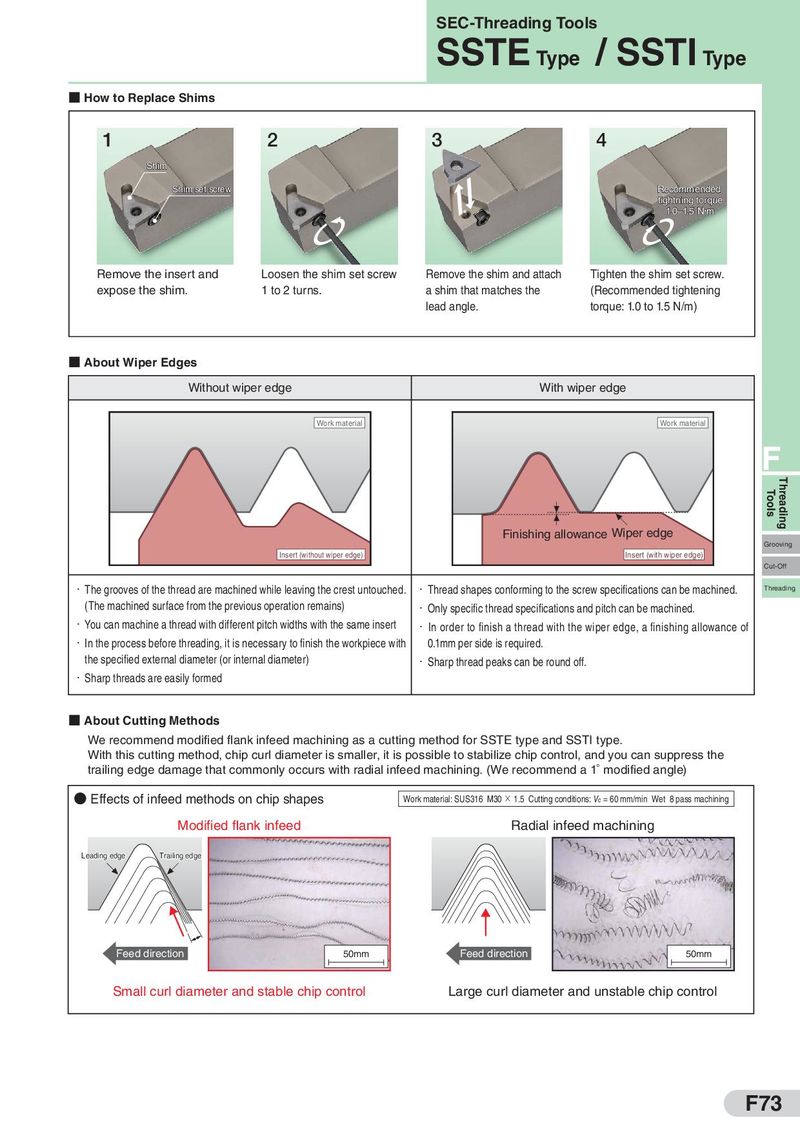
- How to Replace Shims
1 2 3 4
ShimShim Shim set screwShim set screw
Recommended Recommended tightning torquetightning torque 1.0–1.5 N1.0–1.5 N・・mm
| Remove the insert and | Loosen the shim set screw | Remove the shim and attach | Tighten the shim set screw. |
| expose the shim. | 1 to 2 turns. | a shim that matches the | (Recommended tightening |
lead angle. torque: 1.0 to 1.5 N/m)
- About Wiper Edges
Without wiper edge With wiper edge
Work material Work material
F
Finishing allowance Wiper edge Grooving Insert (without wiper edge) Insert (with wiper edge) Cut-Off
- The grooves of the thread are machined while leaving the crest untouched.
- Thread shapes conforming to the screw specifications can be machined.
Threading (The machined surface from the previous operation remains) Only specific thread specifications and pitch can be machined.
- You can machine a thread with different pitch widths with the same insert
In order to finish a thread with the wiper edge, a finishing allowance of
- In the process before threading, it is necessary to finish the workpiece with 0.1mm per side is required. the specified external diameter (or internal diameter) Sharp thread peaks can be round off.
- Sharp threads are easily formed
- About Cutting Methods We recommend modified flank infeed machining as a cutting method for SSTE type and SSTI type. With this cutting method, chip curl diameter is smaller, it is possible to stabilize chip control, and you can suppress the trailing edge damage that commonly occurs with radial infeed machining. (We recommend a 1° modified angle)
- Effects of infeed methods on chip shapes ×
Work material: SUS316 M30 1.5 Cutting conditions: Vc = 60 mm/min Wet 8 pass machining
Modified flank infeed Radial infeed machining
Leading edgeLeading edge Trailing edgeTrailing edge
Feed direction 50mm Feed direction 50mm