Общий каталог Mitsubishi 2020 - 2021 - страница 946
Навигация
 Каталог Mitsubishi Materials запасные части
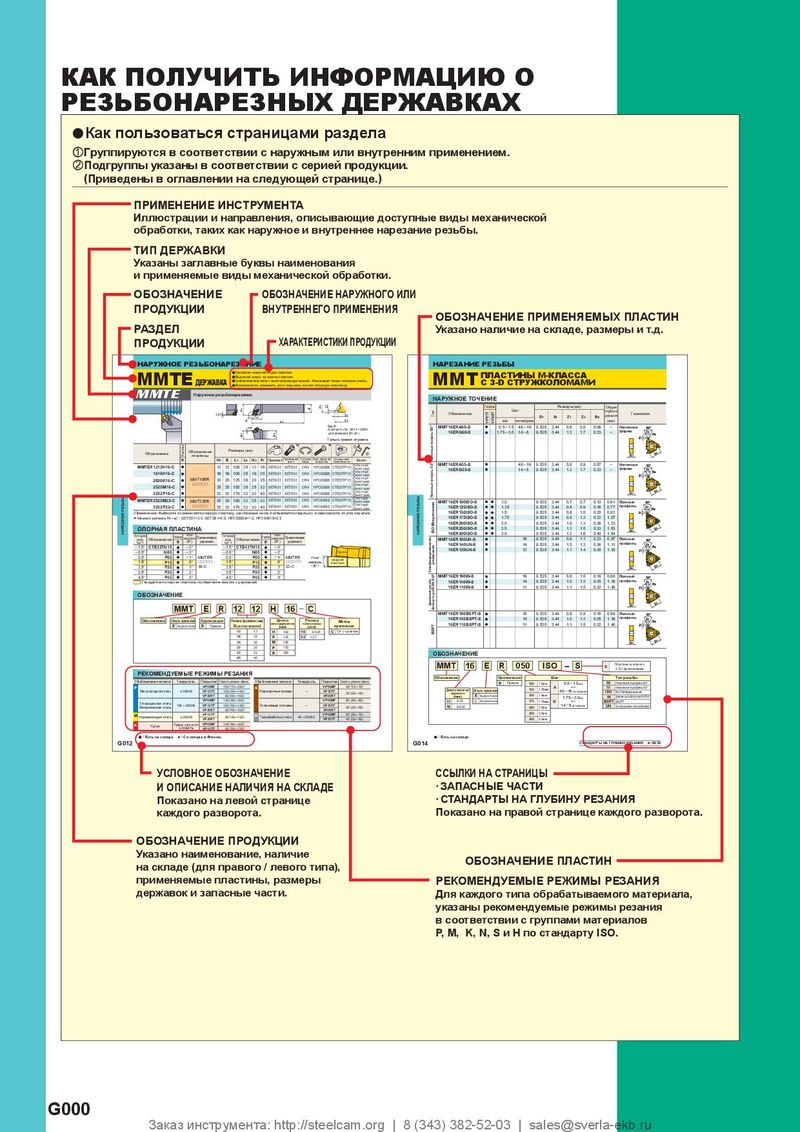 Каталог Mitsubishi Materials резьбонарезной инструмент
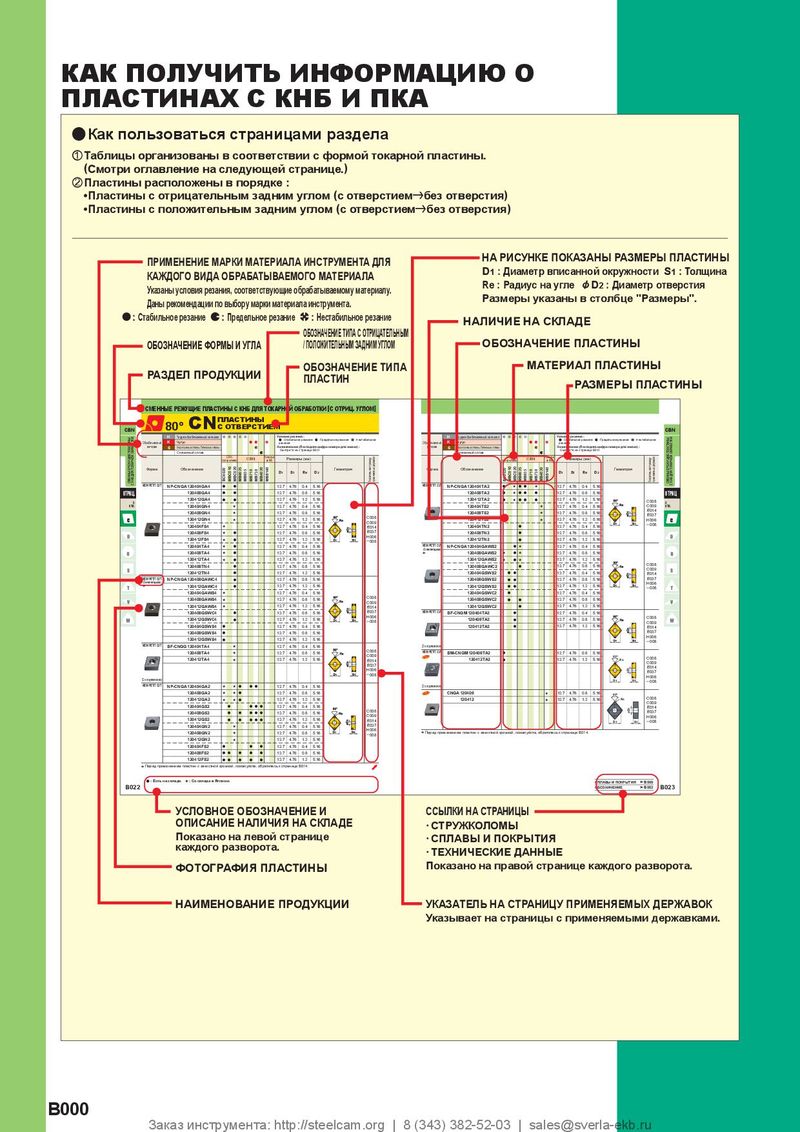 Каталог Mitsubishi Materials СНП с CBN и PCD для токарной обработки
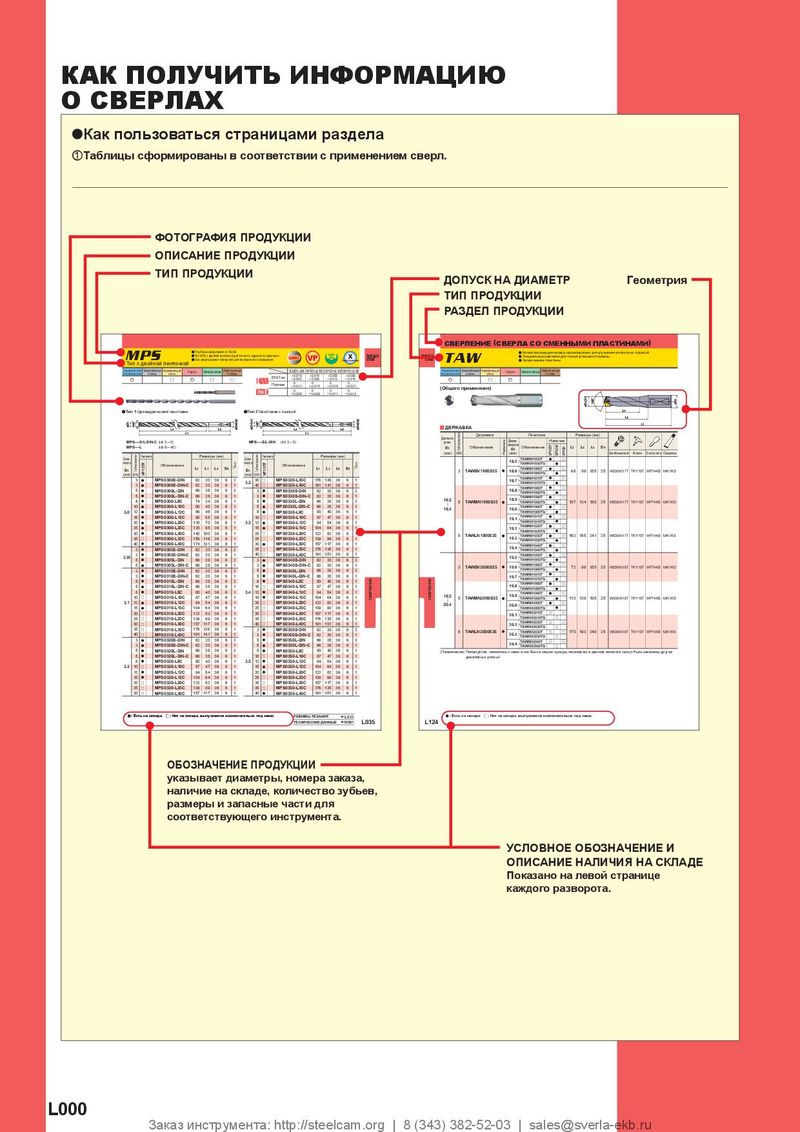 Каталог Mitsubishi Materials сверлильные инструменты
 Каталог Mitsubishi Materials расточной инструмент
 Каталог Mitsubishi Materials пластины для точения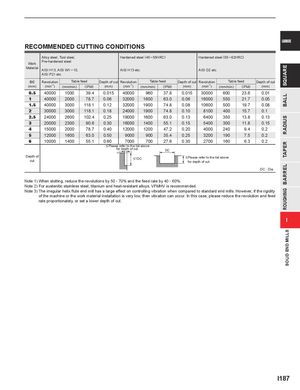
CARBIDE
RECOMMENDED CUTTING CONDITIONS
| Work Material | Alloy steel, T Pre-hardene AISI H13, AI AISI P21 etc | ool steel, d steel SI W1─10, . | Hardened st AISI H13 etc | eel(45─55H . | RC) | Hardened st AISI D2 etc. | eel(55─62H | RC) | ||||
| DC | Revolution | Table | feed | Depth of cut | Revolution | Table | feed | Depth of cut | Revolution | Table | feed | Depth of cut |
| (mm) | (min-1) | (mm/min) | (IPM) | (mm) | (min-1) | (mm/min) | (IPM) | (mm) | (min-1) | (mm/min) | (IPM) | (mm) |
| 0.5 | 40000 | 1000 | 39.4 | 0.015 | 40000 | 960 | 37.8 | 0.015 | 30000 | 600 | 23.6 | 0.01 |
| 1 | 40000 | 2000 | 78.7 | 0.06 | 32000 | 1600 | 63.0 | 0.06 | 16000 | 550 | 21.7 | 0.05 |
| 1.5 | 40000 | 3000 | 118.1 | 0.12 | 32000 | 1900 | 74.8 | 0.08 | 10600 | 500 | 19.7 | 0.08 |
| 2 | 30000 | 3000 | 118.1 | 0.18 | 24000 | 1900 | 74.8 | 0.10 | 8100 | 400 | 15.7 | 0.1 |
| 2.5 | 24000 | 2600 | 102.4 | 0.25 | 19000 | 1600 | 63.0 | 0.13 | 6400 | 350 | 13.8 | 0.13 |
| 3 | 20000 | 2300 | 90.6 | 0.30 | 16000 | 1400 | 55.1 | 0.15 | 5400 | 300 | 11.8 | 0.15 |
| 4 | 15000 | 2000 | 78.7 | 0.40 | 12000 | 1200 | 47.2 | 0.20 | 4000 | 240 | 9.4 | 0.2 |
| 5 | 12000 | 1600 | 63.0 | 0.50 | 9000 | 900 | 35.4 | 0.25 | 3200 | 190 | 7.5 | 0.2 |
| 6 | 10000 | 1400 | 55.1 | 0.60 | 7000 | 700 | 27.6 | 0.30 | 2700 | 160 | 6.3 | 0.2 |
| Depth of cut | fo | refer to the lis r depth of cut. | C t above | DC | for de | e refer to the lis pth of cut. | t above |
DC : Dia. Note 1) When slotting, reduce the revolutions by 50 - 70% and the feed rate by 40 - 60%. Note 2) For austenitic stainless steel, titanium and heat-resistant alloys, VFMHV is recommended. Note 3) The irregular helix flute end mill has a large effect on controlling vibration when compared to standard end mills. However, if the rigidity of the machine or the work material installation is very low, then vibration can occur. In this case, please reduce the revolution and feed rate proportionately, or set a lower depth of cut.