Общий каталог Mitsubishi 2020 - 2021 - страница 880
Навигация
 Каталог Mitsubishi Materials запасные части
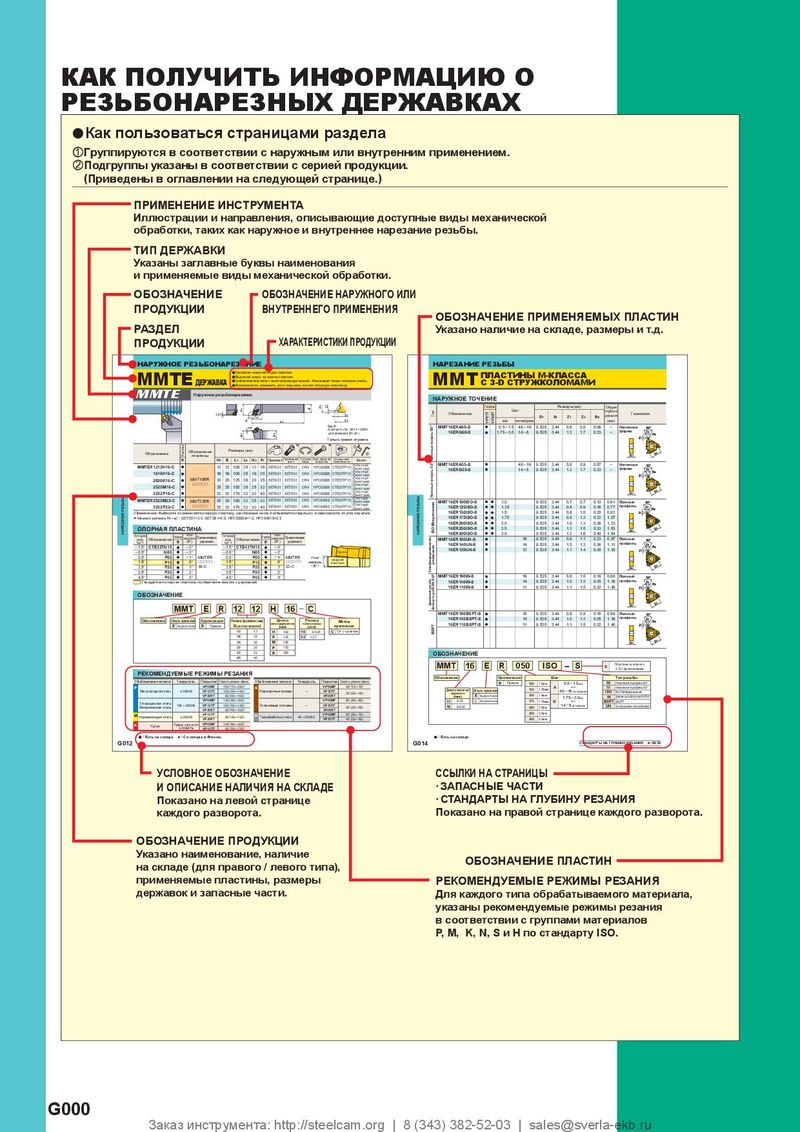 Каталог Mitsubishi Materials резьбонарезной инструмент
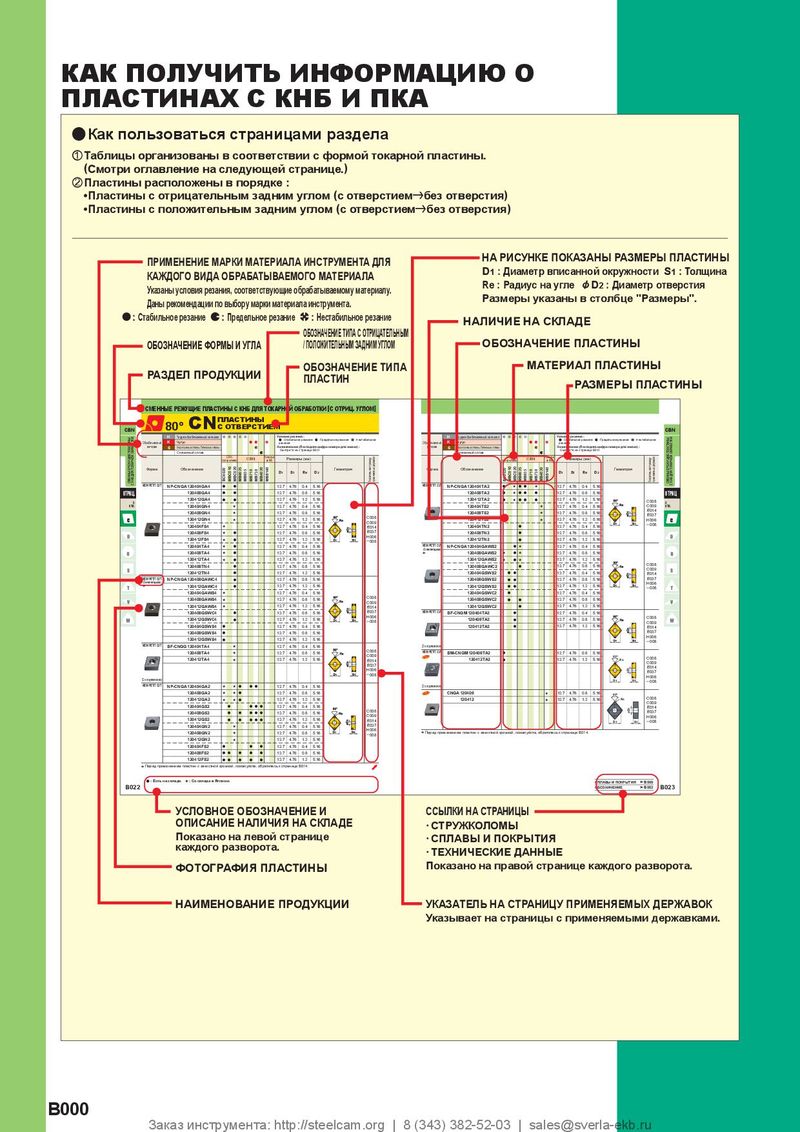 Каталог Mitsubishi Materials СНП с CBN и PCD для токарной обработки
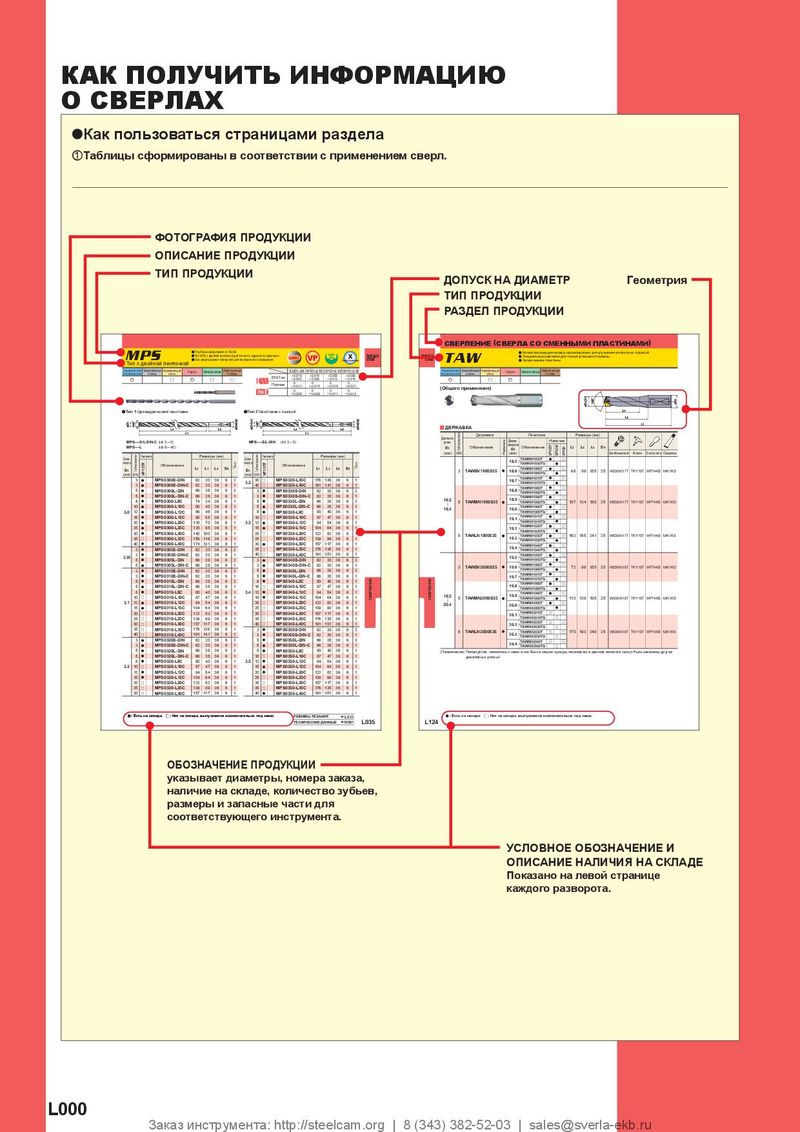 Каталог Mitsubishi Materials сверлильные инструменты
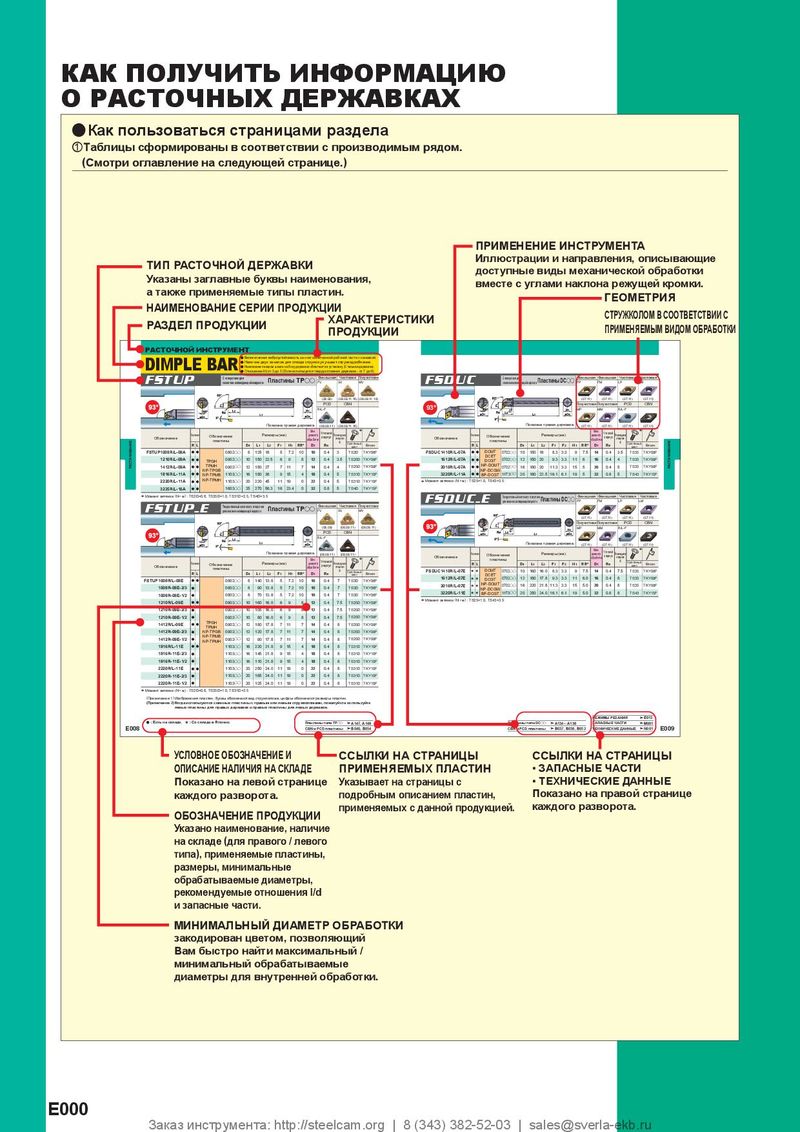 Каталог Mitsubishi Materials расточной инструмент
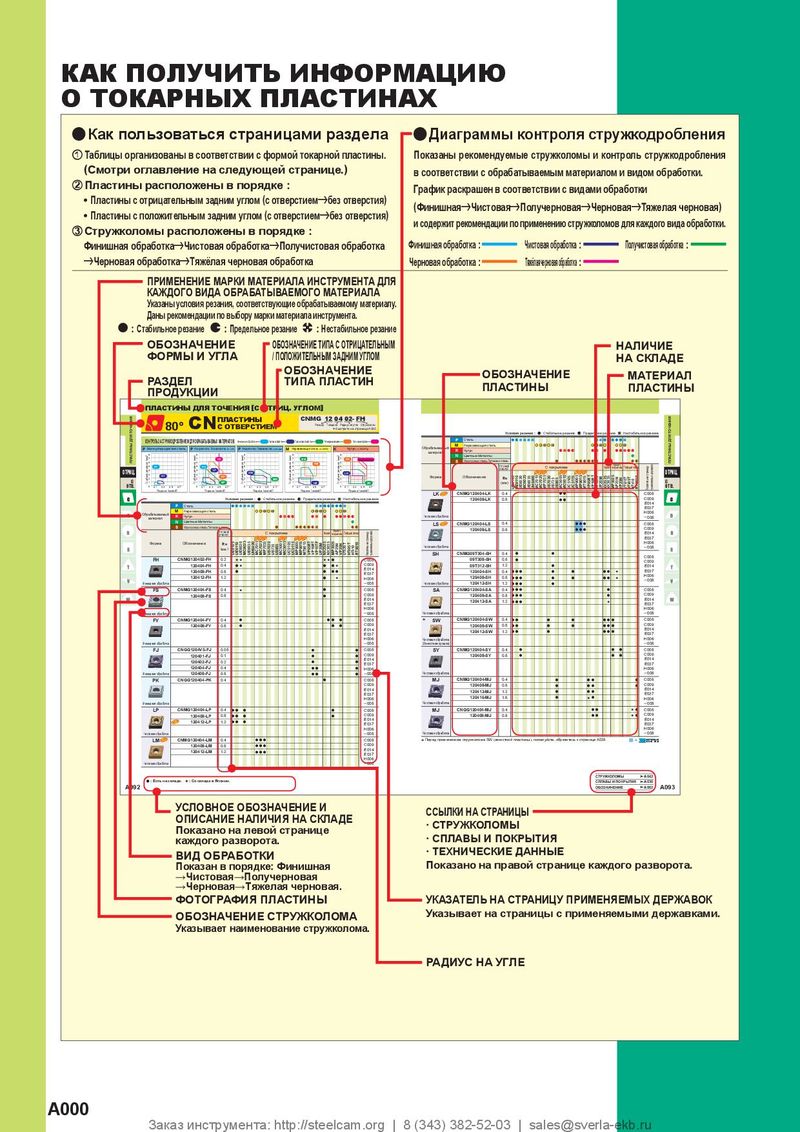 Каталог Mitsubishi Materials пластины для точения
CARBIDE
RECOMMENDED CUTTING CONDITIONS
| Work Material | Carbon stee Alloy steel( AISI 1050, A AISI P20 et | l, Cast iron, ─30HRC) ISI 35, c. | Alloy steel, Pre-harden AISI H13, A AISI P21 et | Tool steel, ed steel ISI W1-10, c. | Austenitic s Titanium all AISI 304, A Ti-6Al-4V | tainless steel, oy ISI 306, etc. | Hardened st AISI H13 etc | eel (45─55H . | RC) | |||
| DC | Revolution | Table f | eed | Revolution | Table | feed | Revolution | Table | feed | Revolution | Table | feed |
| (mm) | (min-1) | (mm/min) | (IPM) | (min-1) | (mm/min) | (IPM) | (min-1) | (mm/min) | (IPM) | (min-1) | (mm/min) | (IPM) |
| 3 | 4200 | 110 | 4.3 | 3400 | 95 | 3.7 | 2600 | 70 | 2.8 | 2100 | 50 | 2.0 |
| 4 | 3400 | 140 | 5.5 | 2700 | 110 | 4.3 | 2100 | 85 | 3.3 | 1700 | 60 | 2.4 |
| 5 | 2900 | 170 | 6.7 | 2300 | 140 | 5.5 | 1800 | 100 | 3.9 | 1500 | 70 | 2.8 |
| 6 | 2500 | 200 | 7.9 | 2000 | 170 | 6.7 | 1500 | 130 | 5.1 | 1300 | 85 | 3.3 |
| 8 | 1900 | 220 | 8.7 | 1500 | 170 | 6.7 | 1200 | 150 | 5.9 | 1000 | 85 | 3.3 |
| 10 | 1600 | 220 | 8.7 | 1300 | 170 | 6.7 | 950 | 130 | 5.1 | 800 | 85 | 3.3 |
| 12 | 1300 | 170 | 6.7 | 1100 | 150 | 5.9 | 800 | 100 | 3.9 | 670 | 70 | 2.8 |
| 16 | 1000 | 140 | 5.5 | 820 | 110 | 4.3 | 600 | 80 | 3.1 | 500 | 50 | 2.0 |
| 20 | 800 | 110 | 4.3 | 650 | 85 | 3.3 | 480 | 70 | 2.8 | 400 | 40 | 1.6 |
| Depth of cut | DC ≤0.05D ≤2.5DC ( | C (MAX.0.5m ≤0.3DC MAX.3mm) | m) | DC | ≤0.02DC ( ≤2DC ≤0.0 (MA | MAX.0.3mm) 5DC X.0.5mm) |
DC : Dia. Note 1) When cutting austenitic stainless steel, the use of water-soluble cutting fluid is especially effective. Note 2) If the depth of cut is smaller than this table, feed rate can be increased. Note 3) The above table shows cutting conditions for shoulder milling. For slotting, please reduce the feed rate only to 50% of the table figure. Please set the revolution rate at 60% and the feed rate at 40% when slotting austenitic stainless steel. I Note 4) When drilling, please set the feed rate at 1/3 or below of the above value. Note 5) If the rigidity of the machine or the work material installation is very low, or chattering is generated, please reduce the revolution and the feed rate proportionately.