Общий каталог Mitsubishi 2020 - 2021 - страница 1293
Навигация
 Каталог Mitsubishi Materials запасные части
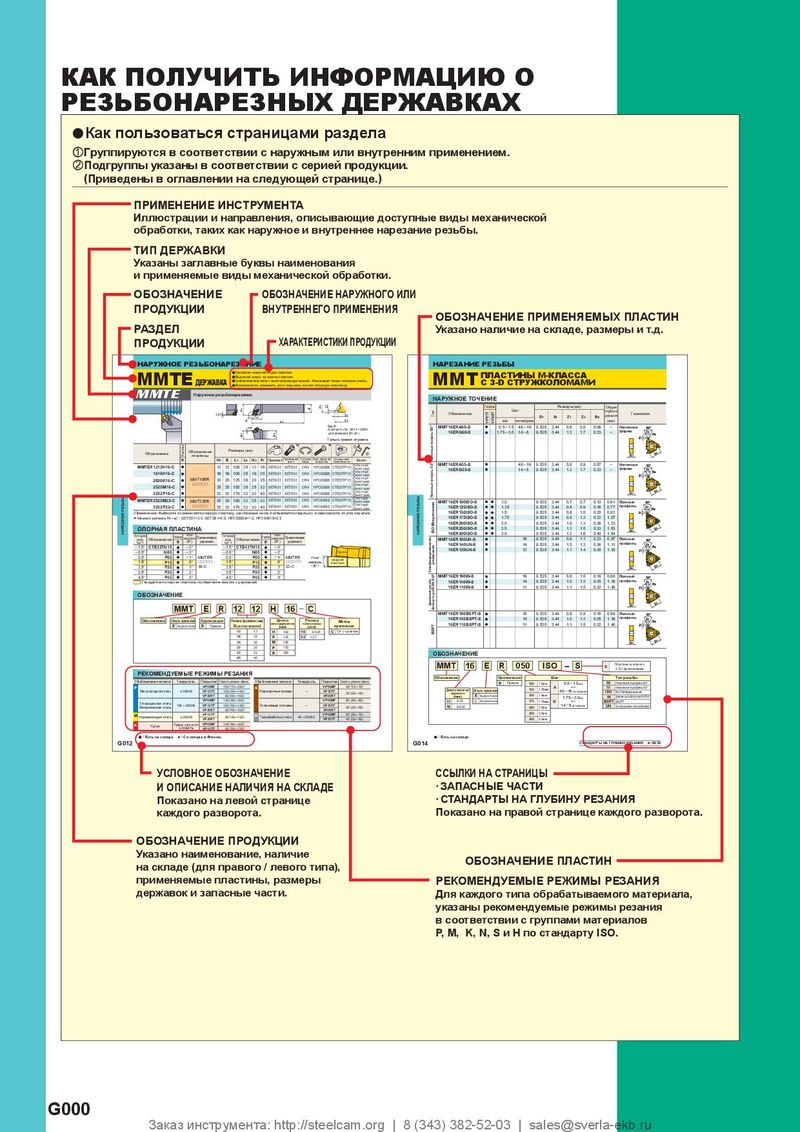 Каталог Mitsubishi Materials резьбонарезной инструмент
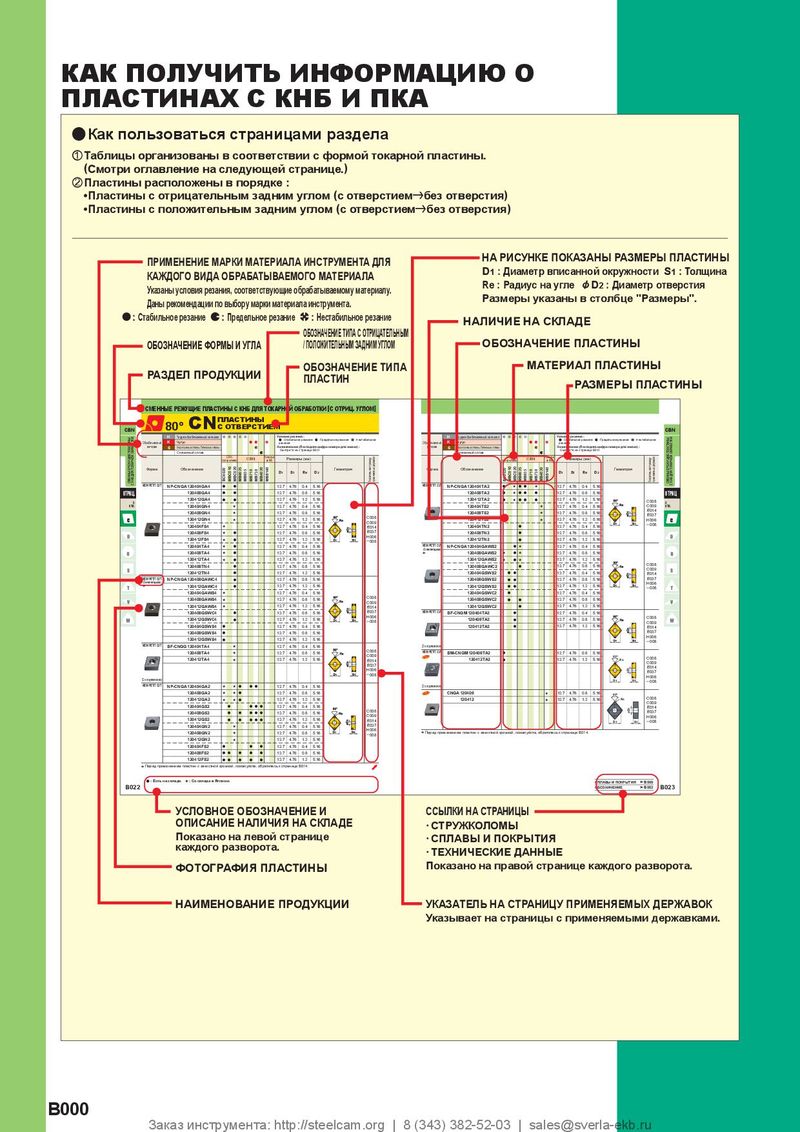 Каталог Mitsubishi Materials СНП с CBN и PCD для токарной обработки
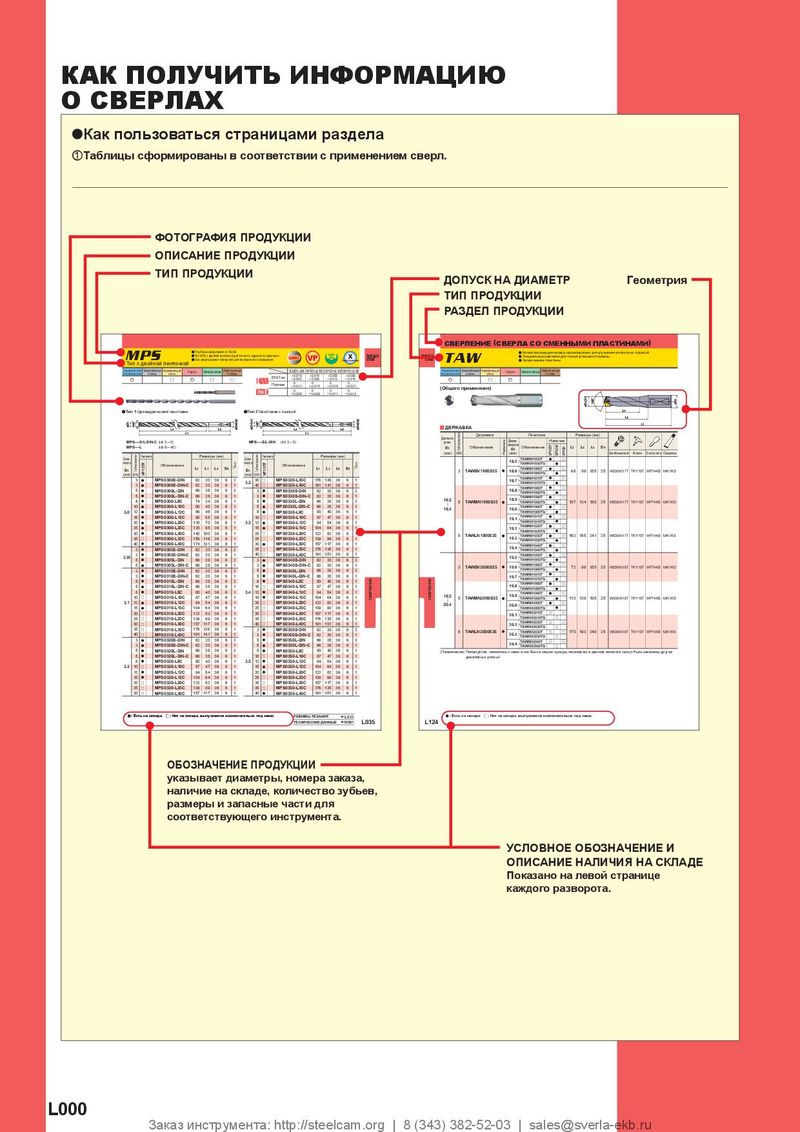 Каталог Mitsubishi Materials сверлильные инструменты
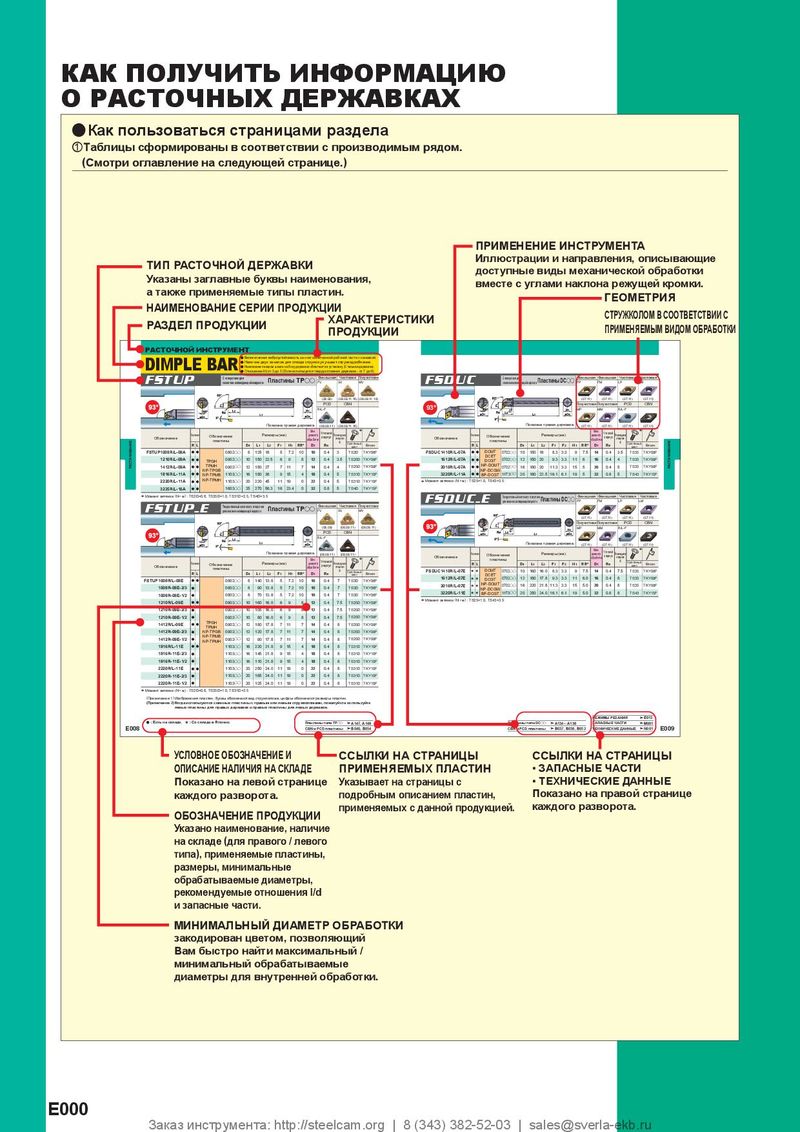 Каталог Mitsubishi Materials расточной инструмент
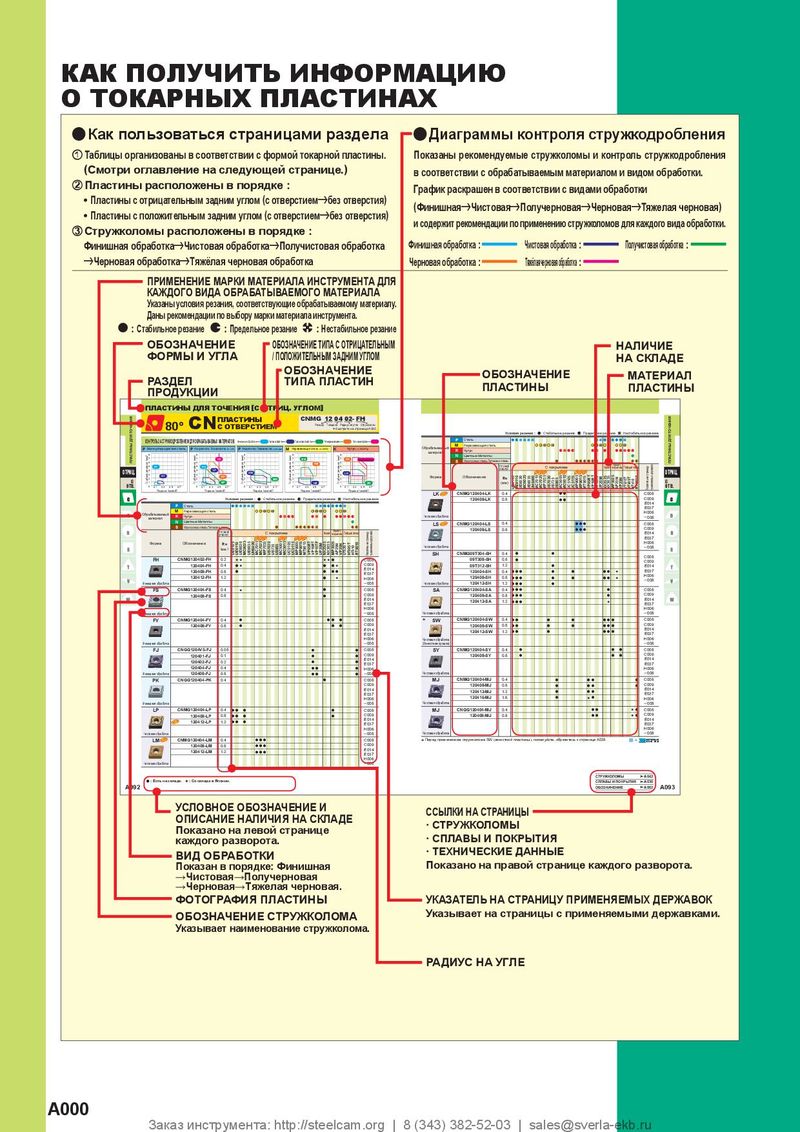 Каталог Mitsubishi Materials пластины для точения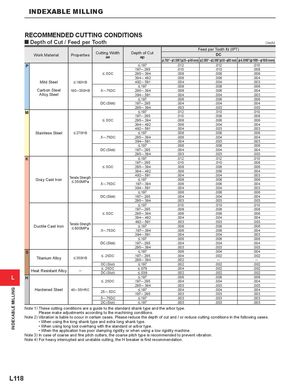
y Depth of Cut / Feed per Tooth (inch)
| Cuttin Width | Deth of Cut | Feed per Toothfz (IPT) | ||
| Work Material | Properties | g ae | p a | DC |
| p | &.750"─&1.500"(&25─&40 mm) &2.000"─&3.000"(&50─&80 mm) &4.000"(&100─&160 mm) | |||
| P | .012 .012 .010 | |||
| .197─.295 | .010 .010 .008 | |||
| .295─.394 | .008 .008 .006 | |||
| .394─.492 | .006 .006 .004 | |||
| Mild Steel | .492─.591 | .004 .004 .003 | ||
| .008 .008 .006 | ||||
| Carbon Steel | 180─350HB | .5─.75DC | .295─.394 | .006 .006 .004 |
| Alloy Steel | .394─.591 | .004 .004 .003 | ||
| .006 .006 .006 | ||||
| DC(Slot) | .197─.295 | .004 .004 .004 | ||
| .295─.394 | .003 .003 .003 | |||
| M | .012 .010 .010 | |||
| .197─.295 | .010 .008 .008 | |||
| .295─.394 | .008 .006 .006 | |||
| .394─.492 | .006 .004 .004 | |||
| .492─.591 | .004 .003 .003 | |||
| Stainless Steel | .008 .006 .006 | |||
| .5─.75DC | .295─.394 | .006 .004 .004 | ||
| .394─.591 | .004 .003 .003 | |||
| .006 .006 .006 | ||||
| DC(Slot) | .197─.295 | .004 .004 .004 | ||
| .295─.394 | .003 .003 .003 | |||
| K | 012 012 010 | |||
| . .197─.295 | . . . .010 .010 .008 | |||
| .295─.394 | .008 .008 .006 | |||
| .394─.492 | .006 .006 .004 | |||
| .492─.591 | .004 .004 .003 | |||
| Gray Cast Iron | Tensile Strength | .008 .008 .006 | ||
| .5─.75DC | .197─.394 | .006 .006 .004 | ||
| .394─.591 | .004 .004 .003 | |||
| 006 006 006 | ||||
| DC(Slot) | . .197─.295 | . . . .004 .004 .004 | ||
| .295─.394 | .003 .003 .003 | |||
| .010 .010 .010 | ||||
| .197─.295 | .008 .008 .008 | |||
| .295─.394 | .006 .006 .006 | |||
| .394─.492 | .004 .004 .004 | |||
| Til Stth | .492─.591 | .003 .003 .003 | ||
| Ductile Cast Iron | ense reng | .008 .008 .006 | ||
| .5─.75DC | .197─.394 | .006 .006 .004 | ||
| .394─.591 | .004 .004 .003 | |||
| 006 006 006 | ||||
| DC(Slot) | . .197─.295 | . . . .004 .004 .004 | ||
| .295─.394 | .003 .003 .003 | |||
| S | .006 .004 .004 | |||
| .197─.295 | .004 .002 .002 | |||
| Titanium Alloy | 295─394 | 002 ─ ─ | ||
| DC(Slot) | .. | . .002 .002 .002 | ||
| .004 .002 .002 | ||||
| Heat Resistant Alloy | ─ | DC(Slot) | 002 002 002 | |
| H | . | . . . .006 .006 .006 | ||
| .197─.295 | .004 .004 .004 | |||
| .295─.394 | .003 .003 .003 | |||
| Hardened Steel | 40─55HRC | .004 .004 .004 | ||
| .25─.5DC | .197─.295 | .003 .003 .003 | ||
| .5─.75DC | .003 .003 .003 | |||
| DC(Slot) | .003 .003 .003 |
Note 1) These cutting conditions are a guide to the standard shank type and the arbor type. Please make adjustments according to the machining conditions. Note 2) Vibration is liable to occur in certain cases. Please reduce the depth of cut and / or reduce cutting conditions in the following cases.
- When using the long shank type and extra long shank type.
- When using long tool overhang with the standard or arbor type.
- When the application has poor clamping rigidity or when using a low rigidity machine.
Note 3) In case of coarse and fine pitch cutters, the coarse pitch type is recommended to prevent vibration. Note 4) For heavy interrupted and unstable cutting, the H breaker is first recommendation.