Общий каталог Mitsubishi 2020 - 2021 - страница 1747
Навигация
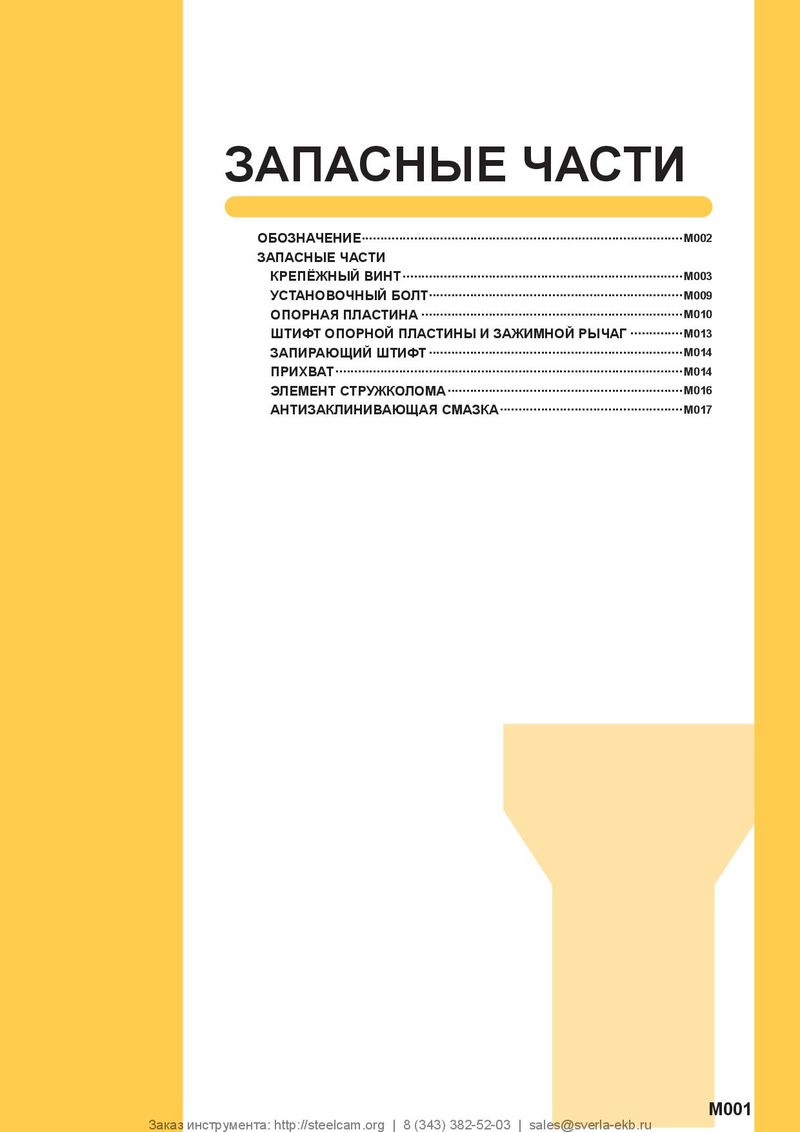 Каталог Mitsubishi Materials запасные части
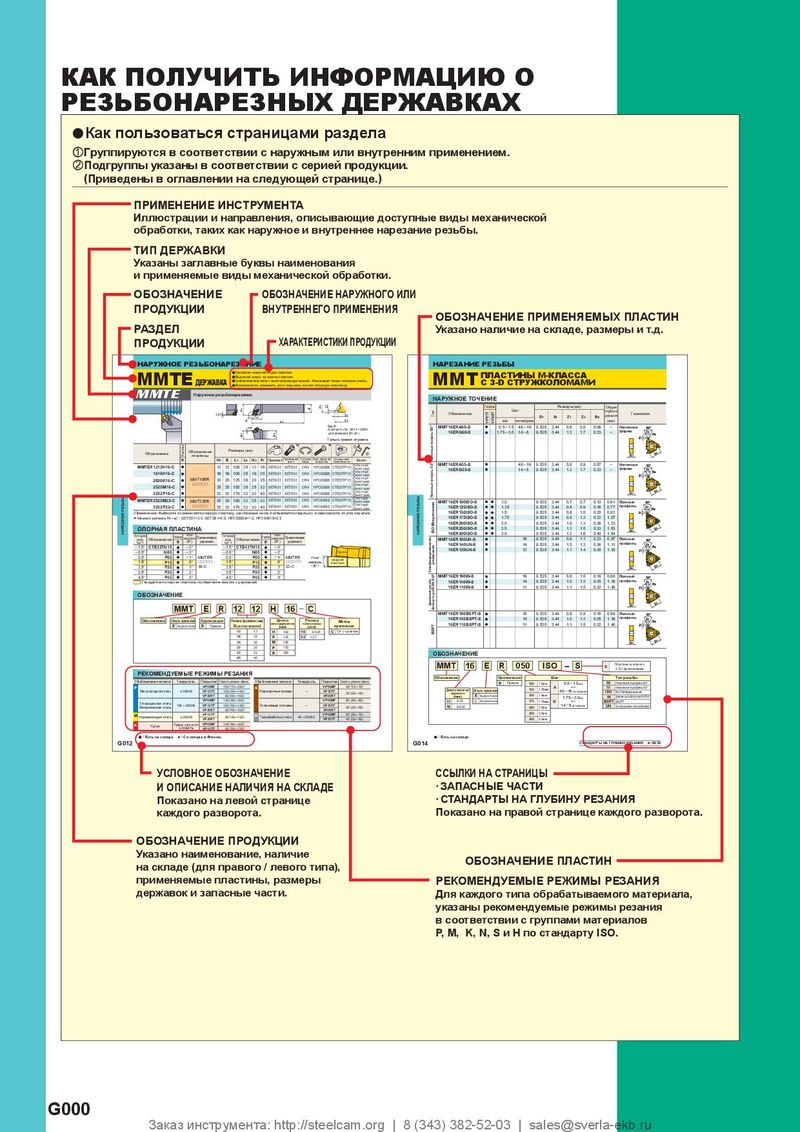 Каталог Mitsubishi Materials резьбонарезной инструмент
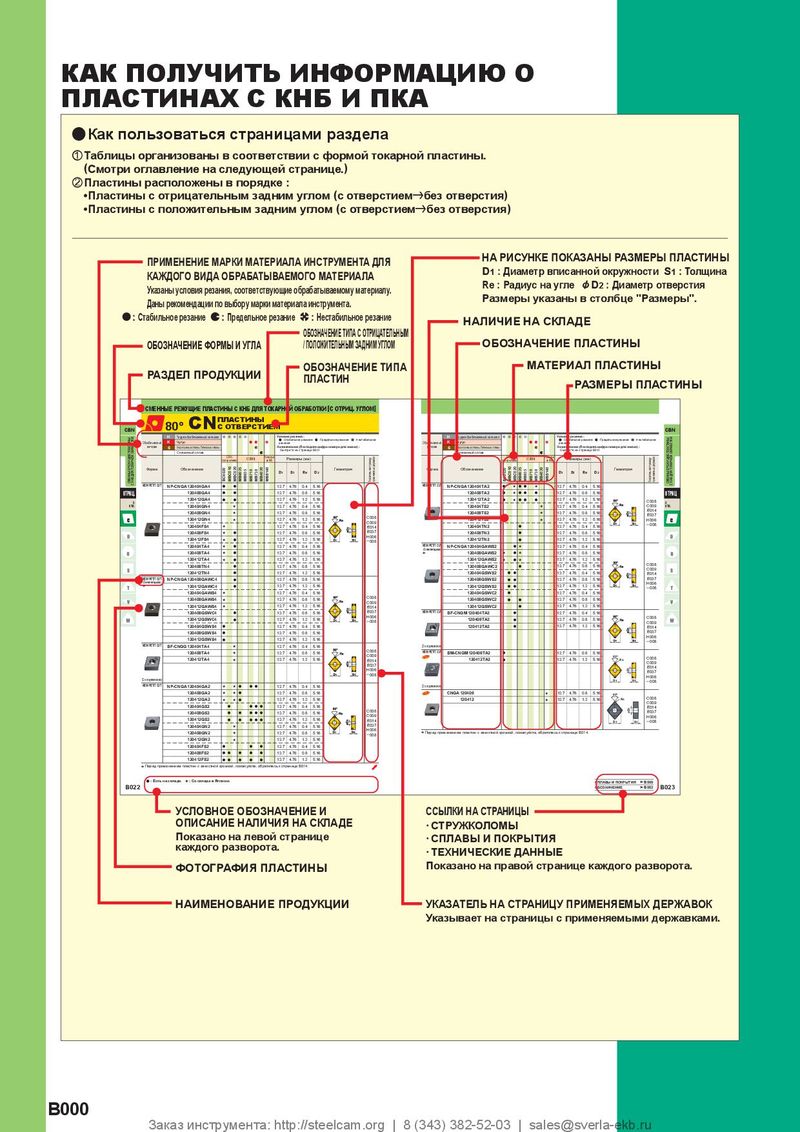 Каталог Mitsubishi Materials СНП с CBN и PCD для токарной обработки
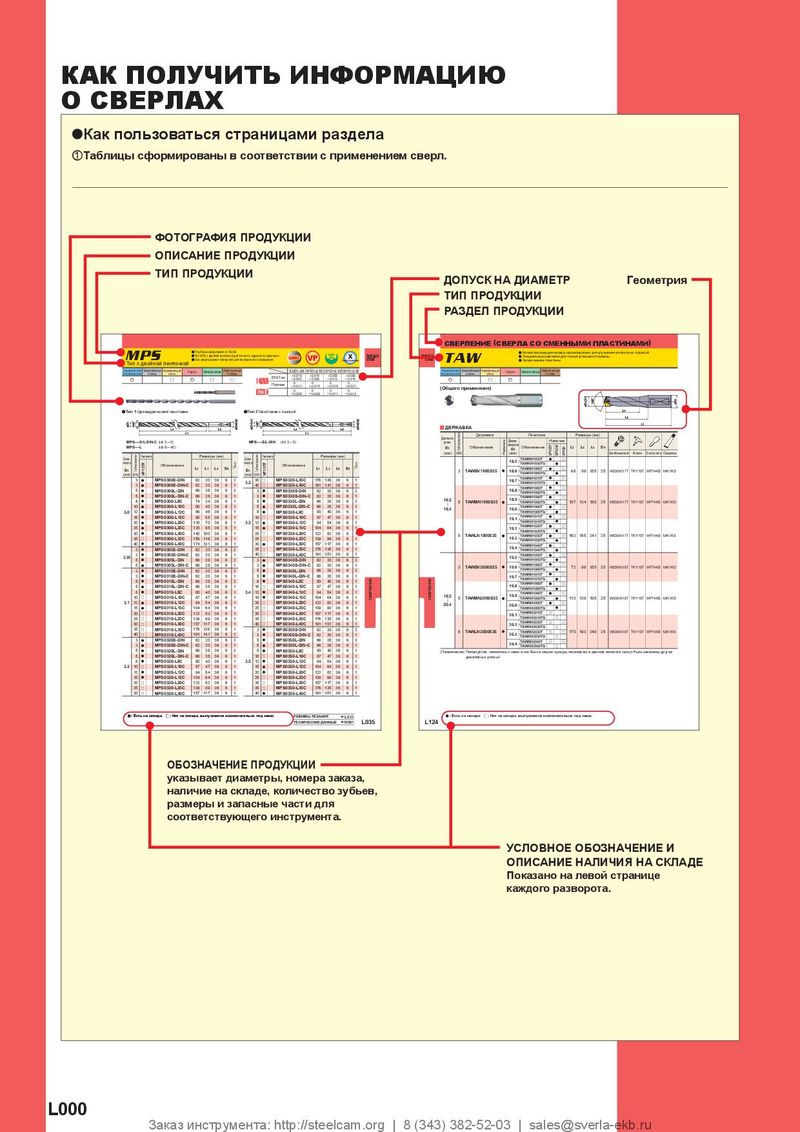 Каталог Mitsubishi Materials сверлильные инструменты
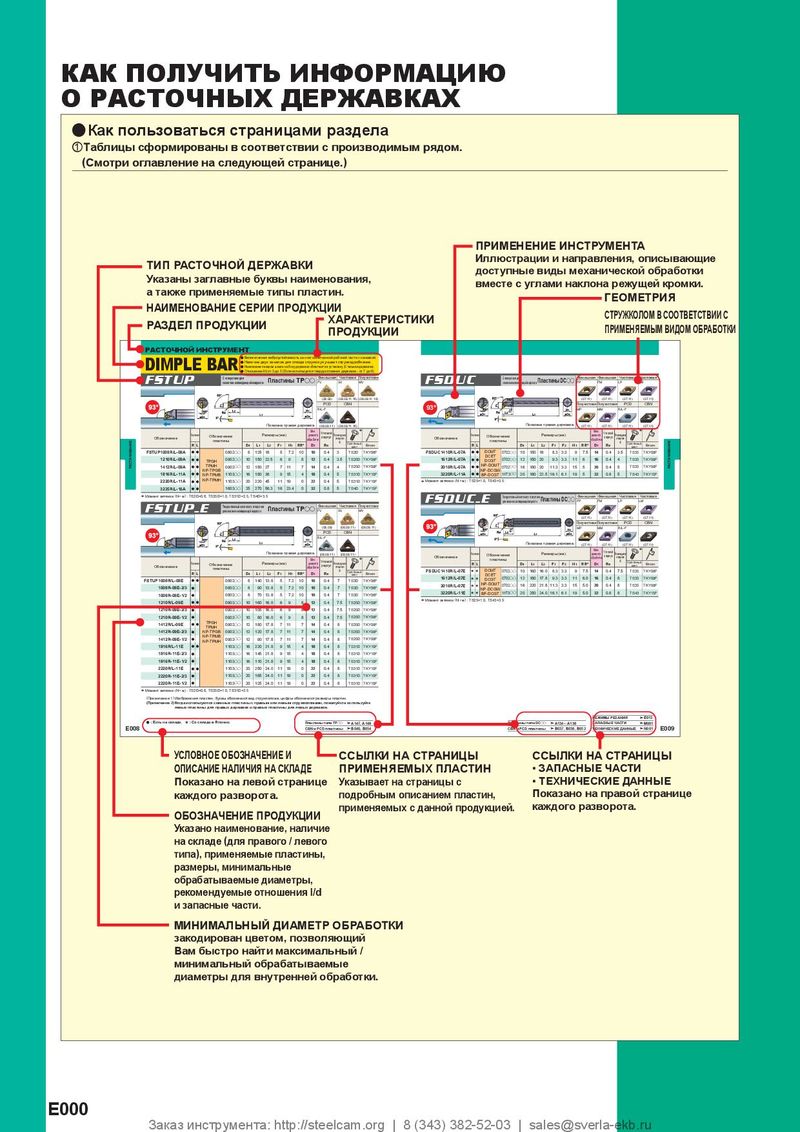 Каталог Mitsubishi Materials расточной инструмент
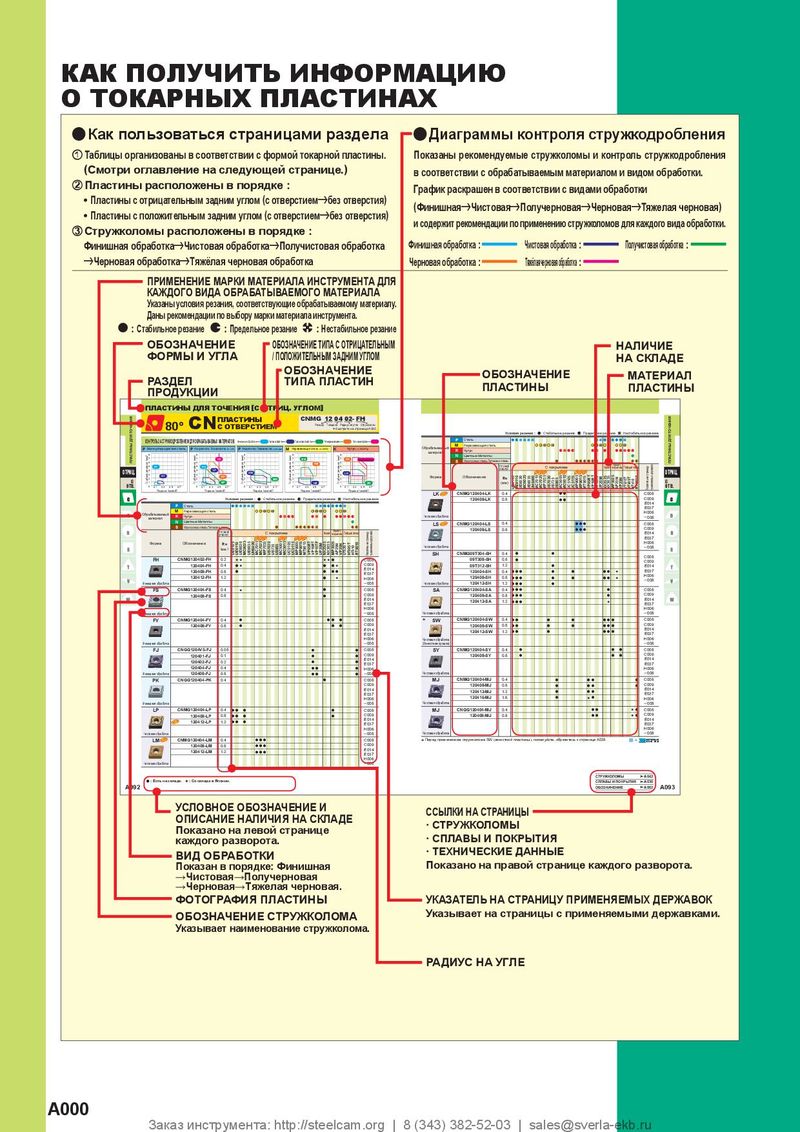 Каталог Mitsubishi Materials пластины для точения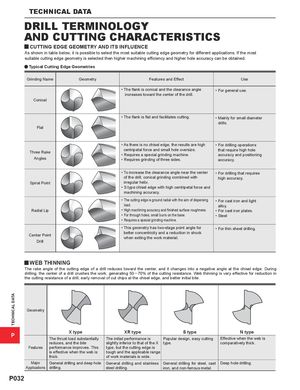
DRILL TERMINOLOGY
AND CUTTING CHARACTERISTICS
y CUTTING EDGE GEOMETRY AND ITS INFLUENCE
As shown in table below, it is possible to select the most suitable cutting edge geometry for different applications. If the most suitable cutting edge geometry is selected then higher machining efficiency and higher hole accuracy can be obtained. a Typical Cutting Edge Geometries
| Grinding Name | Geometry | Features and Effect | Use |
| Conical | • The flank is conical and the clearance angle increases toward the center of the drill. | • For general use. | |
| Flat | • The flank is flat and facilitates cutting. | • Mainly for small diameter drills. | |
| Three Rake Angles | • As there is no chisel edge, the results are high centripetal force and small hole oversize. • Requires a special grinding machine. • Requires grinding of three sides. | • For drilling operations that require high hole accuracy and positioning accuracy. | |
| Spiral Point | • To increase the clearance angle near the center of the drill, conical grinding combined with irregular helix. • S type chisel edge with high centripetal force and machining accuracy. | • For drilling that requires high accuracy. | |
| Radial Lip | •The cutting edge is ground radial with the aim of dispersing load. •High machining accuracy and finished surface roughness. •For through holes, small burrs on the base. •Requires a special grinding machine. | • For cast iron and light alloy. • For cast iron plates. • Steel | |
| Center Point Drill | • This geometry has two-stage point angle for better concentricity and a reduction in shock when exiting the work material. | • For thin sheet drilling. |
y WEB THINNING
The rake angle of the cutting edge of a drill reduces toward the center, and it changes into a negative angle at the chisel edge. During drilling, the center of a drill crushes the work, generating 50─70% of the cutting resistance. Web thinning is very effective for reduction in the cutting resistance of a drill, early removal of cut chips at the chisel edge, and better initial bite.
Geometry
P X type XR type S type N type
| The thrust load substantially | The initial performance is | Popular design, easy cutting | Effective when the web is | |
| reduces, and the bite | slightly inferior to that of the X | type. | comparatively thick. | |
| Features | performance improves. This | type, but the cutting edge is | ||
| is effective when the web is | tough and the applicable range | |||
| thick. | of work materials is wide. | |||
| Major | General drilling and deep hole | General drilling and stainless | General drilling for steel, cast | Deep hole drilling. |
| Applications | drilling. | steel drilling. | iron, and non-ferrous metal. |