Общий каталог Mitsubishi 2020 - 2021 - страница 1746
Навигация
 Каталог Mitsubishi Materials запасные части
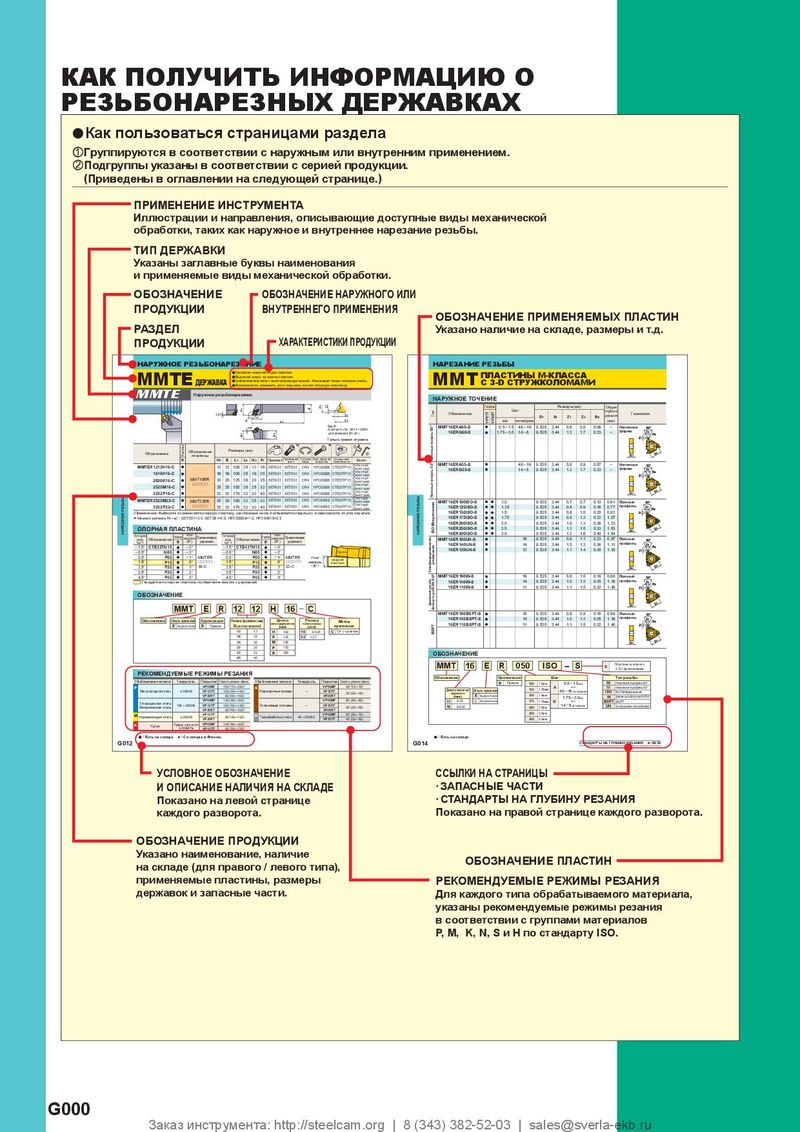 Каталог Mitsubishi Materials резьбонарезной инструмент
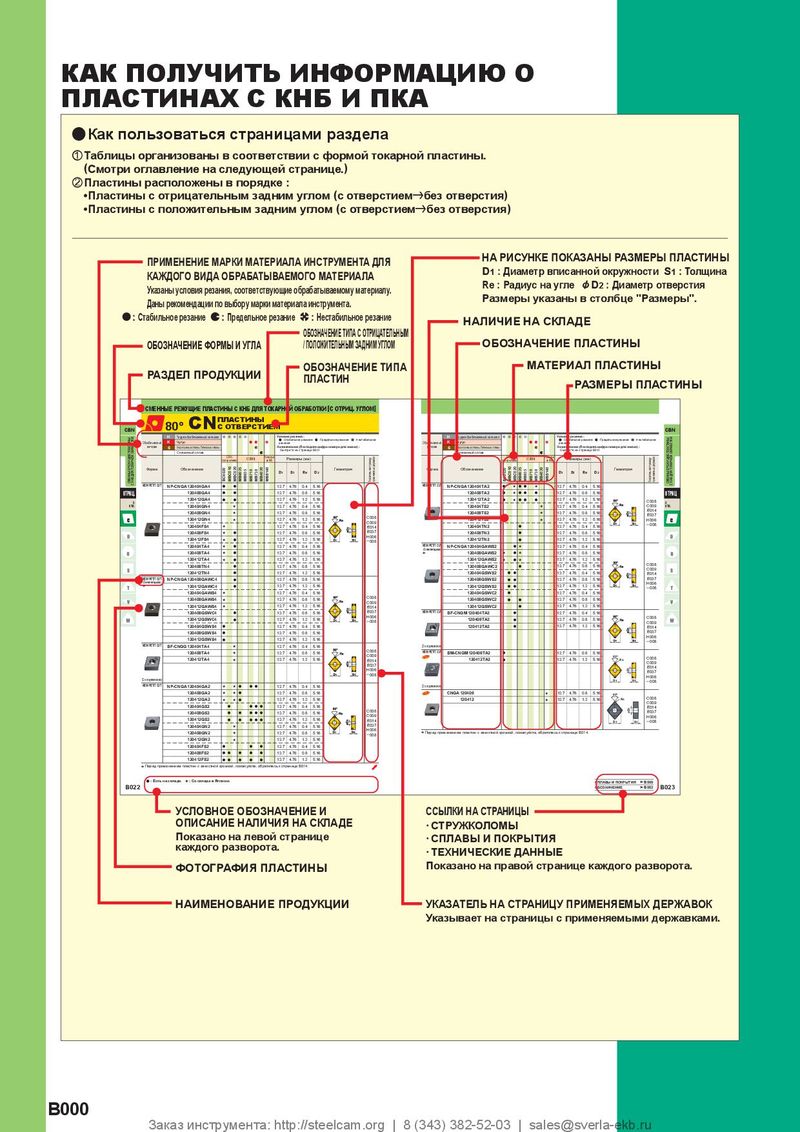 Каталог Mitsubishi Materials СНП с CBN и PCD для токарной обработки
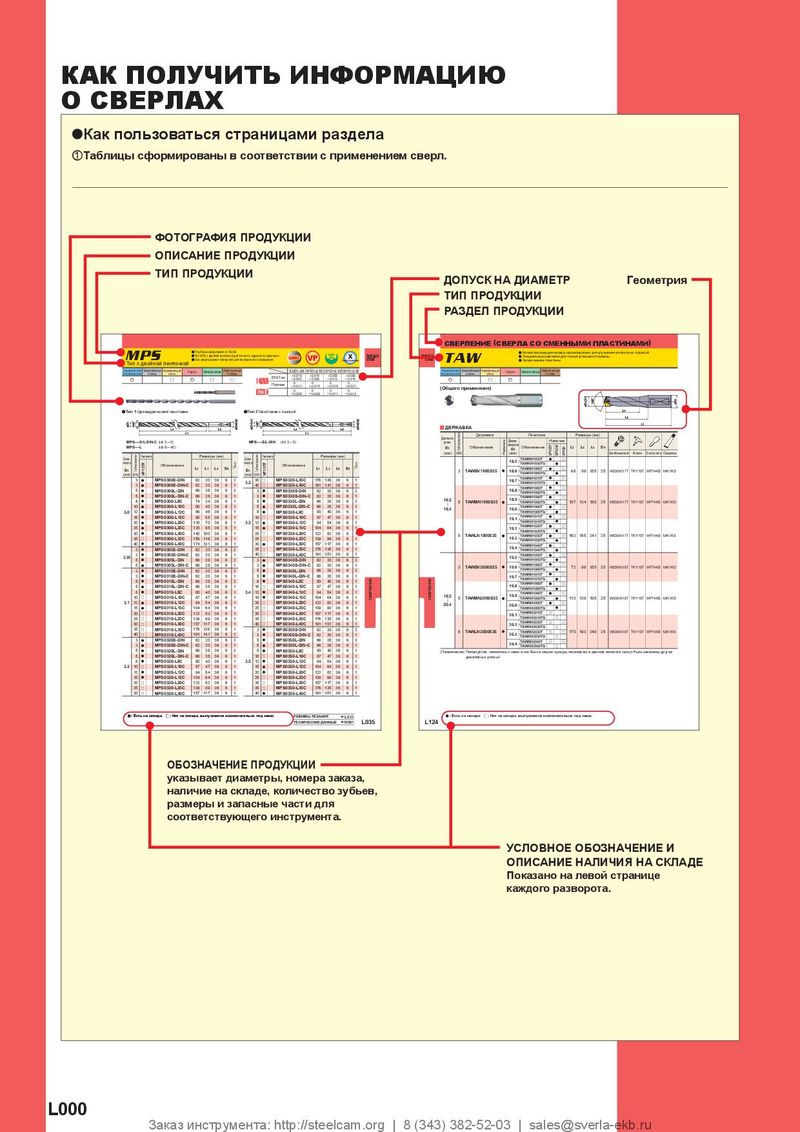 Каталог Mitsubishi Materials сверлильные инструменты
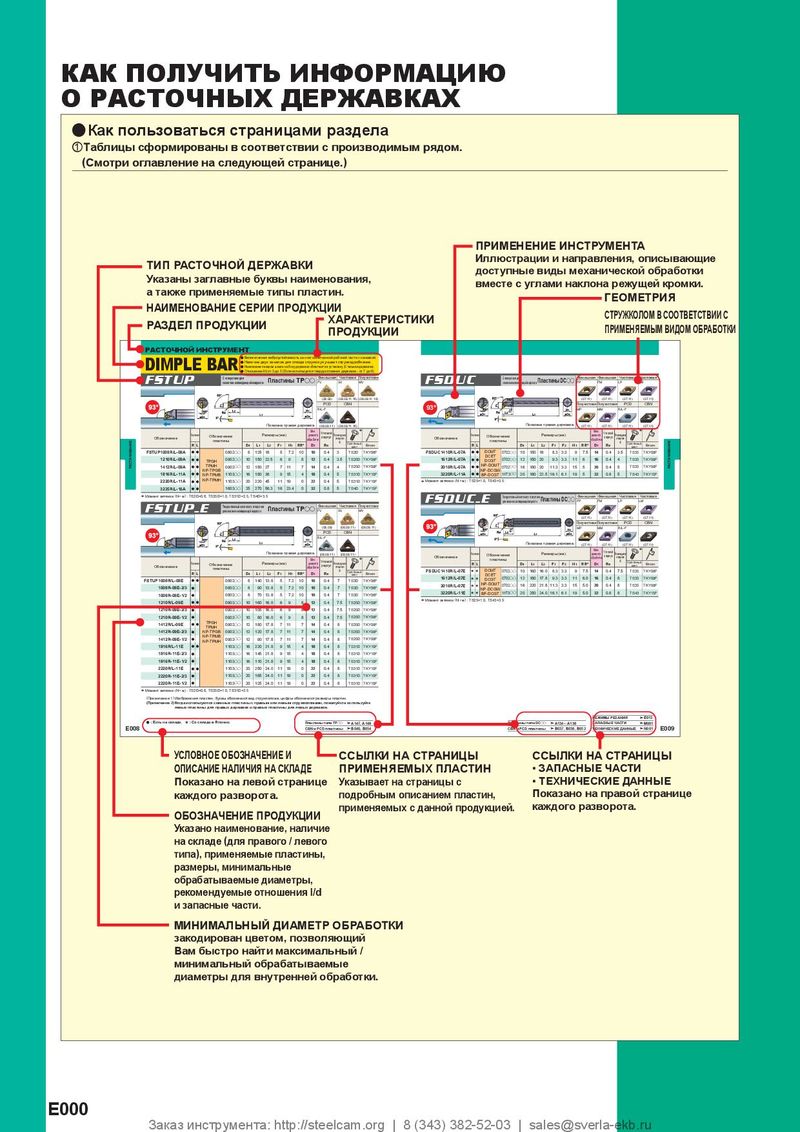 Каталог Mitsubishi Materials расточной инструмент
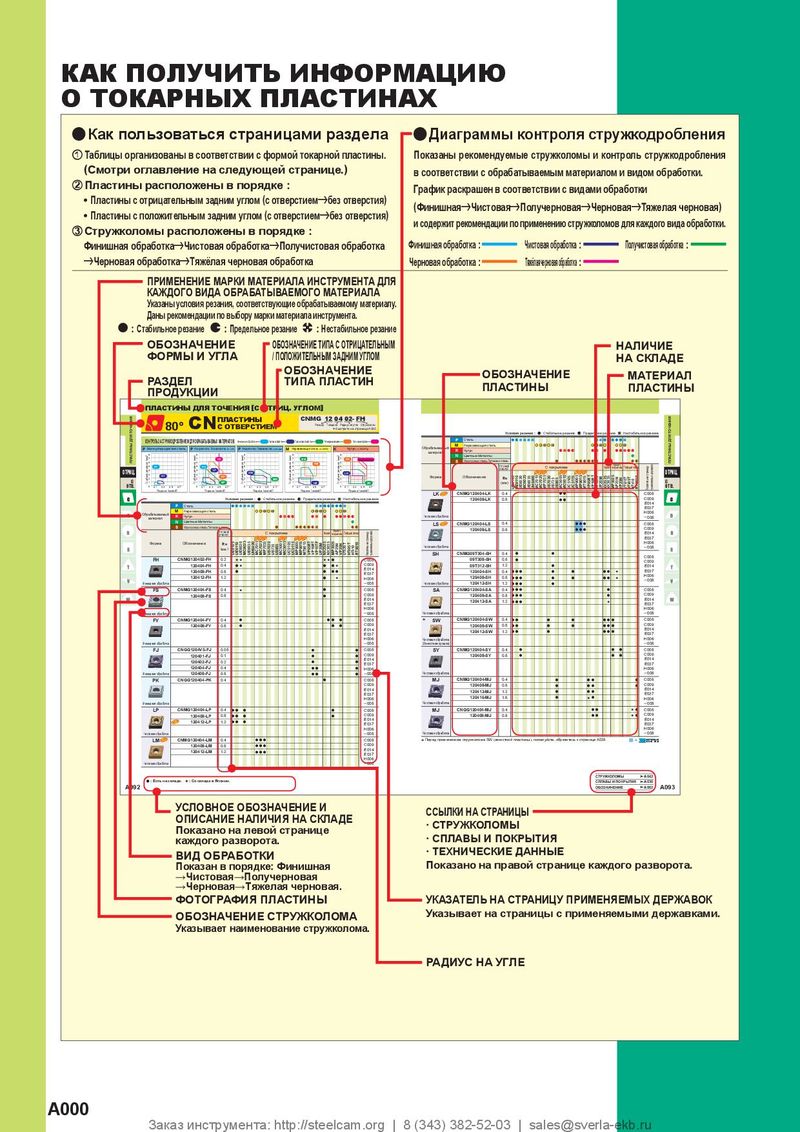 Каталог Mitsubishi Materials пластины для точения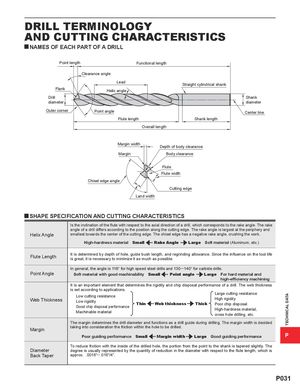
DRILL TERMINOLOGY
AND CUTTING CHARACTERISTICS
y NAMES OF EACH PART OF A DRILL
Point length Functional length Clearance angle Lead Straight cylindrical shank Flank Helix angle Drill Shank diameter diameter
Outer corner Point angle Center line
Flute length Shank length Overall length
Margin width Depth of body clearance Margin Body clearance Flute Flute width Chisel edge angle Cutting edge Land width
y SHAPE SPECIFICATION AND CUTTING CHARACTERISTICS
Is the inclination of the flute with respect to the axial direction of a drill, which corresponds to the rake angle. The rake angle of a drill differs according to the position along the cutting edge. The rake angle is largest at the periphery and Helix Angle smallest towards the center of the cutting edge. The chisel edge has a negative rake angle, crushing the work.
| High-hardness material Small | Rake Angle | Large | Soft material (Aluminum, etc.) | ||
| Flute Length | It is determined by depth of hole, guide bush length, and regrinding allowance. Since the influence on the tool life | ||||
| is great, it is necessary to minimize it as much as possible. | |||||
| In general, the angle is 118° for high speed steel drills and 130 ─140° for carbide drills. |
Point Angle Soft material with good machinability Small Point angle Large For hard material and
high-efficiency machining It is an important element that determines the rigidity and chip disposal performance of a drill. The web thickness is set according to applications. Large cutting resistance
Low cutting resistance Web Thickness High rigidity Low rigidity Thin Web thickness Thick Poor chip disposal Good chip disposal performance High-hardness material, Machinable material cross hole drilling, etc. The margin determines the drill diameter and functions as a drill guide during drilling. The margin width is decided Margin taking into consideration the friction within the hole to be drilled. Poor guiding performance P
Small Margin width Large Good guiding performance
To reduce friction with the inside of the drilled hole, the portion from the point to the shank is tapered slightly. The Diameter degree is usually represented by the quantity of reduction in the diameter with respect to the flute length, which is Back Taper approx. .0016"─.016"/4".