Общий каталог Mitsubishi 2020 - 2021 - страница 1736
Навигация
 Каталог Mitsubishi Materials запасные части
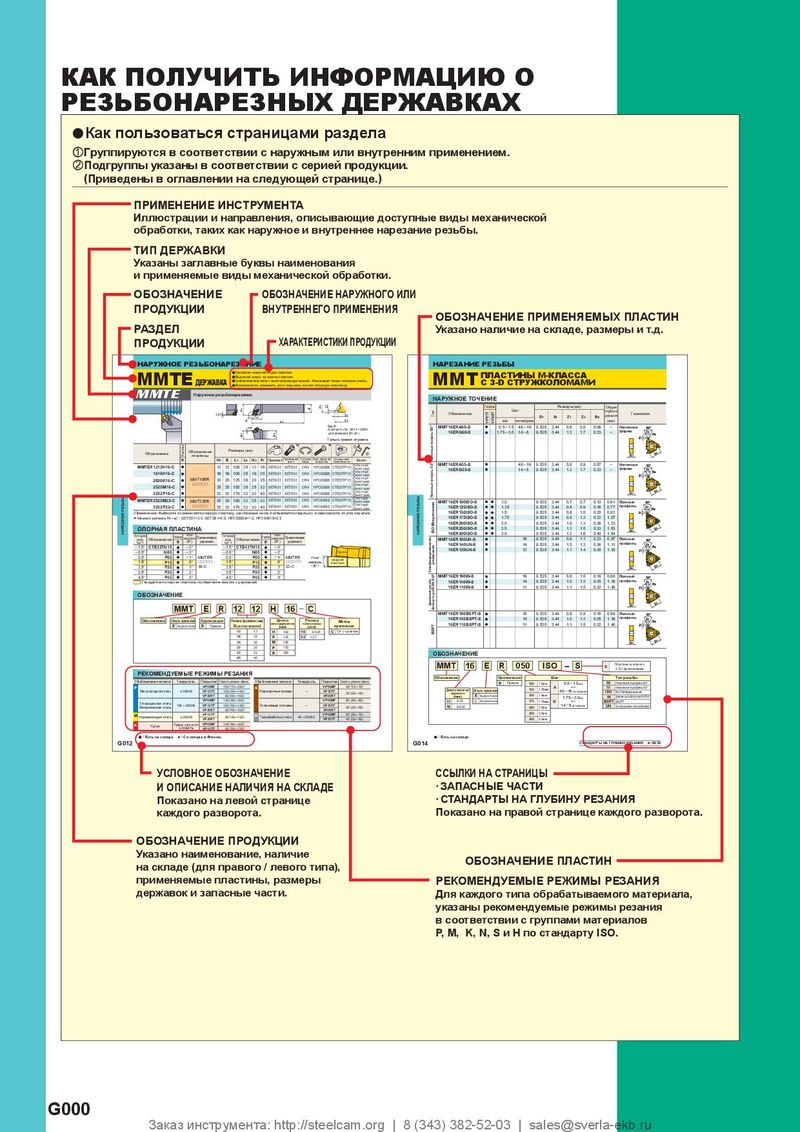 Каталог Mitsubishi Materials резьбонарезной инструмент
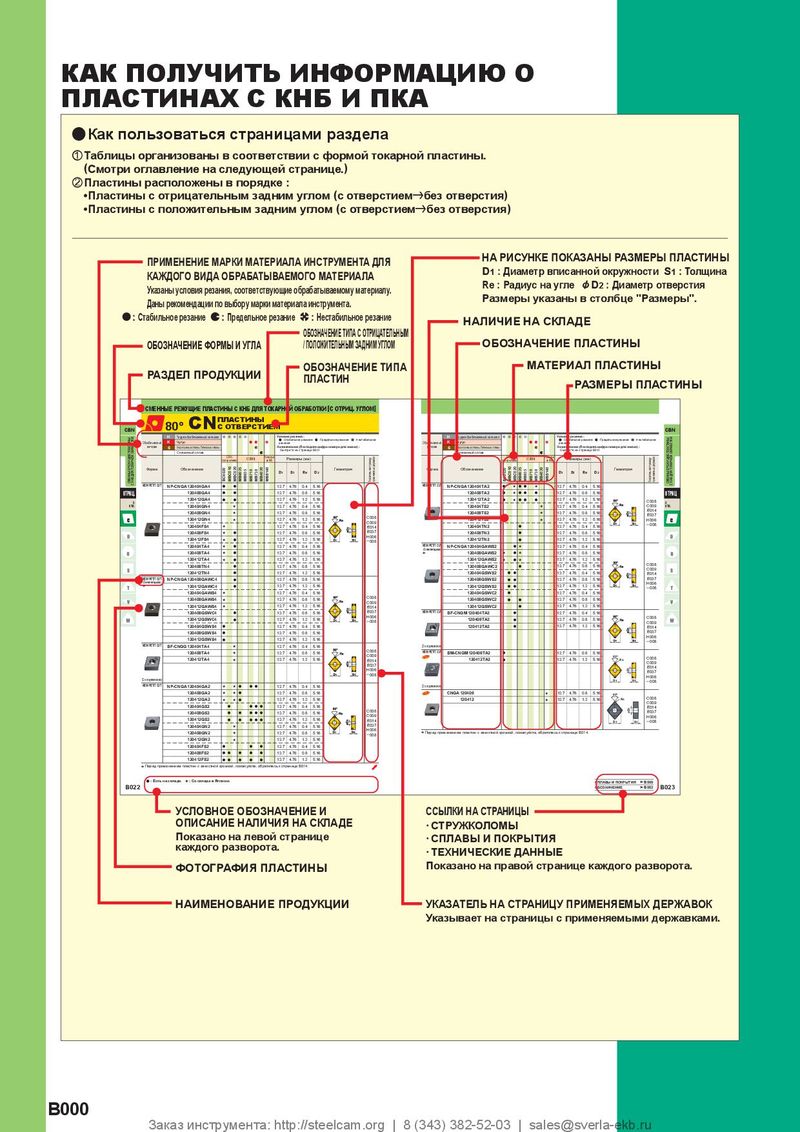 Каталог Mitsubishi Materials СНП с CBN и PCD для токарной обработки
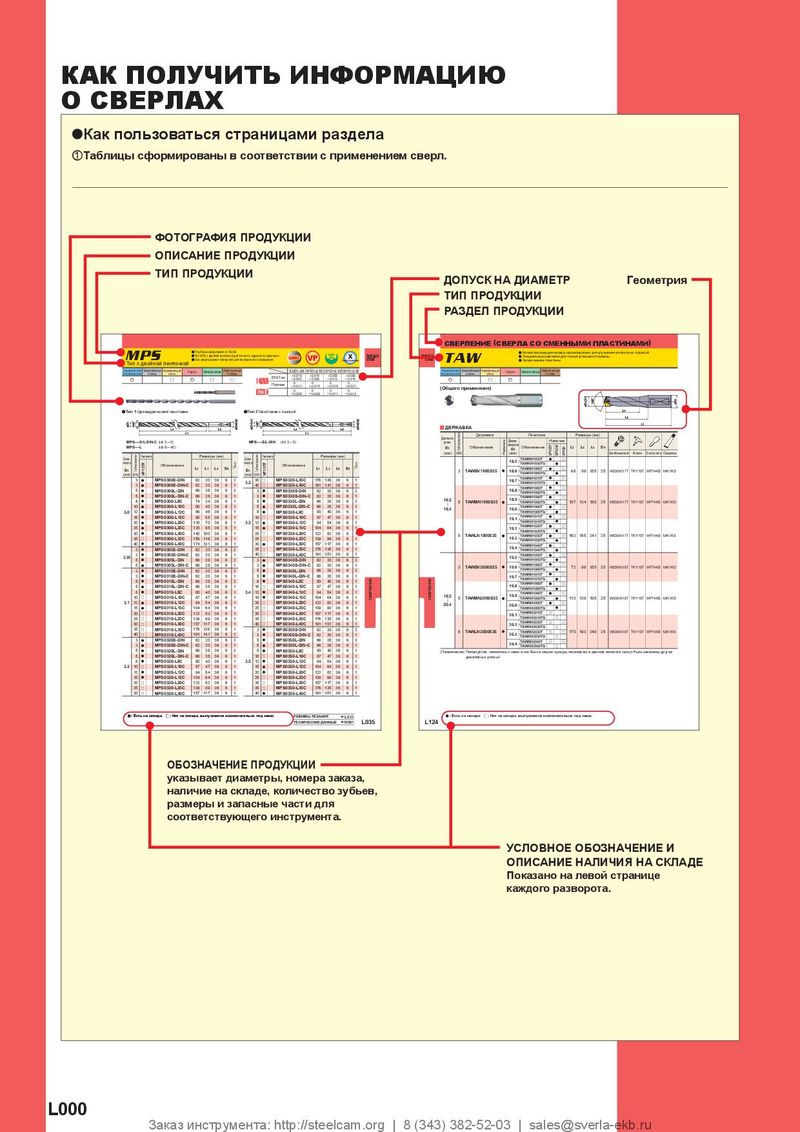 Каталог Mitsubishi Materials сверлильные инструменты
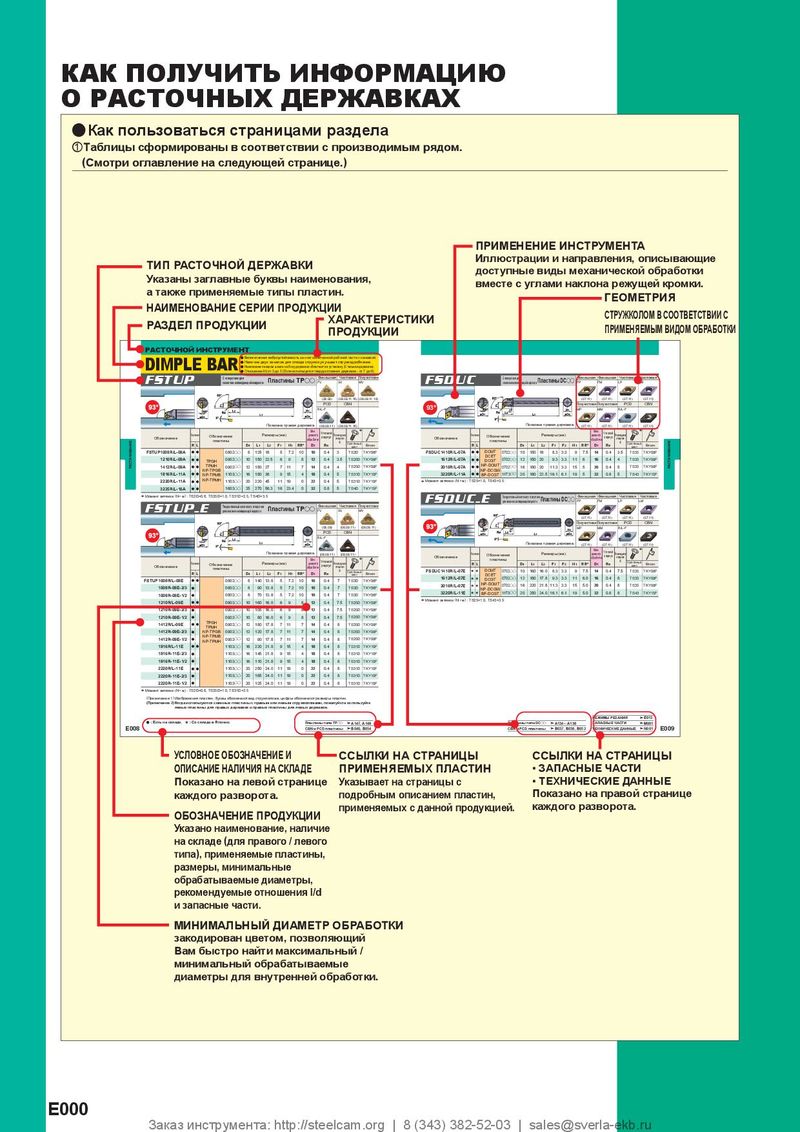 Каталог Mitsubishi Materials расточной инструмент
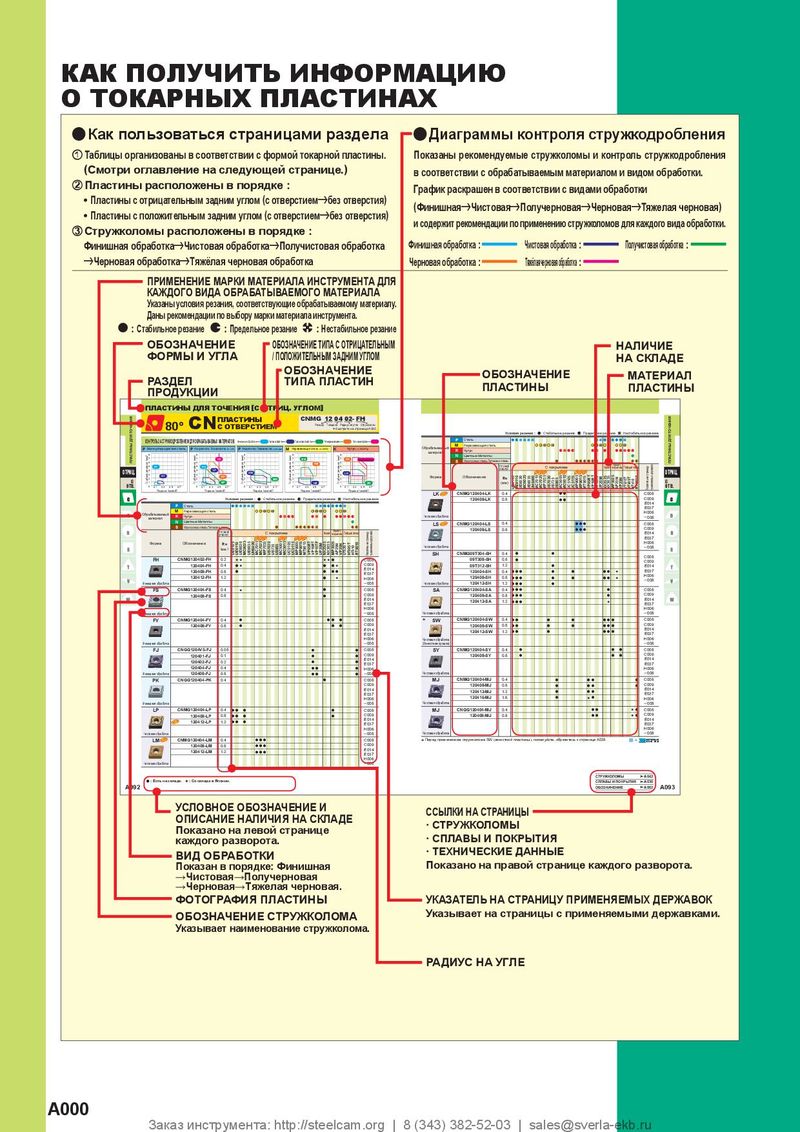 Каталог Mitsubishi Materials пластины для точения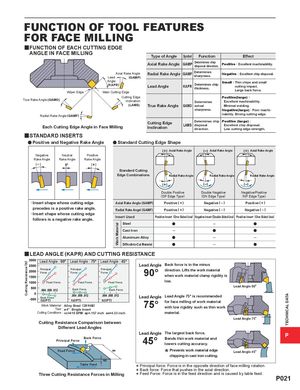
FOR FACE MILLING
y FUNCTION OF EACH CUTTING EDGE
ANGLE IN FACE MILLING
| Type of Angle | Symbol | Function | Effect |
| Axial Rake Angle | GAMP | Determines chip disposal direction. | f Positive:Excellent machinability. |
| Radial Rake Angle | GAMF | Determines sharpness. | Negative : Excellent chip disposal. |
| Lead Angle | KAPR | Determines chip thickness. | Small : Thin chips and small cutting impact. Large back force. |
| True Rake Angle | GAMO | Determines actual sharpness. | Positive(large) : Excellent machinability. Minimal welding. Negative(large) : Poor machi- nability. Strong cutting edge. |
| Cutting Edge Inclination | LAMS | Determines chip disposal direction. | Positive (large) : Excellent chip disposal. Low cutting edge strength. |
Lead (GAMP)
Wiper Edge Main Cutting Edge
y STANDARD INSERTS
a Positive and Negative Rake Angle a Standard Cutting Edge Shape
| Axial RakeAngle | Axial RakeAngle | Axial RakeAngle | ||
| S Ed | tandard Cutting ge Combinations | Double Positive (DP Edge Type) Radial RakeAngle | Radial RakeAngle Double Negative (DN Edge Type) | Radial RakeAngle Negative/Positive (NP Edge Type) |
| Axia | l Rake Angle (GAMP) | Positive ( + ) | Negative ( – ) | Positive ( + ) |
| Radi | al Rake Angel (GAMF) | Positive ( + ) | Negative ( – ) | Negative ( – ) |
| Inse | rt Used | Positive Insert(One Sided Use) | Negative Insert(Double Sided Use) | Positive Insert(One Sided Use) |
| rial | Steel | a | ─ | a |
| Mate | Cast Iron | ─ | a | a |
| ork | Aluminum Alloy | a | ─ | ─ |
| W | Difficult-to-Cut Material | a | ─ | a |
| Negative | Neutral | Positive |
| Rake Angle | Rake Angle | Rake Angle |
- Insert shape whose cutting edge
y LEAD ANGLE (KAPR) AND CUTTING RESISTANCE
Lead Angle : 90° Lead Angle : 75° Lead Angle : 45°
(N Lead Angle90° Back force is in the minus
| Principal | Principal | Principal | direction. Lifts the work material |
| Force | Force | Force | |
| when work material clamp rigidity is | |||
| low. |
| Feed Force | Feed Force | Feed Force | ||||||
| Lead Angle 90° | ||||||||
| Back Force | Back Force | |||||||
| Lead Angle | Lead Angle 75° is recommended | |||||||
| Back Force | 75° |
fz(IPT) fz(IPT) fz(IPT) for face milling of work material
Work Material : Alloy Steel (281HB) with low rigidity such as thin work Tool : ø4" Single Insert Cutting Conditions : vc=410 SFM ap=.157 inch ae=4.33 inch material. Lead Angle 75°
Cutting Resistance Comparison between
Different Lead Angles
| Lead Angle45° | The largest back force. | P | ||
| Back Force | Bends thin work material and | |||
| Principal Force | ||||
| lowers cutting accuracy.* |
| Feed Force | ae | Prevents work material edge | Lead Angle 45° | ||
| chipping in cast iron cutting. | |||||
| Table Feed | ** Principal force: Force is in the opposite direction of face milling rotation. | ||||
| * Back force: Force that pushes in the axial direction. |
Three Cutting Resistance Forces in Milling Feed Force: Force is in the feed direction and is caused by table feed. P021