Общий каталог Mitsubishi 2020 - 2021 - страница 1725
Навигация
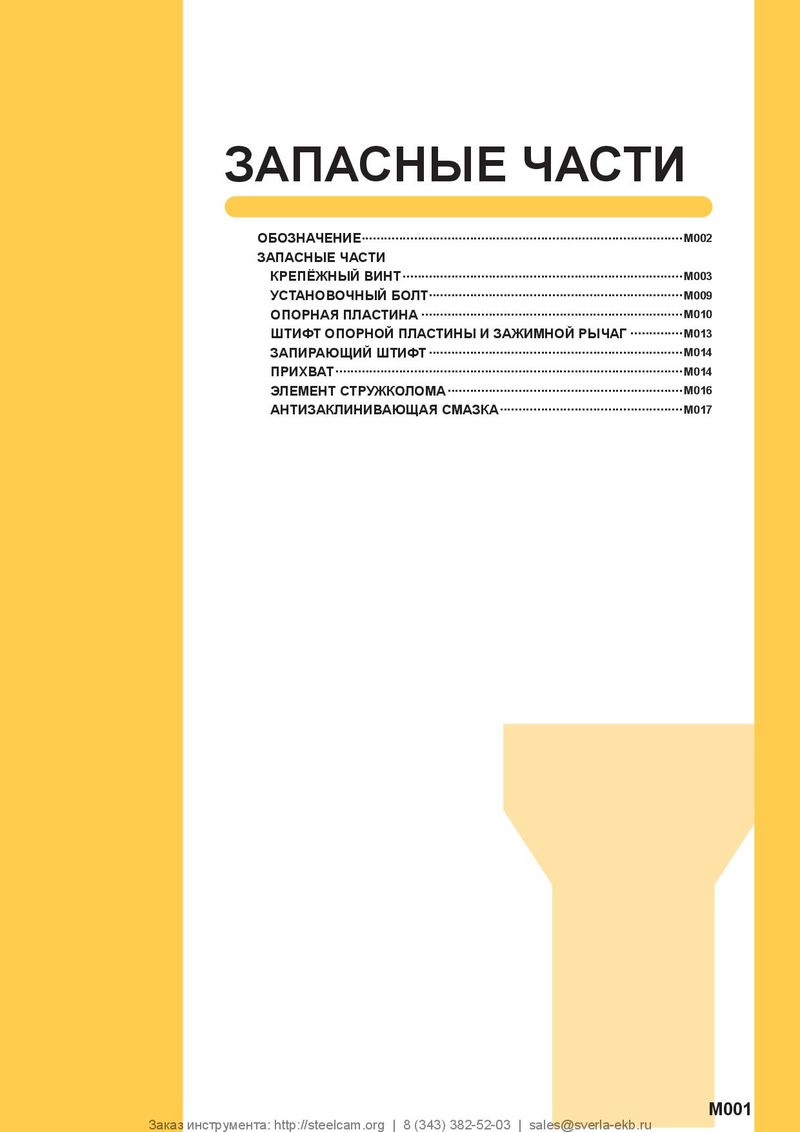 Каталог Mitsubishi Materials запасные части
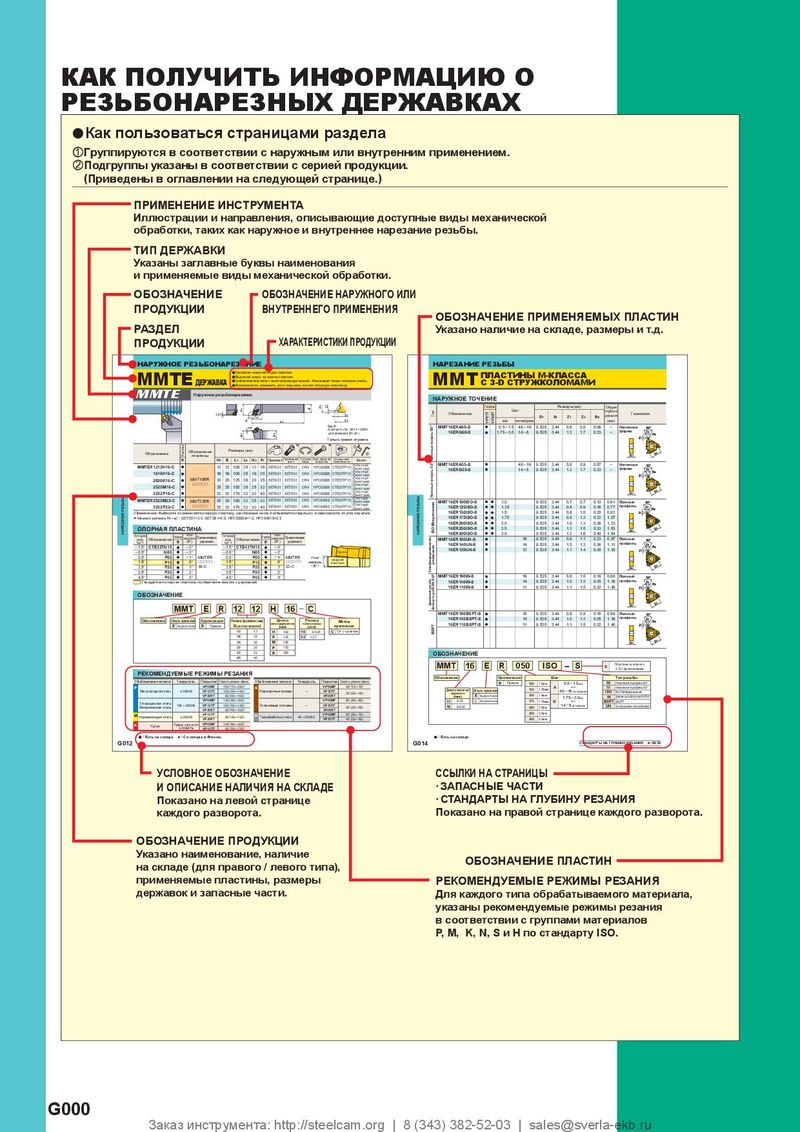 Каталог Mitsubishi Materials резьбонарезной инструмент
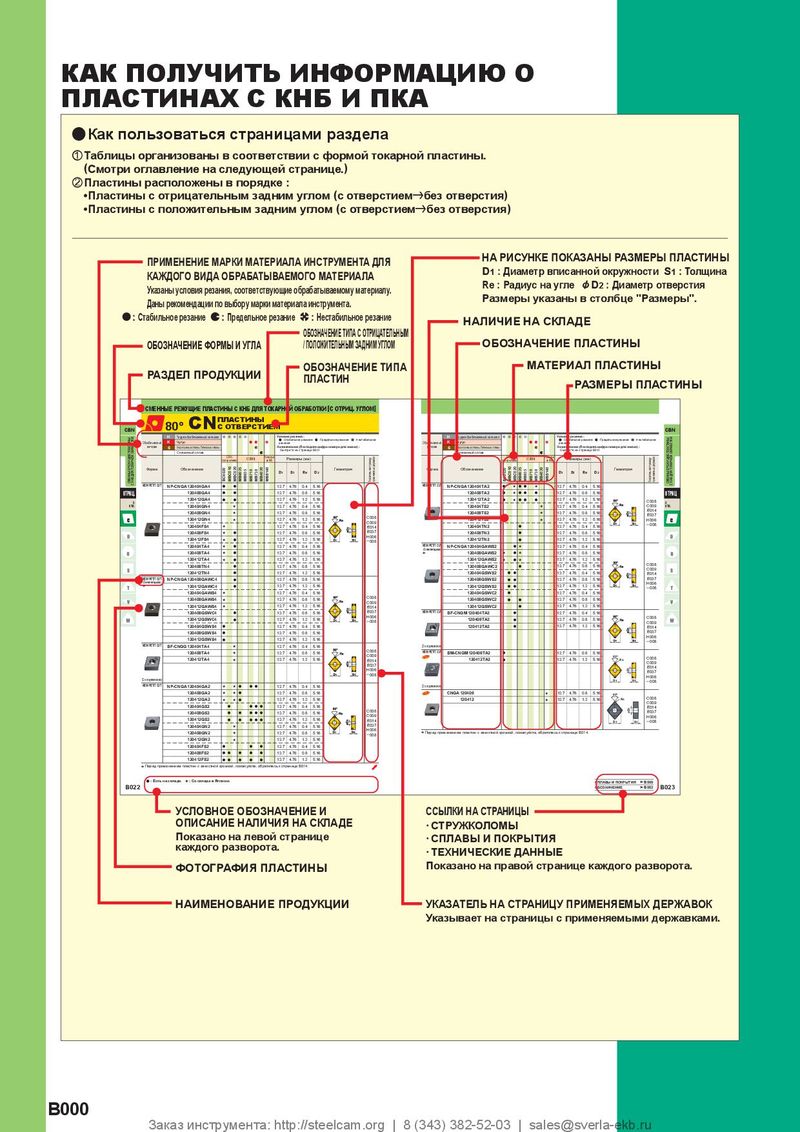 Каталог Mitsubishi Materials СНП с CBN и PCD для токарной обработки
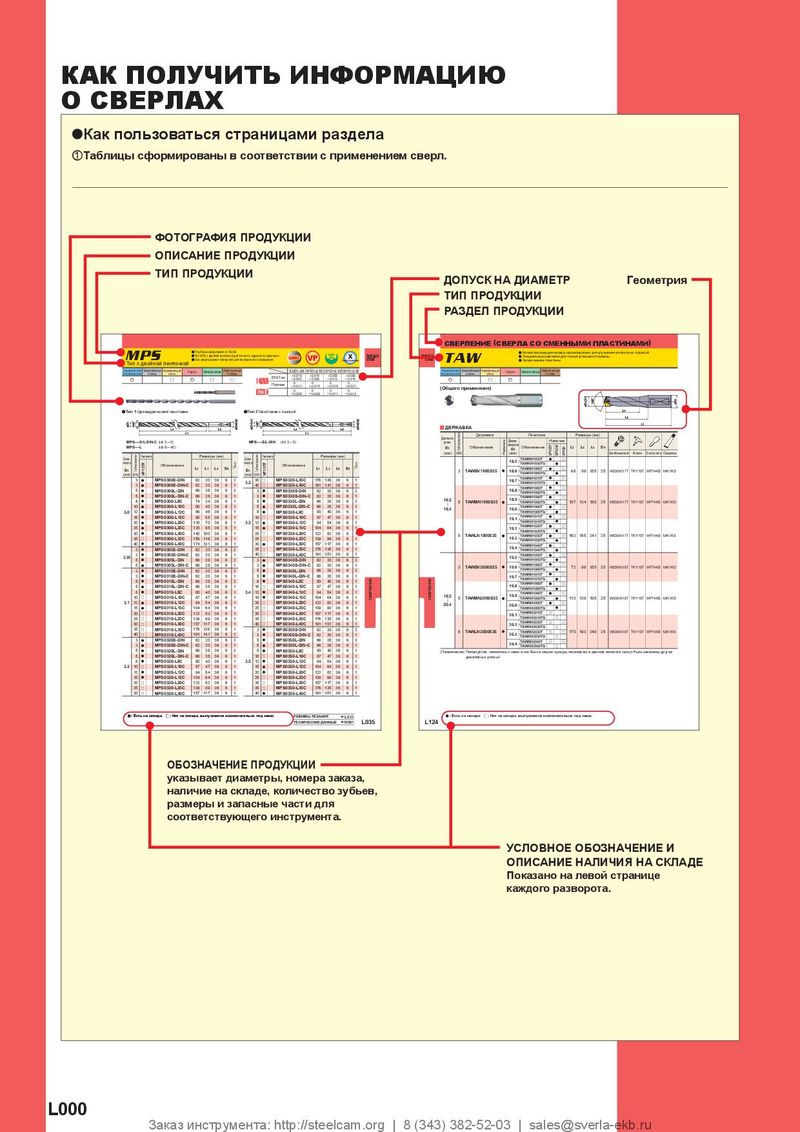 Каталог Mitsubishi Materials сверлильные инструменты
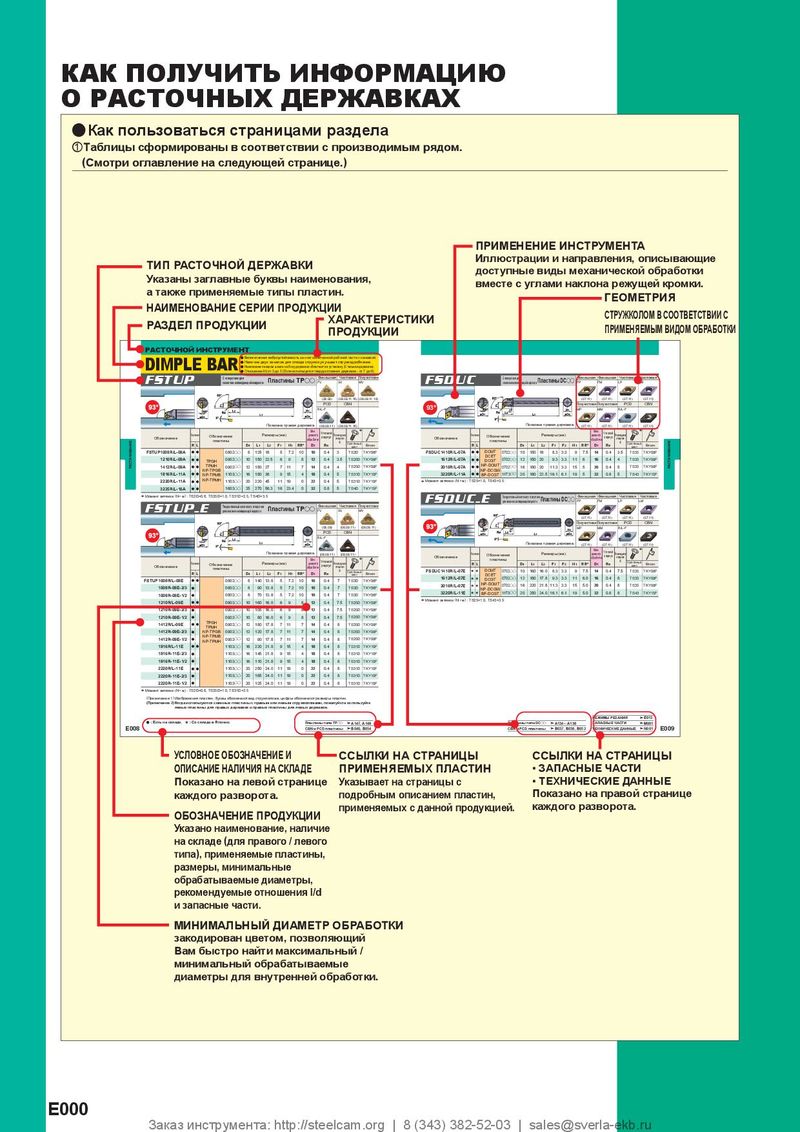 Каталог Mitsubishi Materials расточной инструмент
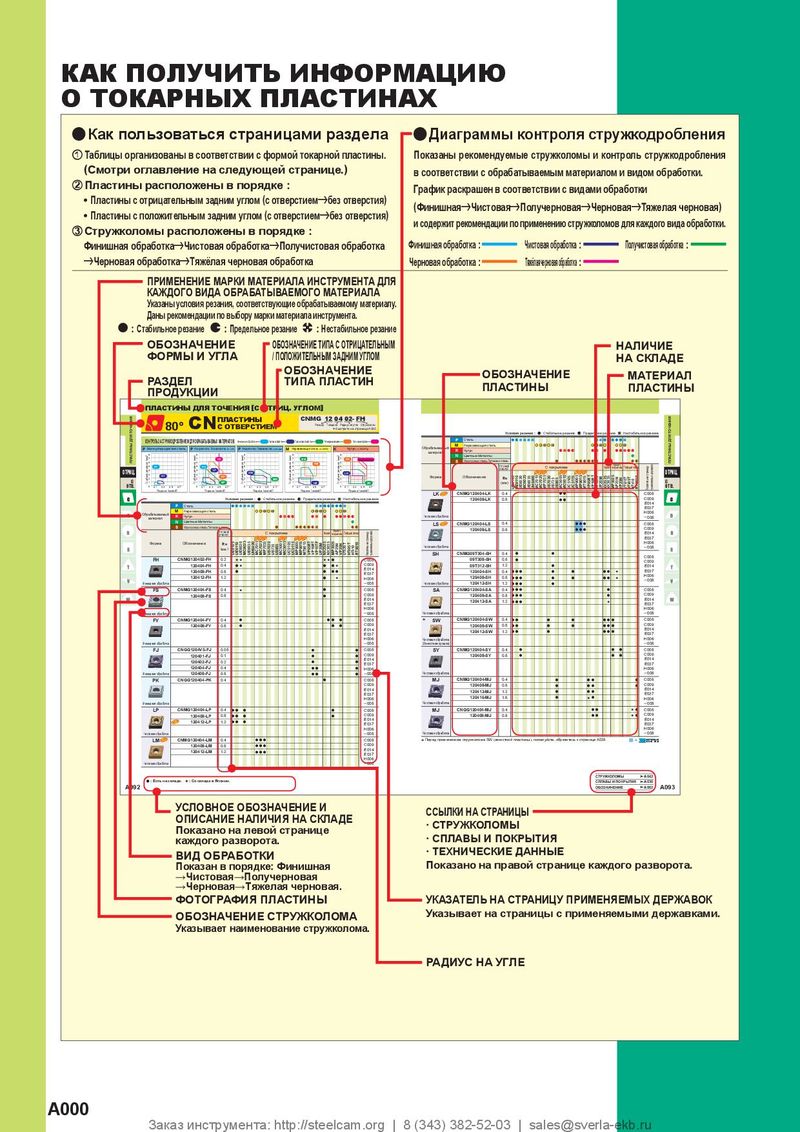 Каталог Mitsubishi Materials пластины для точения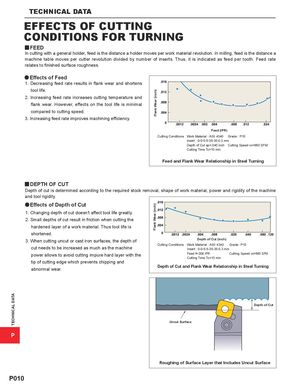
EFFECTS OF CUTTING
CONDITIONS FOR TURNING
y FEED
In cutting with a general holder, feed is the distance a holder moves per work material revolution. In milling, feed is the distance a machine table moves per cutter revolution divided by number of inserts. Thus, it is indicated as feed per tooth. Feed rate relates to finished surface roughness.
a Effects of Feed
1. Decreasing feed rate results in flank wear and shortens tool life. 2. Increasing feed rate increases cutting temperature and flank wear. However, effects on the tool life is minimal compared to cutting speed. 3. Increasing feed rate improves machining efficiency. Feed (IPR)
Cutting Conditions Work Material : AISI 4340 Grade : P10
Insert : 0-0-5-5-35-35-0.3 mm Depth of Cut ap=.040 inch Cutting Speed vc=660 SFM Cutting Time Tc=10 min Feed and Flank Wear Relationship in Steel Turning
y DEPTH OF CUT
Depth of cut is determined according to the required stock removal, shape of work material, power and rigidity of the machine and tool rigidity.
a Effects of Depth of Cut
1. Changing depth of cut doesn't affect tool life greatly. 2. Small depths of cut result in friction when cutting the hardened layer of a work material. Thus tool life is shortened. 3. When cutting uncut or cast iron surfaces, the depth of Depth of Cut (inch)
| cut needs to be increased as much as the machine | Cutting Conditions | Work Material : AISI 4340 | Grade : P10 |
| Insert : 0-0-5-5-35-35-0.3 mm | |||
| power allows to avoid cutting impure hard layer with the | Feed f=.008 IPR | Cutting Speed vc=660 SFM |
Cutting Time Tc=10 min tip of cutting edge which prevents chipping and Depth of Cut and Flank Wear Relationship in Steel Turning abnormal wear.
Depth of Cut
Uncut Surface
P
Roughing of Surface Layer that Includes Uncut Surface