Общий каталог Mitsubishi 2020 - 2021 - страница 1734
Навигация
 Каталог Mitsubishi Materials запасные части
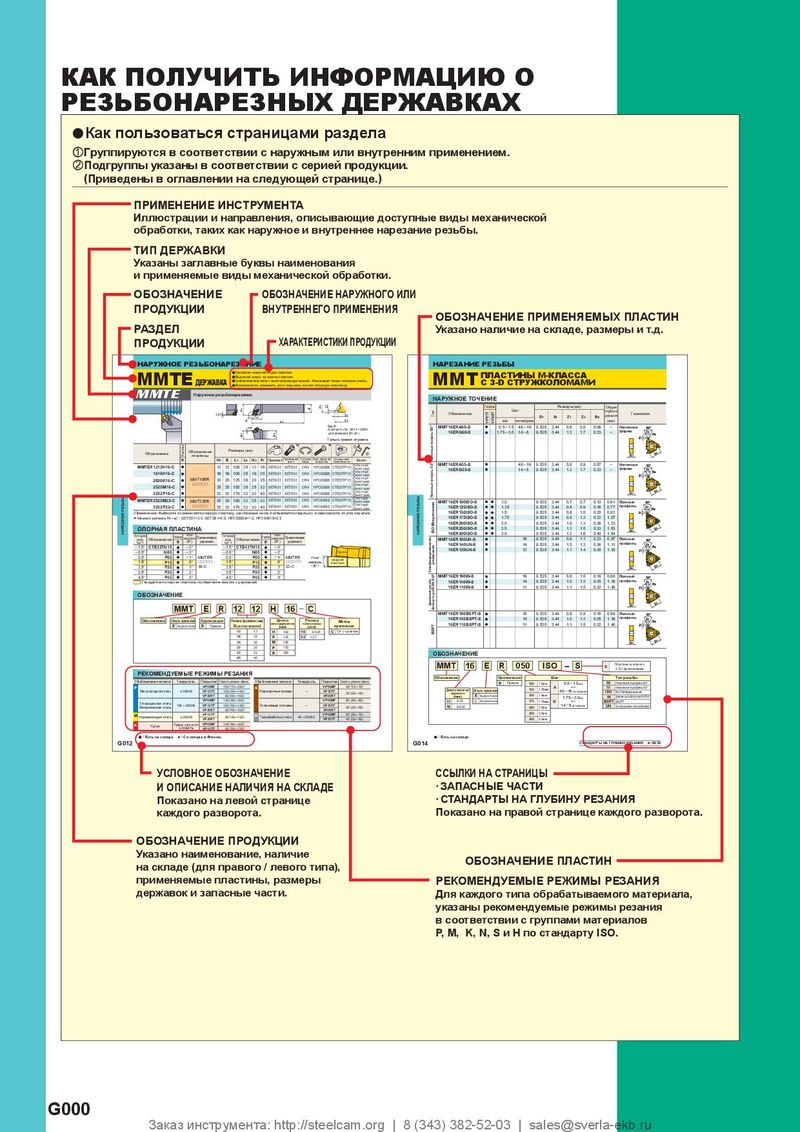 Каталог Mitsubishi Materials резьбонарезной инструмент
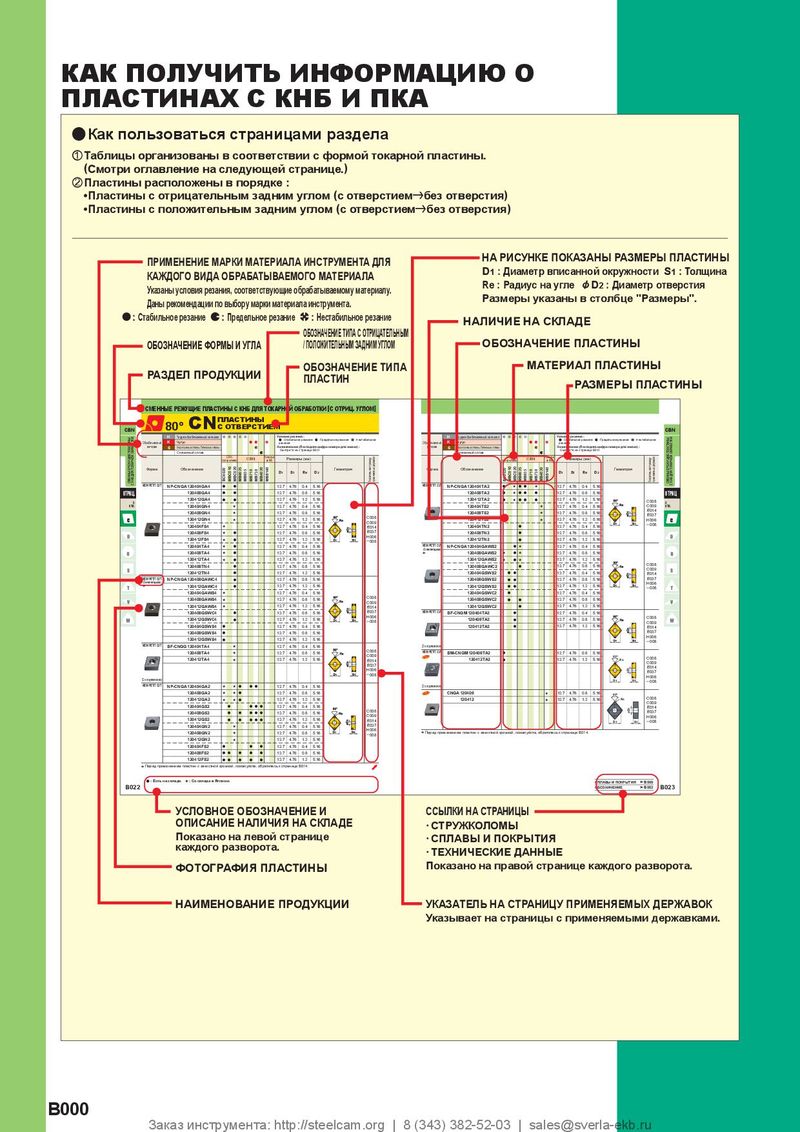 Каталог Mitsubishi Materials СНП с CBN и PCD для токарной обработки
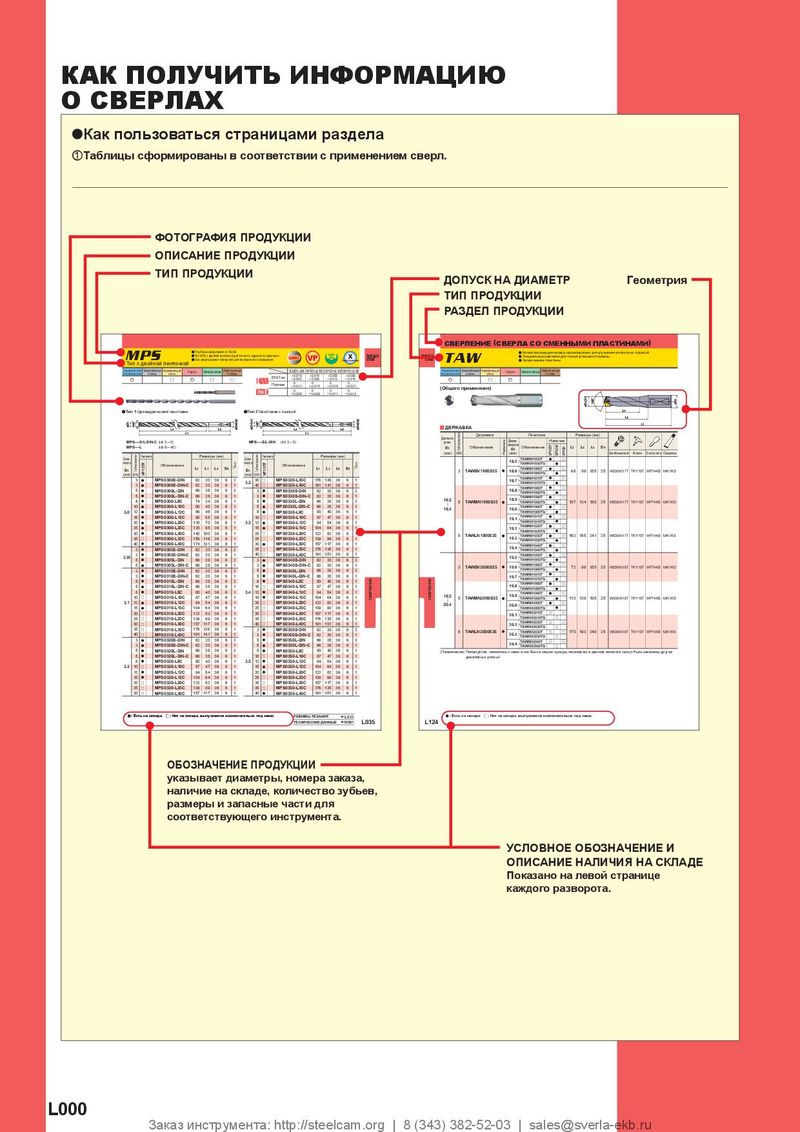 Каталог Mitsubishi Materials сверлильные инструменты
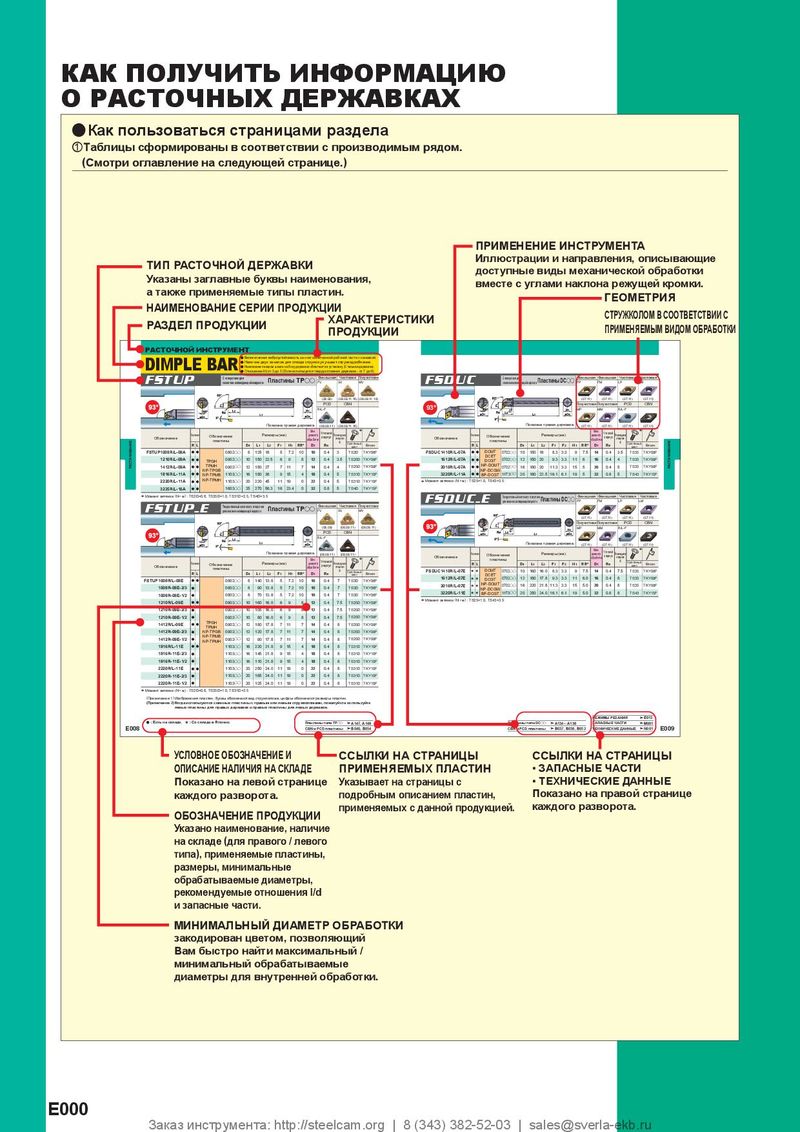 Каталог Mitsubishi Materials расточной инструмент
 Каталог Mitsubishi Materials пластины для точения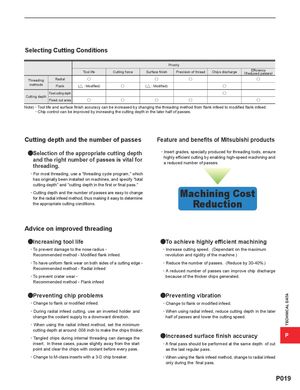
Selecting Cutting Conditions
| Pr | iority | fi | |||||
| Tool life | Cutting force | Surface finish | Precision of thread | Chips discharge | Efficiency (Reduced passes) | ||
| Threading | Radial | u | u | u | u | ||
| methods | Flank | (]: Modified) | u | (]: Modified) | u | ||
| Ci h | Fixed cutting depth | u | |||||
| uttng dept | Fixed cut area | u | u | u | u | u |
Note) Tool life and surface finish accuracy can be increased by changing the threading method from flank infeed to modified flank infeed.
- Chip control can be improved by increasing the cutting depth in the later half of passes.
| Cutting depth and the number of passes | Feature and benefits of Mitsubishi products | ||
| aSelection of the appropriate cutting depth | · Insert grades, specially produced for threading tools, ensure | ||
| and the right number of passes is vital for | highly efficient cutting by enabling high-speed machining and | ||
| threading. | a reduced number of passes. |
- For most threading, use a "threading cycle program," which has originally been installed on machines, and specify "total cutting depth" and "cutting depth in the first or final pass." Machining Cost
- Cutting depth and the number of passes are easy to change for the radial infeed method, thus making it easy to determine Reduction the appropriate cutting conditions.
Advice on improved threading
aIncreasing tool life aTo achieve highly efficient machining
- To prevent damage to the nose radius -
- Increase cutting speed. (Dependant on the maximum
Recommended method - Modified flank infeed. revolution and rigidity of the machine.)
- To have uniform flank wear on both sides of a cutting edge -
- Reduce the number of passes. (Reduce by 30-40%.)
Recommended method - Radial infeed
- A reduced number of passes can improve chip discharge
- To prevent crater wear - because of the thicker chips generated. Recommended method - Flank infeed
aPreventing chip problems aPreventing vibration
- Change to flank or modified infeed.
- Change to flank or modified infeed.
- During radial infeed cutting, use an inverted holder and
- When using radial infeed, reduce cutting depth in the later
change the coolant supply to a downward direction. half of passes and lower the cutting speed.
- When using the radial infeed method, set the minimum cutting depth at around .008 inch to make the chips thicker.
aIncreased surface finish accuracy P
- Tangled chips during internal threading can damage the insert. In these cases, pause slightly away from the start A final pass should be performed at the same depth of cut point and clear the chips with coolant before every pass. as the last regular pass.
- Change to M-class inserts with a 3-D chip breaker.
- When using the flank infeed method, change to radial infeed only during the final pass.