Общий каталог Mitsubishi 2020 - 2021 - страница 1327
Навигация
 Каталог Mitsubishi Materials запасные части
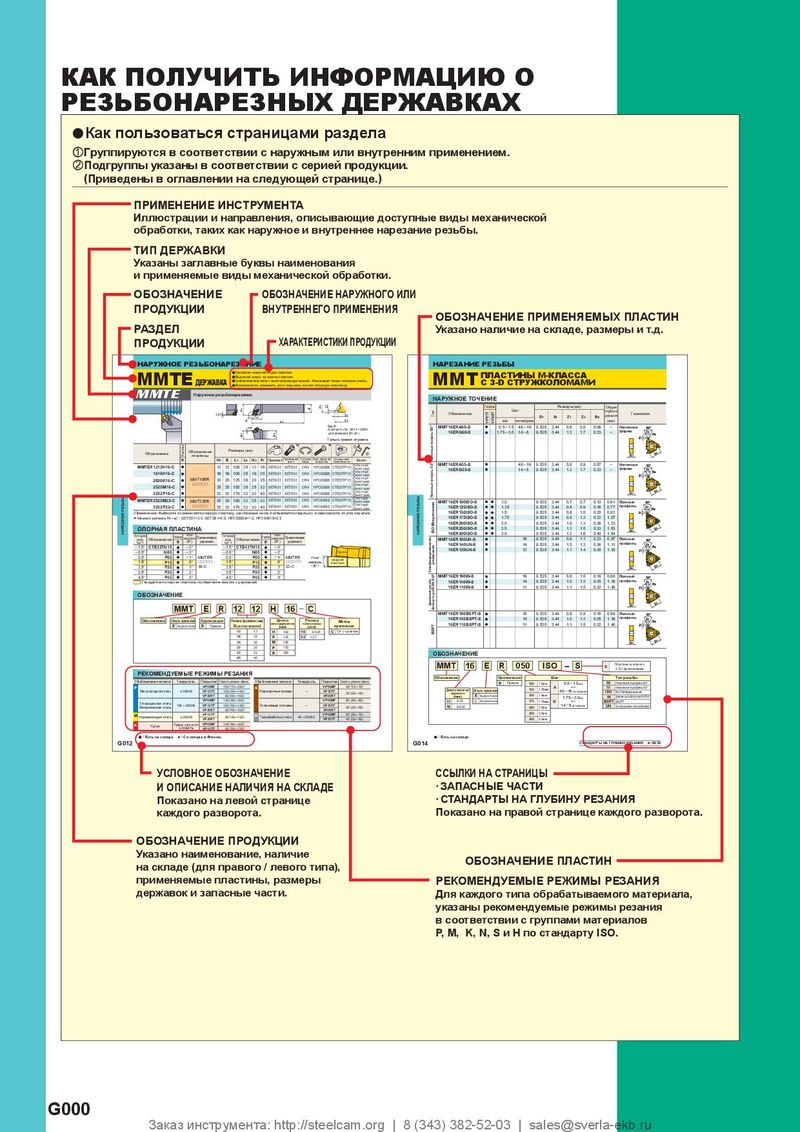 Каталог Mitsubishi Materials резьбонарезной инструмент
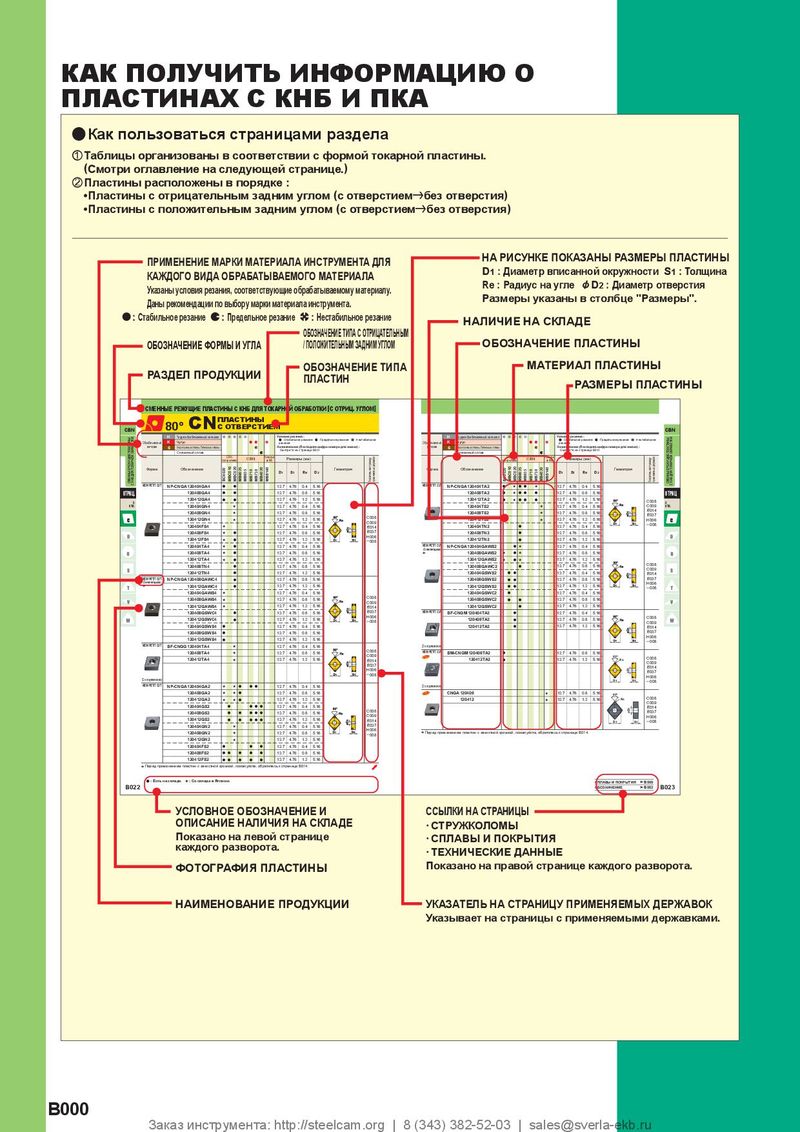 Каталог Mitsubishi Materials СНП с CBN и PCD для токарной обработки
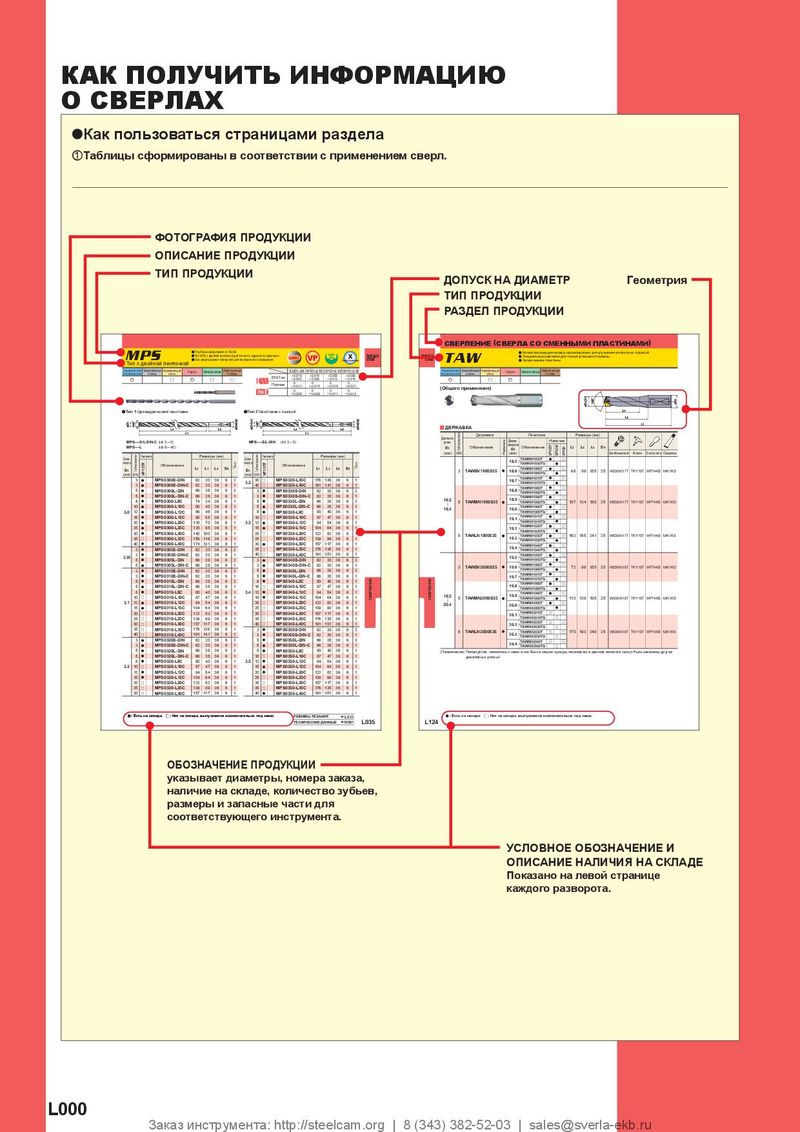 Каталог Mitsubishi Materials сверлильные инструменты
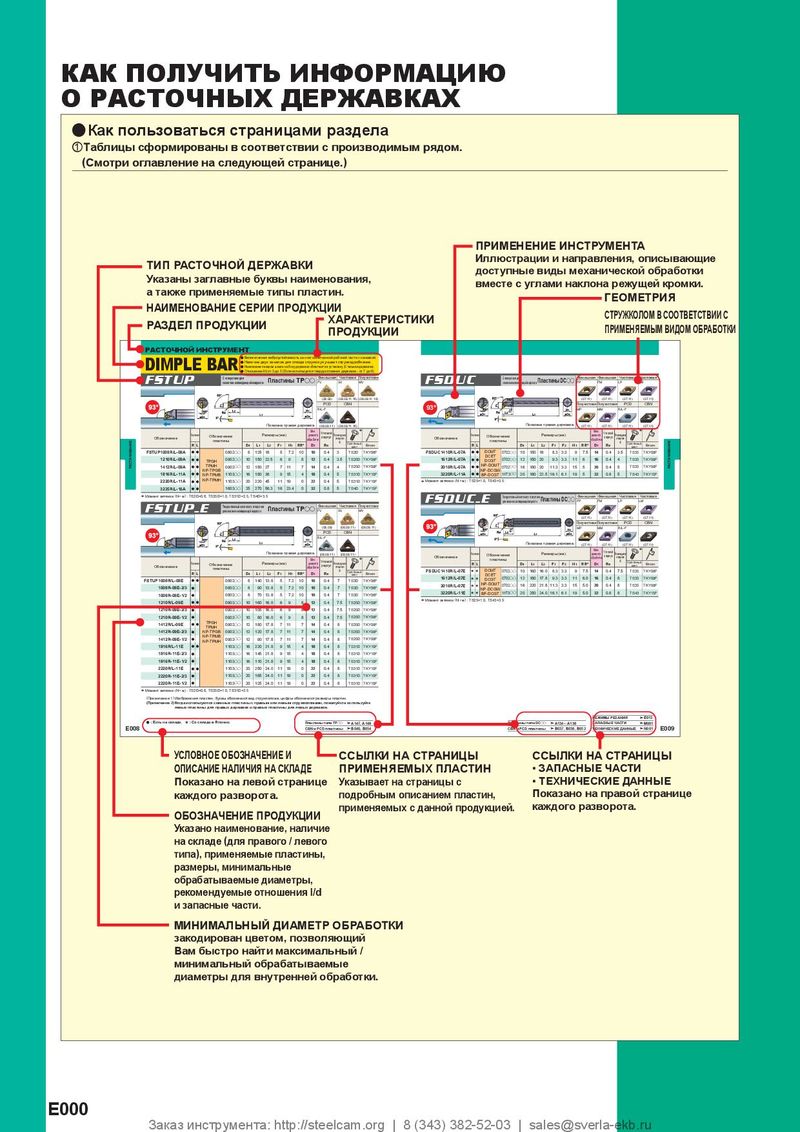 Каталог Mitsubishi Materials расточной инструмент
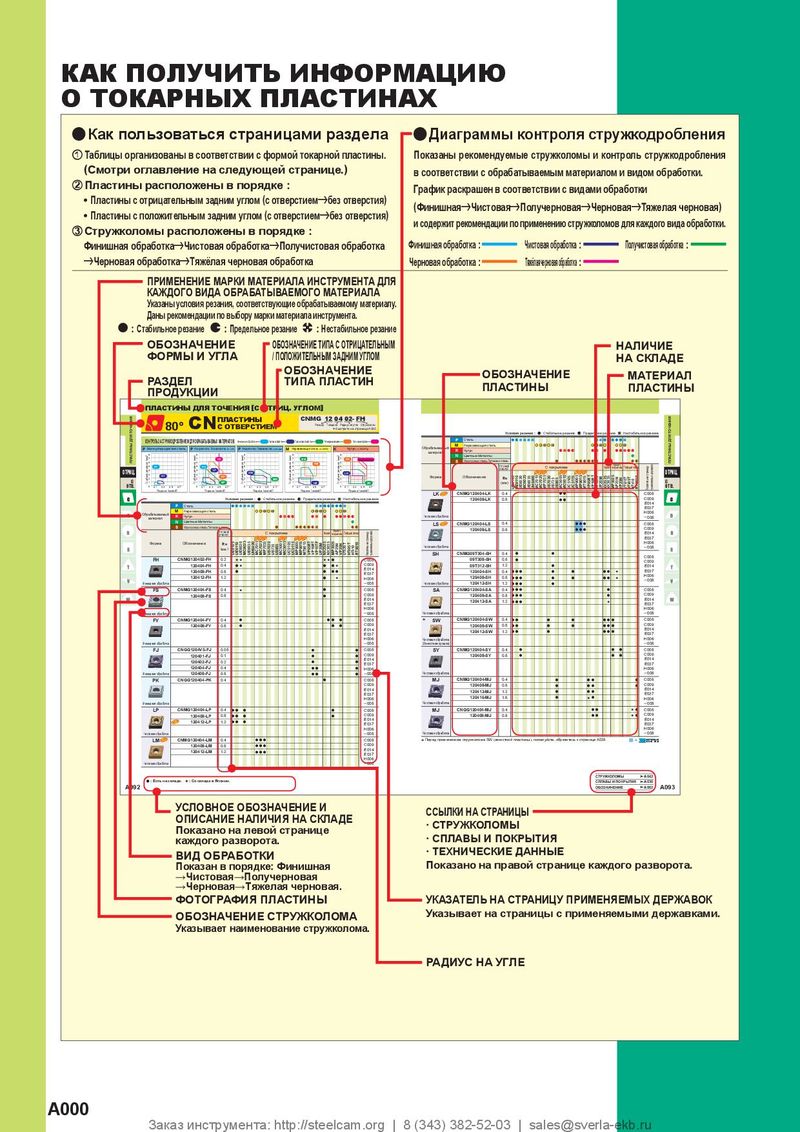 Каталог Mitsubishi Materials пластины для точения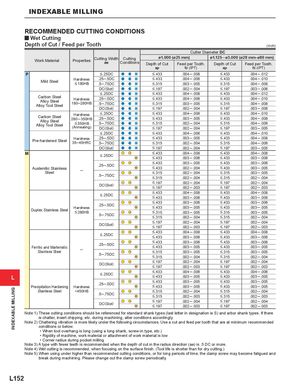
y Wet Cutting
Depth of Cut / Feed per Tooth
(inch)
| Cutter Di | ameterDC | ||||||
| Work Material | Proerties | Cutting Width | Cutting | ø1.000( | ø25 mm) | ø1.125─ø3.000 | (ø28 mm-ø80 mm) |
| p | ae | Conditions | Depth of Cut ap | Feed per Tooth. fz(IPT) | Depth of Cut ap | Feed per Tooth. fz(IPT) | |
| P | .004─.008 | .004─.012 | |||||
| Hardness | .25─.5DC | .004─.006 | .004─.010 | ||||
| Mild Steel | .5─.75DC | .003─.005 | .004─.008 | ||||
| DC(Slot) | .002─.004 | .003─.006 | |||||
| .004─.008 | .004─.012 | ||||||
| Carbon Steel | Hardness | .25─.5DC | .004─.006 | .004─.010 | |||
| Alloy Steel Alloy Tool Steel | 180─280HB | .5─.75DC | .003─.005 | .004─.008 | |||
| DC(Slot) | .002─.004 | .003─.006 | |||||
| Hardness | .004─.006 | .004─.010 | |||||
| Carbon Steel Allo Steel | 280─350HB | .25─.5DC | .003─.005 | .004─.008 | |||
| y Allo Tool Steel | .5─.75DC | .002─.004 | .004─.006 | ||||
| y | (Annealing) | DC(Slot) | .002─.004 | .003─.005 | |||
| .004─.006 | .004─.010 | ||||||
| Hardness | .25─.5DC | .003─.005 | .004─.008 | ||||
| Pre-hardened Steel | 35─45HRC | .5─.75DC | .002─.004 | .004─.006 | |||
| DC(Slot) | .002─.004 | .003─.005 | |||||
| M | .004─.008 | .004─.008 | |||||
| . | .003─.006 | .003─.006 | |||||
| 25─5DC | .003─.005 | .003─.006 | |||||
| Austenitic Stainless | ─ | .. | .002─.004 | .003─.005 | |||
| Steel | .002─.004 | .003─.005 | |||||
| .5─.75DC | .002─.004 | .002─.004 | |||||
| .002─.004 | .002─.004 | ||||||
| DC(Slot) | .002─.003 | .002─.003 | |||||
| .004─.008 | .004─.008 | ||||||
| .003─.006 | .003─.006 | ||||||
| 255DC | .003─.006 | .003─.006 | |||||
| Dl Stil Stl | Hardness | .─. | .003─.005 | .003─.005 | |||
| upex aness ee | 5─75DC | .003─.005 | .003─.005 | ||||
| .. | .002─.004 | .002─.004 | |||||
| DC(Slt) | .002─.004 | .002─.004 | |||||
| o | .002─.003 | .002─.003 | |||||
| .004─.008 | .004─.008 | ||||||
| .003─.006 | .003─.006 | ||||||
| .003─.006 | .003─.006 | ||||||
| Ferritic and Martensitic | .25─.5DC | .003─.005 | .003─.005 | ||||
| Stainless Steel | ─ | .003─.005 | .003─.005 | ||||
| .5─.75DC | .002─.004 | .002─.004 | |||||
| .002─.004 | .002─.004 | ||||||
| DC(Slot) | .002─.003 | .002─.003 | |||||
| .004─.006 | .004─.006 | ||||||
| .003─.005 | .003─.005 | ||||||
| .003─.005 | .003─.005 | ||||||
| Precipitation Hardening | Hardness | .25─.5DC | .003─.005 | .003─.005 | |||
| Stainless Steel | 5─75DC | .002─.004 | .002─.004 | ||||
| .. | .002─.003 | .002─.003 | |||||
| .002─.004 | .002─.004 | ||||||
| DC(Slot) | .002─.003 | .002─.003 |
Note 1) These cutting conditions should be referenced for standard shank types (last letter in designation is S) and arbor shank types. If there is chatter, insert chipping, etc. during machining, alter conditions accordingly. Note 2) Chattering vibration is more likely under the following circumstances. Use a cut and feed per tooth that are at minimum recommended conditions or below.
- When tool overhang is long (using a long shank, screw-in type, etc.)
- Rigidity of machine, work material or attachment of work material is low
- Corner radius during pocket milling
Note 3) A type with fewer teeth is recommended when the depth of cut in the radius direction (ae) is .5 DC or more. Note 4) Wet cutting is recommended, when focusing on the surface finish. (Tool life is shorter than for dry cutting.) Note 5) When using under higher than recommended cutting conditions, or for long periods of time, the clamp screw may become fatigued and