Техническая информация Sumitomo - страница 8
Навигация
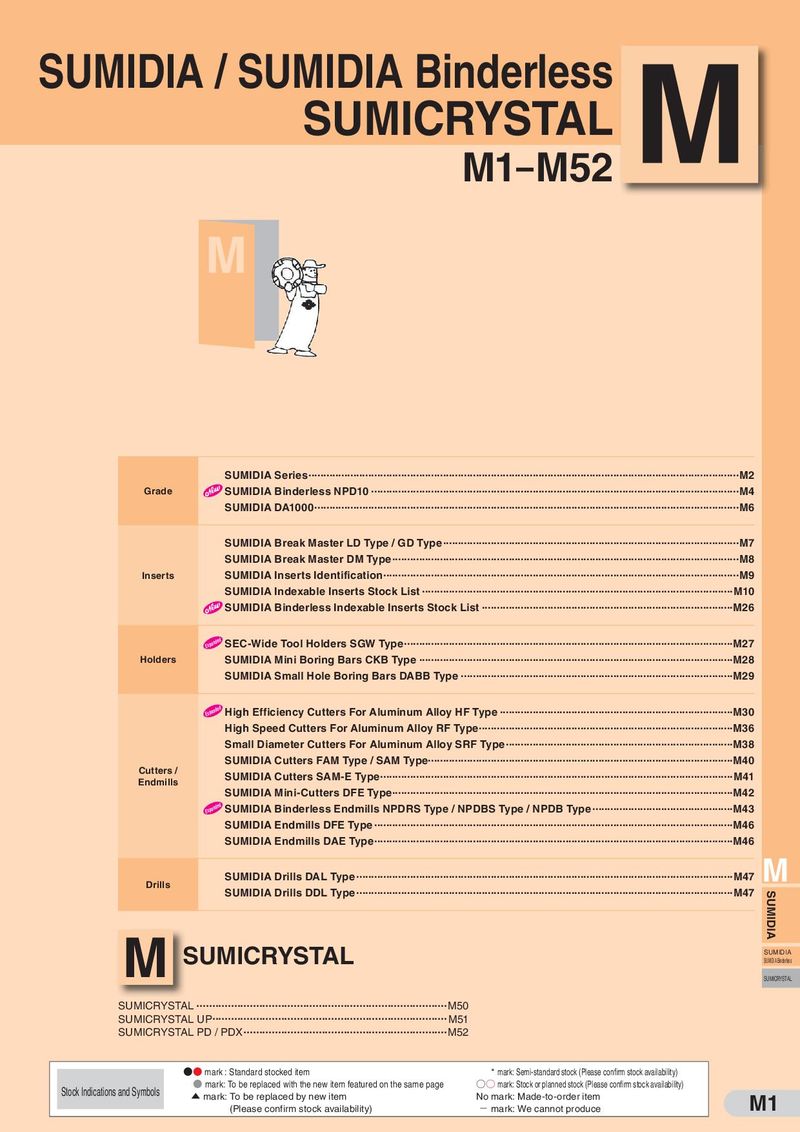 Каталог Sumitomo пластины с алмазными вставками Sumidia
 Общий каталог Sumitomo 2019 - 2020
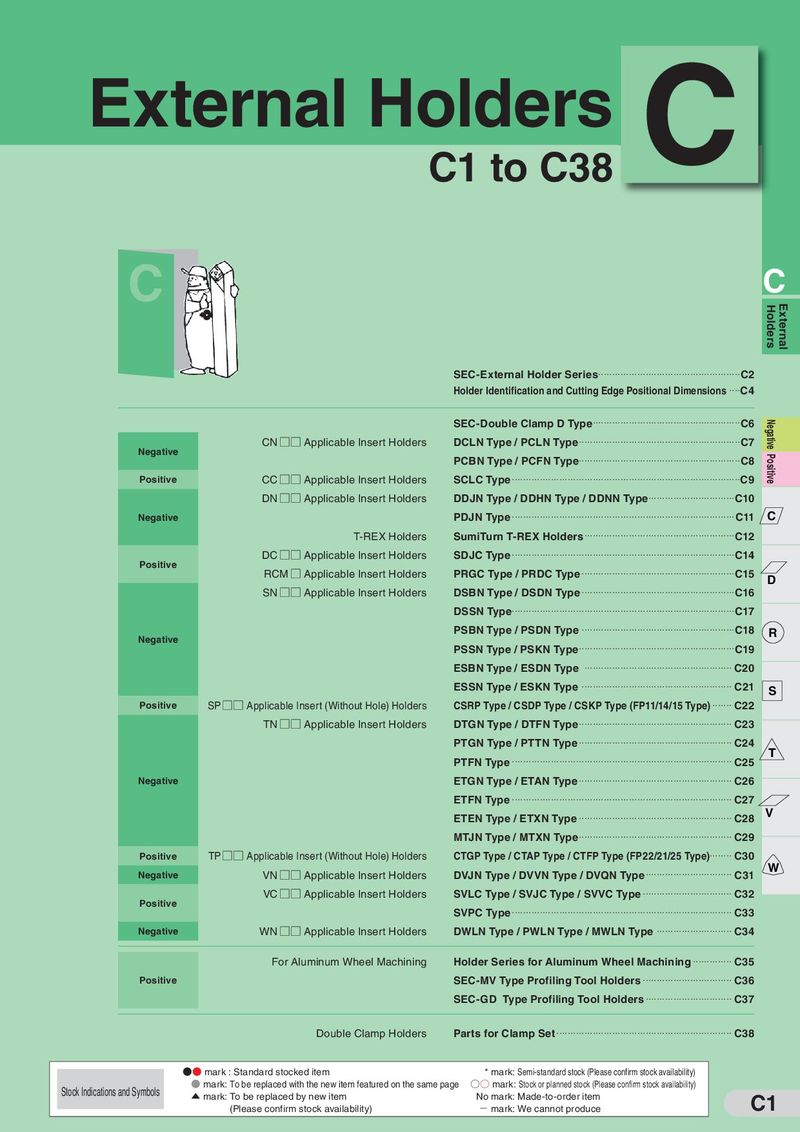 Каталог Sumitomo токарные резцы (державки) для наружного точения
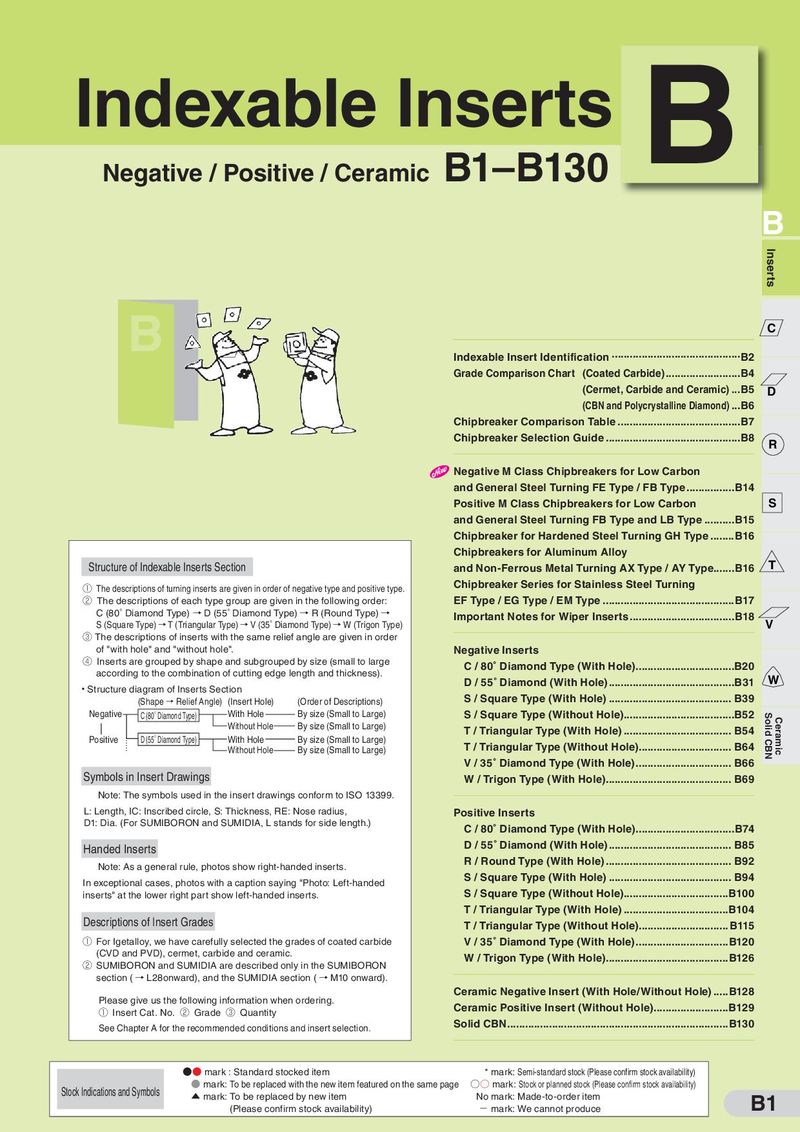 Каталог Sumitomo твердосплавные пластины
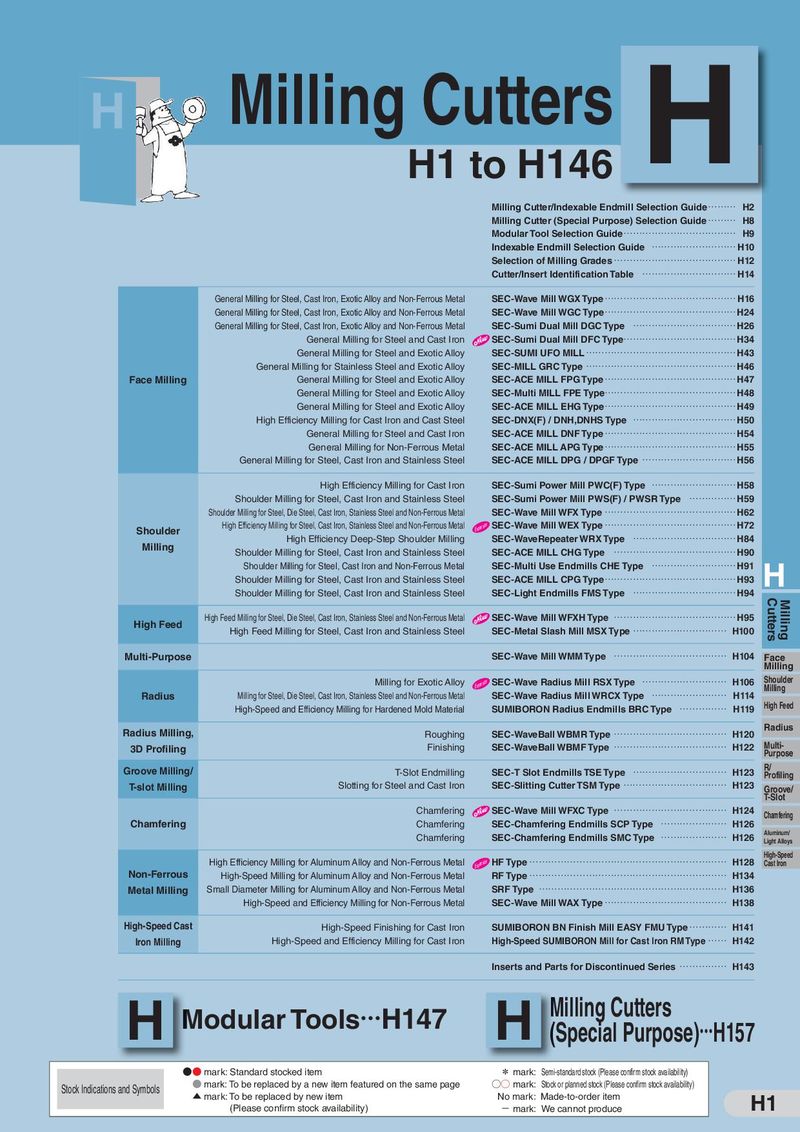 Каталог Sumitomo фрезы со сменными пластинами
 Каталог Sumitomo пластины с режущей кромкой-моноалмаз Sumicristal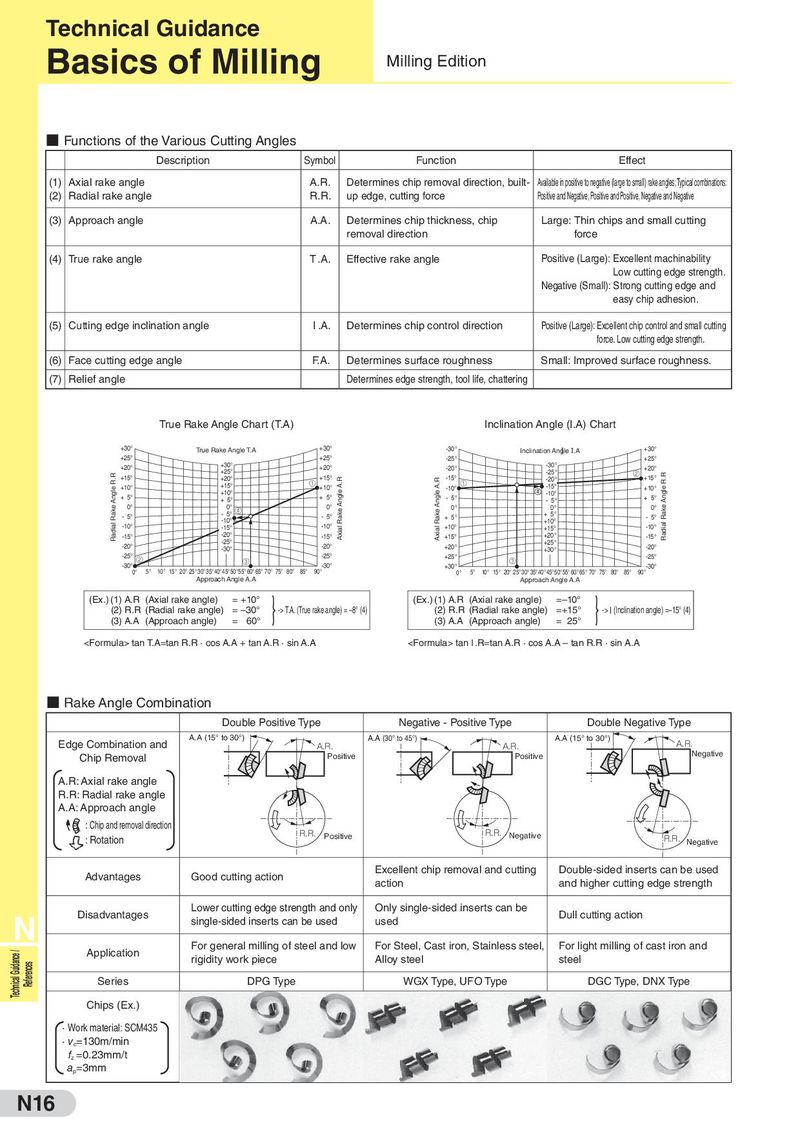
- Functions of the Various Cutting Angles
Description Symbol Function Effect
| (1) Axial rake angle | A.R. | Determines chip removal direction, built- | Available in positive to negative (large to small) rake angles; Typical combinations: |
| (2) | Radial rake angle R.R. | up edge, cutting force | Positive and Negative, Positive and Positive, Negative and Negative |
| (3) Approach angle | A.A. | Determines chip thickness, chip | Large: Thin chips and small cutting |
| removal direction | force | ||
| (4) True rake angle | T .A. | Effective rake angle | Positive (Large): Excellent machinability |
| Low cutting edge strength. | |||
| Negative (Small): Strong cutting edge and | |||
| easy chip adhesion. | |||
| (5) Cutting edge inclination angle | I .A. | Determines chip control direction | Positive (Large): Excellent chip control and small cutting |
| force. Low cutting edge strength. | |||
| (6) Face cutting edge angle | F.A. | Determines surface roughness | Small: Improved surface roughness. |
(7) Relief angle Determines edge strength, tool life, chattering
True Rake Angle Chart (T.A) Inclination Angle (I.A) Chart
| +30° | True Rake Angle T.A | +30° | -30° | Inclination Angle I.A | +30° |
| +25° | +25° | -25° | +25° | ||
| +20° | +30° | +20° | -30° | ||
| +25° | -20° | +20° | |||
| -25° | ② | ||||
| +15° | +20° | +15° | -15° | -20° | +15° |
| ① | ① | ||||
| +10° | +15° | +10° | -10° | -15° | +10° |
| +10° | -10° | ||||
| + 5° | + 5° | + 5° | - 5° | - 5° | + 5° |
| 0° | 0° ④ | 0° | 0° 0° | 0° | |
| - 5° | + 5° | ||||
| - 5° | - 5° | + 5° | - 5° | ||
| -10° | +10° | ||||
| -10° | -15° | -10° | +10° | +15° | -10° |
| -15° | -20° | -15° | +15° | +20° | -15° |
| -25° | +25° | ||||
| -20° | -30° | -20° | +20° | -20° | |
| +30° | |||||
| -25° ② | -25° | +25° | ③ | -25° | |
| ③ | |||||
| -30° | -30° | +30° | -30° |
| 0° | 5° | 10° 15° 20° 25° 30° 35° 40°45°50°55° 60° 65° 70° 75° 80° 85° | 90° | 0° | 5° | 10° 15° 20° 25° 30° 35°40° 45°50°55° 60° 65° 70° 75° 80° 85° | 90° | ||
| Approach Angle A.A } | Approach Angle A.A } |
(Ex.) (1) A.R (Axial rake angle) = +10° (Ex.) (1) A.R (Axial rake angle) =–10°
| (2) R.R (Radial rake angle) | = –30° | -> T.A. (True rake angle) = –8° (4) | (2) R.R (Radial rake angle) | =+15° | -> I (Inclination angle) =–15° (4) | ||
| (3) A.A | (Approach angle) | = 60° | (3) A.A | (Approach angle) | = 25° |
<Formula> tan T.A=tan R.R cos A.A + tan A.R sin A.A <Formula> tan I.R=tan A.R cos A.A – tan R.R sin A.A
- Rake Angle Combination
Double Positive Type Negative - Positive Type Double Negative Type
A.A (15° to 30°) A.A (30° to 45°) A.A (15° to 30°)
Edge Combination and A.R. A.R. A.R.
Chip Removal Positive Positive Negative
A.R: Axial rake angle R.R: Radial rake angle A.A: Approach angle : Chip and removal direction
R.R. R.R.
: Rotation Positive Negative R.R.
Negative Excellent chip removal and cutting Double-sided inserts can be used Advantages Good cutting action action and higher cutting edge strength
Lower cutting edge strength and only Only single-sided inserts can be
| N | Disadvantages | Dull cutting action | ||
| single-sided inserts can be used | used |
| For general milling of steel and low | For Steel, Cast iron, Stainless steel, | For light milling of cast iron and | |
| Application | |||
| rigidity work piece | Alloy steel | steel |
Series DPG Type WGX Type, UFO Type DGC Type, DNX Type
Chips (Ex.)
- Work material: SCM435
- v =130m/min c f =0.23mm/t z a =3mm p