Общий каталог Sumitomo 2018 - 2019 - страница 570
Навигация
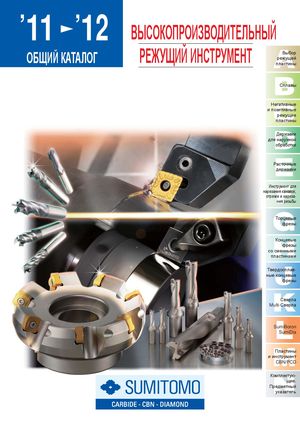 Общий каталог Sumitomo 2012
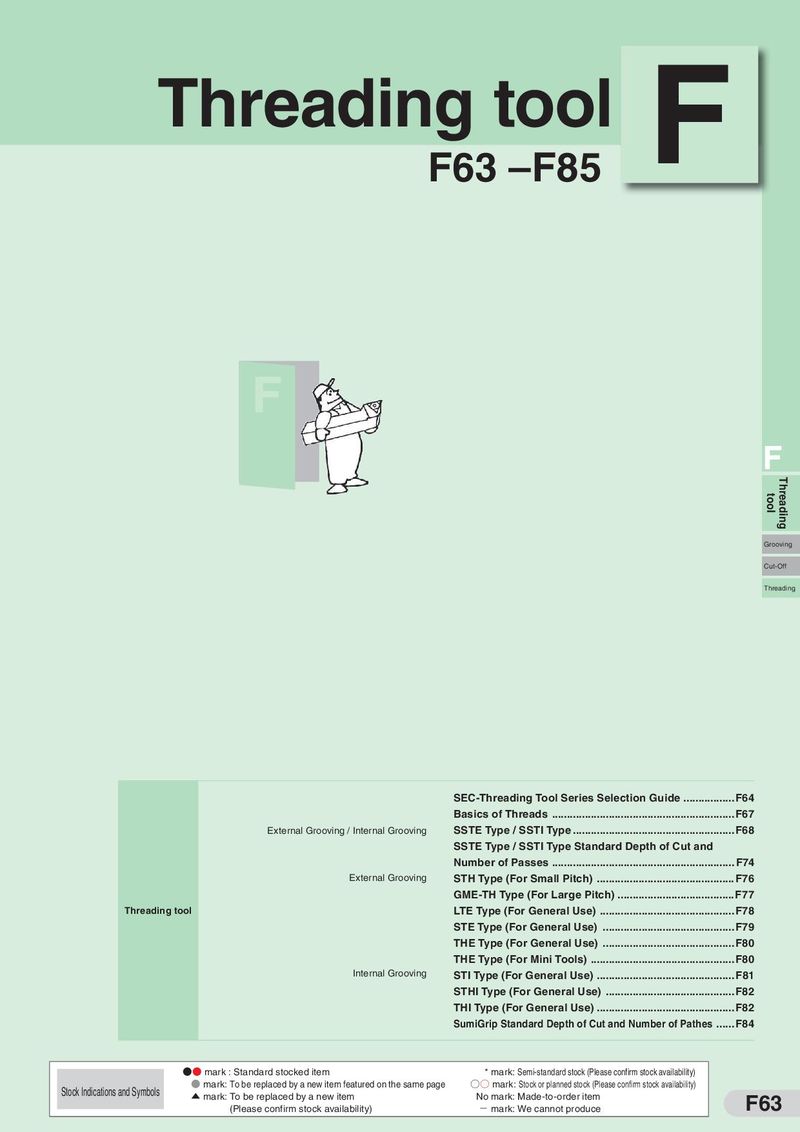 Каталог Sumitomo резьбонарезной инструмент
 Каталог Sumitomo пластины с режущей кромкой-моноалмаз Sumicristal
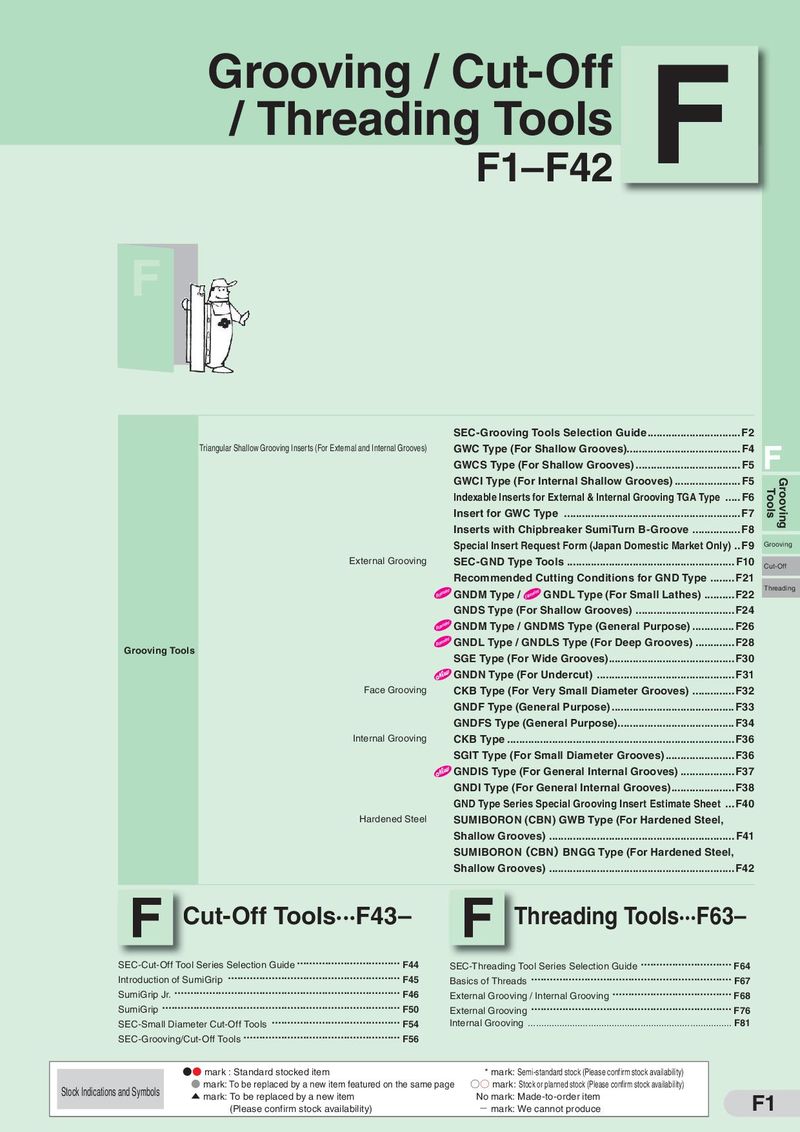 Каталог Sumitomo инструмент для обработки канавок
 Общий каталог Sumitomo 2019 - 2020
 Каталог Sumitomo запасные части
- Pages 3-6_CS6_EN_web
- A 1-20 insert selection EN_web
- B 1-14 grades_EN_web
- C01-17 inserts intro pages_EN_web
- C18-56 negative inserts_EN_web
- C57-86 positive inserts_EN_web
- D 1-46 tool holders_EN_web
- E 1-24 boring bars_EN_web
- F 1-48 grooving_thread tools_EN_web
- G 1-54 milling cutters_EN_web
- H 1-48 insert type endmills_EN_web
- J 1-24 new endmills_EN_web
- J 25-50 endmills_EN_web
- K 1-46 Multi-Drills_EN_web
- K 47-76 Multi-Drills_EN_web
- L 1-28 cbn_pcd grades_EN_web
- M 1-34 cbn_pcd inserts_EN_web
- M 35-56 SHM tools_EN_web
- N1-24 technical guidance_EN_web
- P 1-8 spare parts_neu_EN_web
- P 9-22 index_notes_EN_web
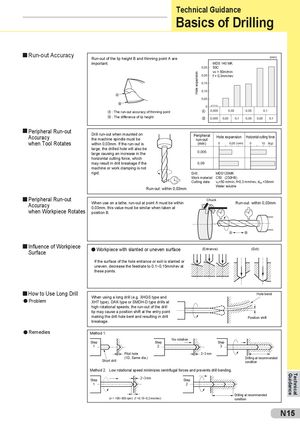
Run-out Accuracy
Run-out of the lip height B and thinning point A are (mm) important. MDS 140 MK 0,25 50C vc = 50m/min 0,20 f = 0,3mm/rev 0,15 0,10 0,05 0
| A : The run-out accuracy of thinning point | A | 0,005 | 0,02 | 0,05 | 0,1 | |||||
| B : The difference of lip height | ||||||||||
| B | 0,005 | 0,02 | 0,1 | 0,05 | 0,02 | 0,1 | ||||
| Peripheral Run-out |
| Accuracy | Drill run-out when mounted on | Peripheral | |
| the machine spindle must be | Hole expansion Horizontal cutting force | ||
| when Tool Rotates | run-out |
within 0,03mm. If the run-out is (mm) 0 0,05 (mm) 0 10 (kg)
large, the drilled hole will also be large causing an increase in the 0,005 horizontal cutting force, which may result in drill breakage if the 0,09
machine or work clamping is not
rigid. Drill: MDS120MK Work material: C50 (230HB) Cutting data: vc=50 m/min, f=0,3 mm/rev, doc =38mm Water soluble
Run-out: within 0,03mm
Peripheral Run-out Chuck
Accuracy When use on a lathe, run-out at point A must be within Run-out: within 0,03mm
when Workpiece Rotates 0,03mm, this value must be similar when taken at position B.
Influence of Workpiece
Surface Workpiece with slanted or uneven surface (Entrance) (Exit)
If the surface of the hole entrance or exit is slanted or uneven, decrease the feedrate to 0,1~0,15mm/rev at these points.
How to Use Long Drill
Hole bend
When using a long drill (e.g. XHGS type and
Problem XHT type), DAK type or SMDH-D type drills at
high rotational speeds, the run-out of the drill
tip may cause a position shift at the entry point
making the drill hole bent and resulting in drill Position shift breakage. Remedies Method 1. No rotation
| Step | Step | Step | ||
| 1 | 2 | 3 | ||
| Pilot hole | 2~ 3 mm | |||
| (1D, Same dia.) | Drilling at recommended | |||
| Short drill | condition | |||
| Method 2. Low rotational speed minimizes centrifugal forces and prevents drill bending. |
Step 2~3 mm Step
Drilling at recommended (n = 100~300 rpm) (f =0,15~0,2 mm/rev) condition