Каталог Iscar токарный инструмент 2017 - страница 357
Навигация
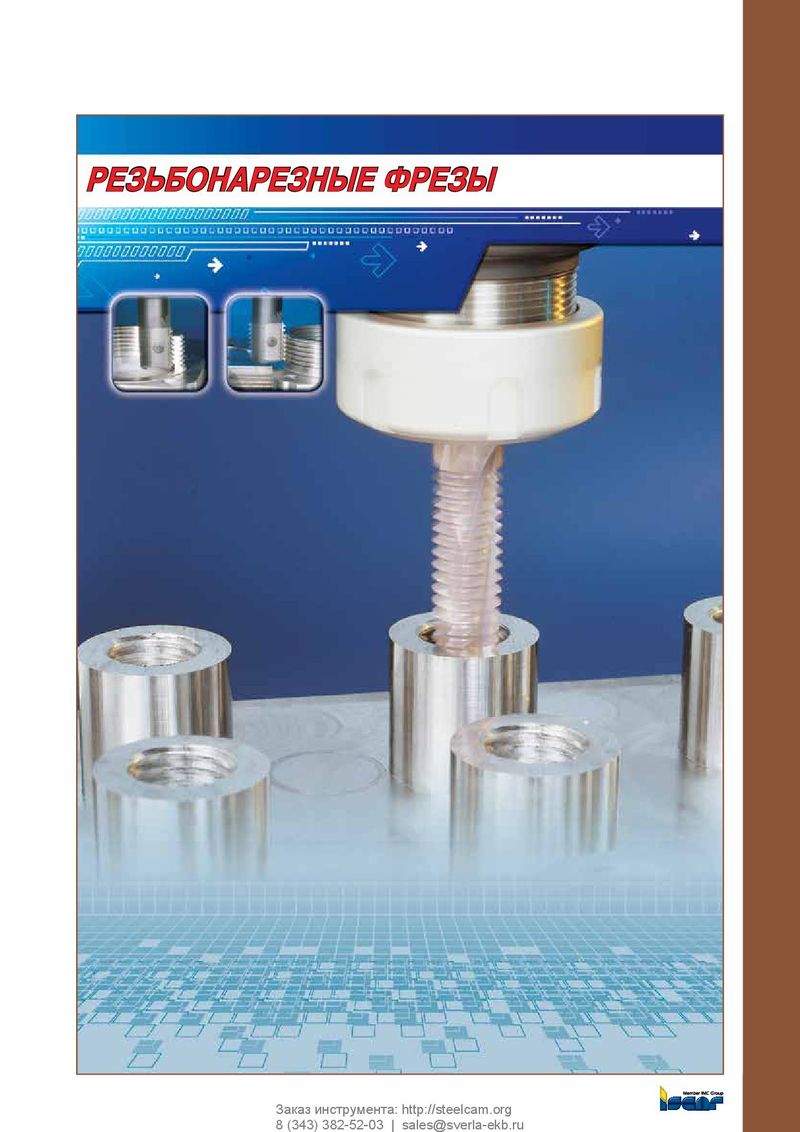 Каталог Iscar резьбонарезные фрезы
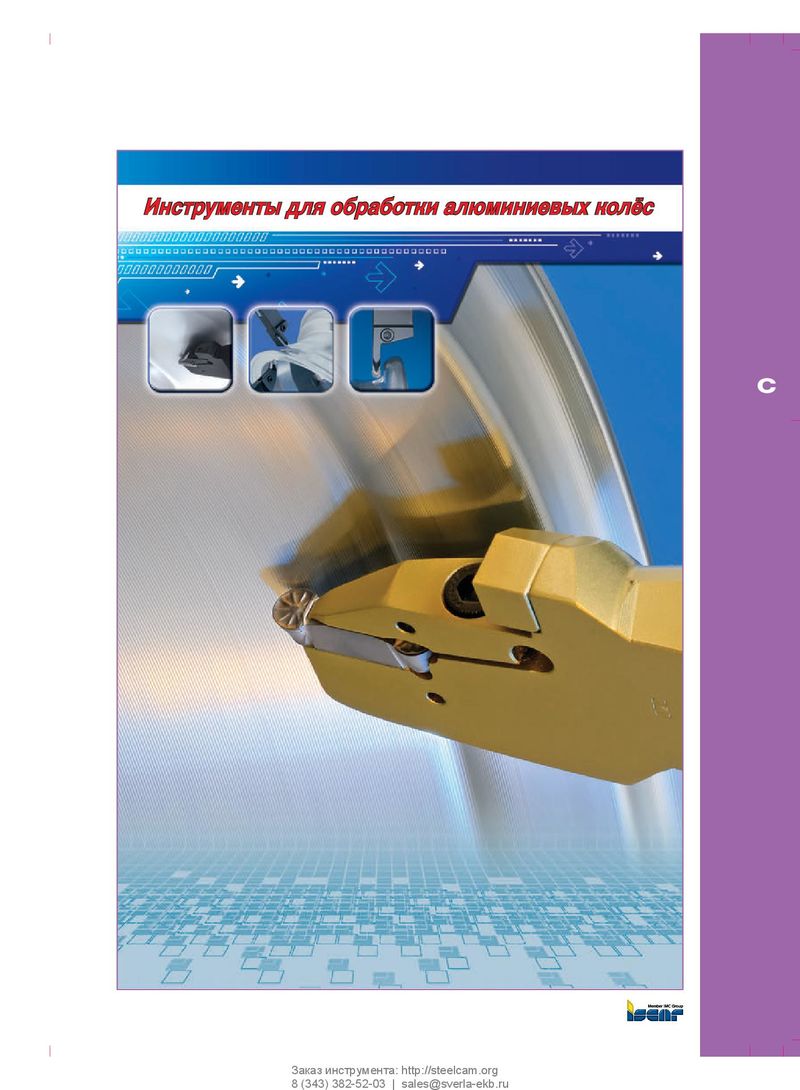 Каталог Iscar инструмент для обработки алюминиевых колёс
 Каталог Iscar державки и пластины для нарезания резьбы 2022
 Каталог Iscar расточные системы 2022
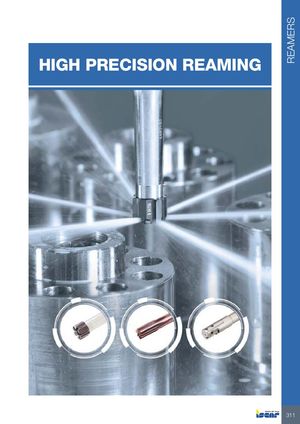 Каталог Iscar высокоточные развертки и метчики 2022
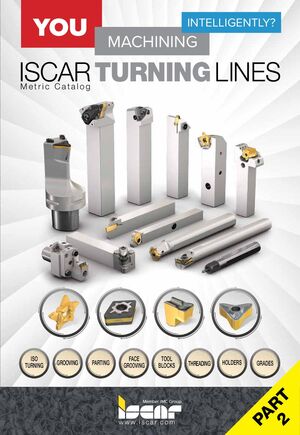 Токарные инструменты Iscar (часть 2) 2026
JETCUT Tools High Pressure (up to 340 Bar)
The high pressure coolant feature has been in existence for a long time in the metal removal world, taking a bigger role in today’s machining. ISCAR was one of the first cutting tools companies to respond to market needs by designing and producing tools for ultra high and high pressure coolant flow. High pressure coolant was initially implemented mainly for difficult-to-machine materials such as titanium, inconel and other heat resistant alloys. Later it was found that tool-life, productivity and chip control can be improved when machining stainless and alloyed steel. JETCUT tools are essential and important in the aviation, aerospace and medical industries. How does it work? The stream velocity of the coolant emitted from the pump increases as the coolant holes become smaller. When it emerges out of the tool through the nozzle, the velocity is very high, exerting considerable force on the chips, lowering their temperature and protecting the cutting edge from thermal shock. High temperature alloys produce a very high temperature as they are being cut. By effectively removing the heat, the chips become less ductile and thus easier to break. Shorter chips are easily managed - they do not tangle around the workpiece or machine parts, so there is no need to stop the process frequently. Usually in conventional cooling the chip prevents the coolant from reaching the insert rake face in the cutting zone. The coolant stream of the JETCUT tools is directed precisely between the insert rake face and the flowing chip. This results in longer tool life and a much more reliable process.
General Information Pressure Ranges Up to 30 Bar – Low pressure (LP) may provide some improvement in tool life. Usually will not have an effect on chip control. 30 – 120 Bar – High pressure (HP) the most commonly used pressure range used with JETCUT tools. Increase in tool life, increase in cutting speeds, improved chip control. 120 – 400 Bar – Ultra high pressure (UHP) requires special tool design in order to take advantage of the extra pressure. Minor increase in tool life compared to HP range. Ultra high pressure coolant is usually implemented for machining titanium and heat resistant alloys when there is a need for very small chips and higher machining rates. Since 2000, ISCAR has provided hundreds of special tools featuring ultra high pressure coolant capability, for various customers and applications. Pressure vs. Flow Each JETCUT tool is designed to work at a certain flow rate, depending on the pressure. The flow rates are listed in the catalog pages for each tool. The user should verify that his pump can supply the required flow in order to achieve the optimal results. The pump data sheet will usually list the maximum flow rate for each pressure range. Chips & Pressure The coolant flow will start to break the chips at a certain pressure, depending on the specific tool and the workpiece material. If the chips are not breaking, the pressure should be increased until chip control is achieved. Above this pressure, as it is increased the chips become smaller and smaller. It is possible to control the size of the chips by modifying the pressure in order to achieve the desired chip size.
The coolant channels of the JETCUT tools feature outlets very close to the cutting edges, thus gaining the following advantages:
- Shorter machining time – the cutting speed may be increased by up to 200% when machining titanium & heat resistant alloys
- Longer tool life – tool life increases by up to 100% not only on titanium and heat resistant alloys, but also on stainless and alloy steels
- Improved chip control – even on the most ductile and problematic materials, small chips can be obtained
- Very effective cooling down of the cutting edge, which reduces sensitivity to heat fluctuations
- Safer and more stable process JETCUT tools provide advantageous performance also when conventional pressure is applied.