Каталог Iscar токарный инструмент 2017 - страница 348
Навигация
 Каталог Iscar резьбонарезные фрезы
 Каталог Iscar инструмент для обработки алюминиевых колёс
 Каталог Iscar державки и пластины для нарезания резьбы 2022
 Каталог Iscar расточные системы 2022
 Каталог Iscar высокоточные развертки и метчики 2022
 Токарные инструменты Iscar (часть 2) 2026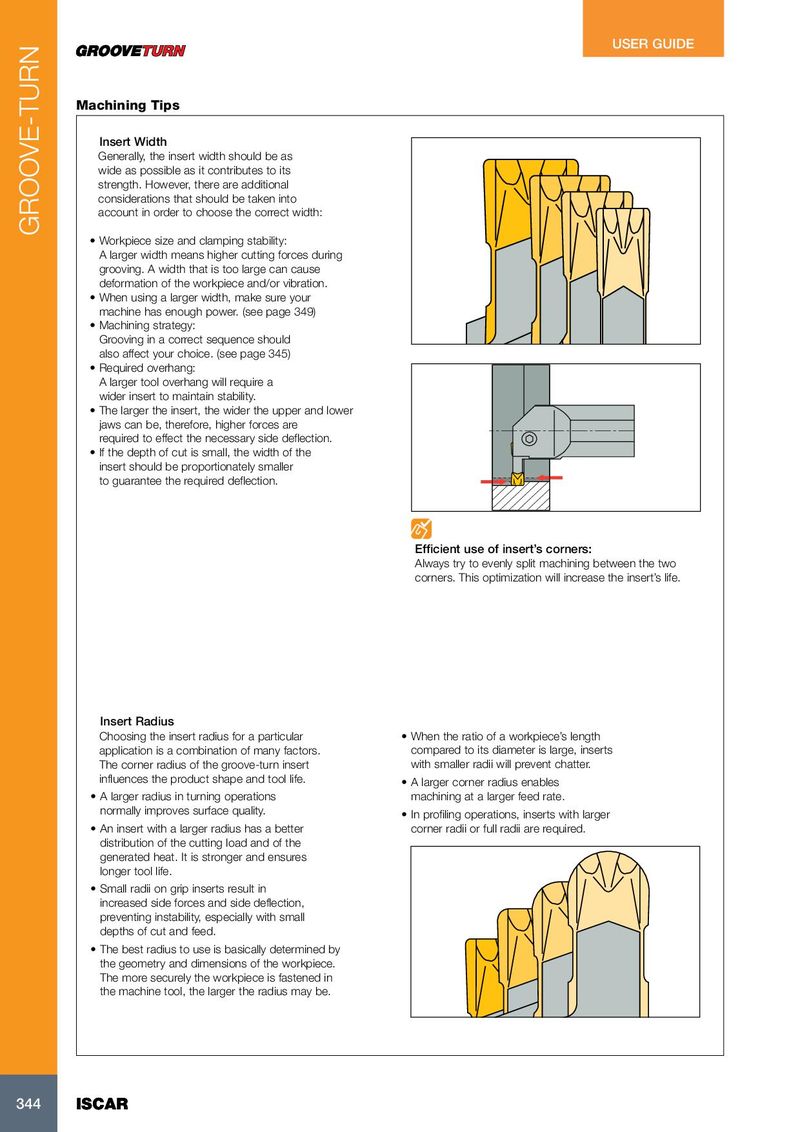
Machining Tips
Insert Width Generally, the insert width should be as wide as possible as it contributes to its strength. However, there are additional considerations that should be taken into account in order to choose the correct width:
- Workpiece size and clamping stability: A larger width means higher cutting forces during grooving. A width that is too large can cause deformation of the workpiece and/or vibration.
- When using a larger width, make sure your machine has enough power. (see page 349)
- Machining strategy: Grooving in a correct sequence should also affect your choice. (see page 345)
- Required overhang: A larger tool overhang will require a wider insert to maintain stability.
- The larger the insert, the wider the upper and lower jaws can be, therefore, higher forces are required to effect the necessary side deflection.
- If the depth of cut is small, the width of the insert should be proportionately smaller to guarantee the required deflection.
Efficient use of insert’s corners: Always try to evenly split machining between the two corners. This optimization will increase the insert’s life.
Insert Radius
| Choosing the insert radius for a particular | • When the ratio of a workpiece’s length |
| application is a combination of many factors. | compared to its diameter is large, inserts |
| The corner radius of the groove-turn insert | with smaller radii will prevent chatter. |
| influences the product shape and tool life. | • A larger corner radius enables |
- A larger radius in turning operations machining at a larger feed rate. normally improves surface quality. In profiling operations, inserts with larger
- An insert with a larger radius has a better corner radii or full radii are required. distribution of the cutting load and of the generated heat. It is stronger and ensures longer tool life.
- Small radii on grip inserts result in increased side forces and side deflection, preventing instability, especially with small depths of cut and feed.
- The best radius to use is basically determined by the geometry and dimensions of the workpiece. The more securely the workpiece is fastened in the machine tool, the larger the radius may be.