Режущие и зажимные инструменты Hoffmann Group 2026 - страница 1263
Навигация
 Каталог Hoffmann Group ручной и измерительный инструмент
 Каталог Hoffmann Group режущий и вспомогательный инструмент
 Производственная мебель и системы хранения Hoffmann Group 2026
 Каталог Hoffmann Group токарный инструмент
 Каталог Hoffmann Group запасные части, оснастка и СИЗ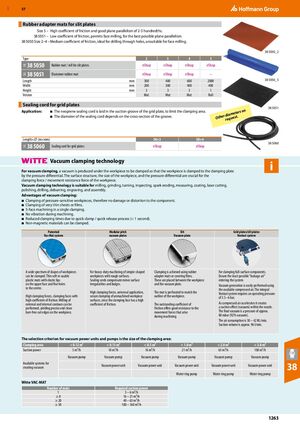
Резиновые адаптивные коврики для щелевых пластин
Размер 5 – высокий коэффициент трения и хорошая параллелизм плоскостей 2-3 сотых.
38 5051 – низкий коэффициент трения, позволяет фрезерование поверхностей, для наилучшего параллелизма плоскостей.
38 5050 Размер 2–4 – средний коэффициент трения, идеален для сверления сквозных отверстий, не подходит для фрезерования поверхностей.
| Тип | 38 5050 / 38 5051 | ||||
|---|---|---|---|---|---|
| 2 | 3 | 4 | 5 | ||
| Длина | мм | 300 | 400 | 600 | 2000 |
| Ширина | мм | 200 | 300 | 400 | 400 |
| Высота | мм | 3 | 3 | 3 | 1 |
| Вариант | коврик | коврик | коврик | рулон | |
Уплотнительный шнур для сетчатых пластин
Применение:
- неопреновый уплотнительный шнур укладывается в канавку всасывания сетчатой пластины для ограничения зажимной площади.
- диаметр уплотнительного шнура зависит от сечения канавки.
| Параметр | 38 5060 | |
|---|---|---|
| Длина × ⌀ (м × мм) | 50×3 | 50×4 |
Технология вакуумного зажима
Для вакуумного зажима под заготовкой создается вакуум так, чтобы заготовка прижималась к зажимной пластине разностью давлений. Структура поверхности, размер заготовки и разность давлений критичны для силы зажима / силы сопротивления перемещению заготовки.
Технология вакуумного зажима подходит для фрезерования, шлифования, токарной обработки, контроля, электроэрозионной обработки, измерения, покрытия, лазерной резки, полирования, сверления, удаления заусенцев, гравирования и сборки.
Преимущества вакуумного зажима
- зажим чувствительных к давлению заготовок, поэтому без повреждений или деформаций компонента.
- зажим очень тонких листов или пленок.
- 5-сторонняя обработка при однократном зажиме.
- отсутствие вибрации во время обработки.
- сокращенное время зажима благодаря процессу быстрого зажима / быстрого отпуска (< 1 секунды).
- немагнитные материалы могут быть зажаты.
Сравнение типов вакуумных пластин
| Запатентованная система Vac-Mat | Модульные вакуумные пластины с шагом | Щелевая вакуумная пластина | Сетчатые/щелевые пластины, система Вентури |
|---|---|---|---|
| Можно зажимать широкий спектр форм заготовок. Тонкие мягкие многоразовые пластиковые коврики с эластичными губами на верхней поверхности и тонкими отверстиями в центре. Высокие силы зажима, зажимные поверхности с высоким коэффициентом трения. Фрезерование наружных и внутренних контуров может быть выполнено, получая точные и чистые края без заусенцев на заготовке. | Для высокопроизводительной обработки простых по форме заготовок с шероховатыми поверхностями. Уплотнительные шнуры компенсируют незначительные неровности поверхности и вздутия. Высокие силы зажима, универсальное применение, надежный зажим необработанных поверхностей заготовок, так как зажимная поверхность имеет высокий коэффициент трения. | Зажим достигается с помощью резиновых адаптивных ковриков или покрывающих пленок. Они размещаются между заготовкой и вакуумной пластиной. Коврик пробит отверстиями, соответствующими контуру заготовки. Выдающийся коэффициент трения обеспечивает хорошее сопротивление силам перемещения, возникающим во время обработки. | Для зажима полнопокрытых компонентов. Обеспечивает минимально возможное проникновение "утечки воздуха" в систему. Создание вакуума легко осуществляется с использованием доступного сжатого воздуха. Интегральная система Вентури требует рабочего давления 3.5 – 6 бар. При ускорении сжатый воздух создает эффект всасывания (вакуум) внутри сопла. Окончательный вакуум составляет примерно 80 мбар (92% вакуума). Потребление воздуха 30 – 42 л/мин при нормальных условиях. Объем всасывания примерно 96 л/мин. |
Критерий выбора вакуумных установок и насосов
Критерий выбора вакуумных установок и насосов - размер зажимной площади.
| Зажимная площадь | Мощность всасывания | Доступные системы создания вакуума |
|---|---|---|
| < 0.12 м² | 5 м³/ч | вакуумный насос |
| < 0.15 м² | 10 м³/ч | вакуумный насос; вакуумная силовая установка |
| < 0.5 м² | 16 м³/ч | вакуумный насос; вакуумная силовая установка |
| < 1.0 м² | 21 м³/ч | вакуумный насос; вакуумная силовая установка; водокольцевой насос |
| < 2.0 м² | 63 м³/ч | вакуумная силовая установка; водокольцевой насос |
| < 3.0 м² | 100 м³/ч | вакуумная силовая установка; водокольцевой насос |
Система Witte VAC-MAT
| Количество ковриков | Требуемая мощность всасывания |
|---|---|
| 1 | 3 – 6 м³/ч |
| ≥ 8 | 16 – 21 м³/ч |
| ≥ 20 | 40 – 63 м³/ч |
| ≥ 50 | 100 – 160 м³/ч |