Каталог ZCC-CT токарная обработка - страница 379
Навигация
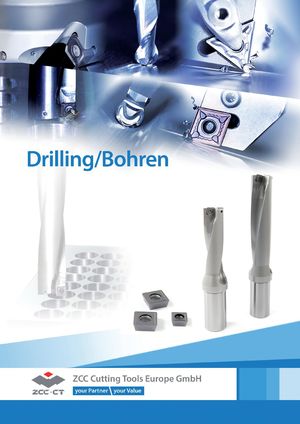 Каталог ZCC-CT сверла со сменными пластинами
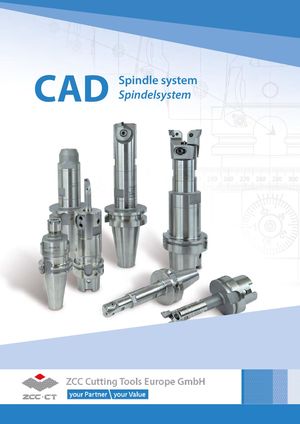 Каталог ZCC-CT расточные системы
 Общий каталог ZCC-CT 2019
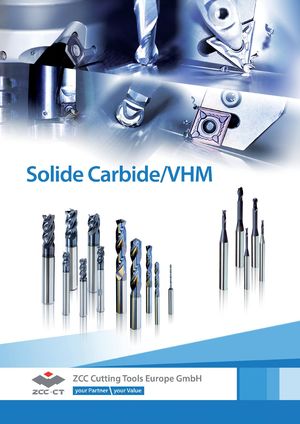 Каталог ZCC-CT фрезы монолитные
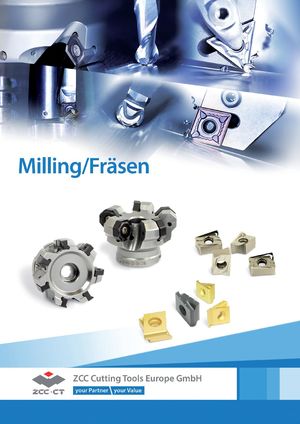 Каталог ZCC-CT фрезы со сменными пластинами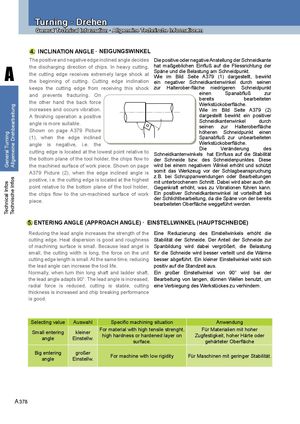
4. INCLINATION ANGLE . NEIGUNGSWINKEL
A The positive and negative edge inclined angle decides Die positive oder negative Anstellung der Schneidkante
the discharging direction of chips. In heavy cutting, hat maßgeblichen Einfluß auf die Fliessrichtung der the cutting edge receives extremely large shock at Späne und die Belastung am Schneidpunkt. Wie im Bild Seite A379 (1) dargestellt, bewirkt the beginning of cutting. Cutting edge inclination ein negativer Schneidkantenwinkel durch seinen
keeps the cutting edge from receiving this shock zur Halterober-fläche niedrigeren Schneidpunkt
| and prevents fracturing. On | zur Spanabfluß einen | |
| bereits bearbeiteten | ||
| the other hand the back force | Werkstückoberfläche. | |
| increases and occurs vibration. | Wie im Bild Seite A379 (2) | |
| A finishing operation a positive | dargestellt bewirkt ein positiver | |
| angle is more suitable. | Schneidkantenwinkel durch | |
| seinen zur Halteroberfläche | ||
| Shown on page A379 Picture | höheren Schneidpunkt einen | |
| (1), when the edge inclined | Spanabfluß zur unbearbeiteten | |
| angle is negative, i.e. the | Werkstückoberfläche. | |
| cutting edge is located at the lowest point relative to | Die Veränderung des | |
| Schneidkantenwinkels hat Einfluss auf die Stabilität | ||
| the bottom plane of the tool holder, the chips flow to | der Schneide bzw. des Schneidenpunktes. Diese | |
| the machined surface of work piece. Shown on page | wird bei einem negativem Winkel erhöht und schützt | |
| A379 Picture (2), when the edge inclined angle is somit das Werkzeug vor der Schlagbeanspruchung | ||
| z.B. bei Schruppanwendungen oder Bearbeitungen | ||
| positive, i.e. the cutting edge is located at the highest | mit unterbrochenem Schnitt. Dabei wird aber auch die | |
| point relative to the bottom plane of the tool holder, | Gegenkraft erhöht, was zu Vibrationen führen kann. | |
| the chips flow to the un-machined surface of work | Ein positiver Schneidkantenwinkel ist vorteilhaft bei | |
| piece. | der Schlichtbearbeitung, da die Späne von der bereits | |
| bearbeiteten Oberfläche weggeführt werden. | ||
| 5. ENTERING ANGLE (APPROACH ANGLE) . EINSTELLWINKEL (HAUPTSCHNEIDE) | ||
| Reducing the lead angle increases the strength of the | Eine Reduzierung des Einstellwinkels erhöht die | |
| cutting edge. Heat dispersion is good and roughness | Stabilität der Schneide. Der Anteil der Schneide zur | |
| of machining surface is small. Because lead angel is | Spanbildung wird dabei vergrößert, die Belastung | |
| small, the cutting width is long, the force on the unit | für die Schneide wird besser verteilt und die Wärme | |
| cutting edge length is small. At the same time, reducing | besser abgeführt. Ein kleiner Einstellwinkel wirkt sich | |
| the lead angle can increase the tool life. | positiv auf die Standzeit aus. | |
| Normally, when turn thin long shaft and ladder shaft, | Ein großer Einstellwinkel von 90° wird bei der | |
| the lead angle adapts 90°. The lead angle is increased, | Bearbeitung von langen, dünnen Wellen benutzt, um |
radial force is reduced, cutting is stable, cutting eine Verbiegung des Werkstückes zu verhindern. thickness is increased and chip breaking performance is good.
| Selecting value | Auswahl | Specific machining situation | Anwendung |
| Small entering angle | kleiner Einstellw. | For material with high tensile strenght, high hardness or hardened layer on surface. | Für Materialien mit hoher Zugfestigkeit, hoher Härte oder gehärteter Oberfläche |
| Big entering angle | großer Einstellw. | For machine with low rigidity | Für Maschinen mit geringer Stabilität. |