Общий каталог Sumitomo 2018 - 2019 - страница 560
Навигация
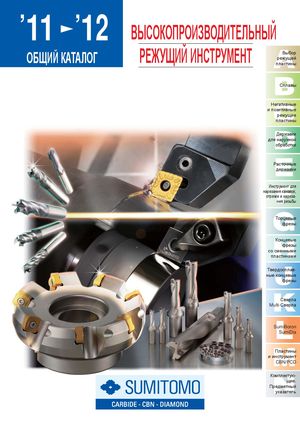 Общий каталог Sumitomo 2012
 Каталог Sumitomo резьбонарезной инструмент
 Каталог Sumitomo пластины с режущей кромкой-моноалмаз Sumicristal
 Каталог Sumitomo инструмент для обработки канавок
 Общий каталог Sumitomo 2019 - 2020
 Каталог Sumitomo запасные части
- Pages 3-6_CS6_EN_web
- A 1-20 insert selection EN_web
- B 1-14 grades_EN_web
- C01-17 inserts intro pages_EN_web
- C18-56 negative inserts_EN_web
- C57-86 positive inserts_EN_web
- D 1-46 tool holders_EN_web
- E 1-24 boring bars_EN_web
- F 1-48 grooving_thread tools_EN_web
- G 1-54 milling cutters_EN_web
- H 1-48 insert type endmills_EN_web
- J 1-24 new endmills_EN_web
- J 25-50 endmills_EN_web
- K 1-46 Multi-Drills_EN_web
- K 47-76 Multi-Drills_EN_web
- L 1-28 cbn_pcd grades_EN_web
- M 1-34 cbn_pcd inserts_EN_web
- M 35-56 SHM tools_EN_web
- N1-24 technical guidance_EN_web
- P 1-8 spare parts_neu_EN_web
- P 9-22 index_notes_EN_web

Chip Control
Type of Chip Generation Type of Chip Control
| a | b | c | d | Feed rate | ABCDE | |
| Large feed rate |
| Continuous chips | Chip is sheared | Chips appear to | Chips crack before | Small feed rate | ||
| with good surface | and separated by | be torn from the | reaching the cutting | |||
| finish. | the shear angle. | surface. | point. | 5 5 NC lathe | ||
| (For automation) | ||||||
| Steel, Stainless steel Steel, Stainless steel | Steel, Cast iron (Very low | ~ General lathe | ||||
| (Low speed) | speed, very small feedrate) Cast iron, Carbon | 5 5 (For safety){ | ||||
| Easy | Work deformation | Difficult | Good : C type, D type | |||
| A type : Twines around the tool or workpiece, damages the machined surface | ||||||
| Large | Rake angle | Small | and affects safety. | |||
| Small | D.O.C. | Large | B type : Bulky, causes problems in the automatic chip conveyor and chipping Poor | |||
| Fast | Cutting speed | Slow | occurs easily. |
E type : Causes spraying of chips, poor machined surface due to chattering, chipping, large cutting force and high temperatures. Factor of Improvement Chip Control j Increase feed rate
4,0
t1 t2>t1
| f | f >f | 2,0 | |
| 1 | 2 | 1 |
When feedrate increase, chips become 0,1 0,2 0,3 0,4 0,5
thick and chip control improves. Feed rate (mm/rev)
k Decrease side cutting edge
< 45°
1 2 1
t1 t2>t1 f f 15°
Even if feed rate is the same, smaller
side cutting edge angle makes chips
| thick and chip control improves. | 0,2 | 0,25 | 0,3 | 0,35 | ||||
| Feed rate (mm/rev) | ||||||||
| l Decrease nose radius | ||||||||
| r | 1,6 | |||||||
| t1 | r |
r 2 < 1
t2 1 t2>t1 f f
0,8
Even if depth of cut is the same, smaller nose radius
makes chip thick and chip control improves.
* Cutting resistance increases in proportion with
the width of the contact surface. Therefore, with 0,4
a larger nose radius, cutting resistance and
back force increases, chattering may also occur.
However, with the same feedrate, a smaller nose 0,2 0,25 0,3 0,35
radius would produce a poorer surface finish. Depth of cut (mm)