Каталог Stellram токарный инструмент - страница 203
Навигация
 Каталог Stellram материалы и сплавы
 Каталог Stellram твердосплавные цельные фрезы
 Каталог Stellram фрез со сменными пластинами
 Каталог Stellram высокопроизводительные фрезерные системы
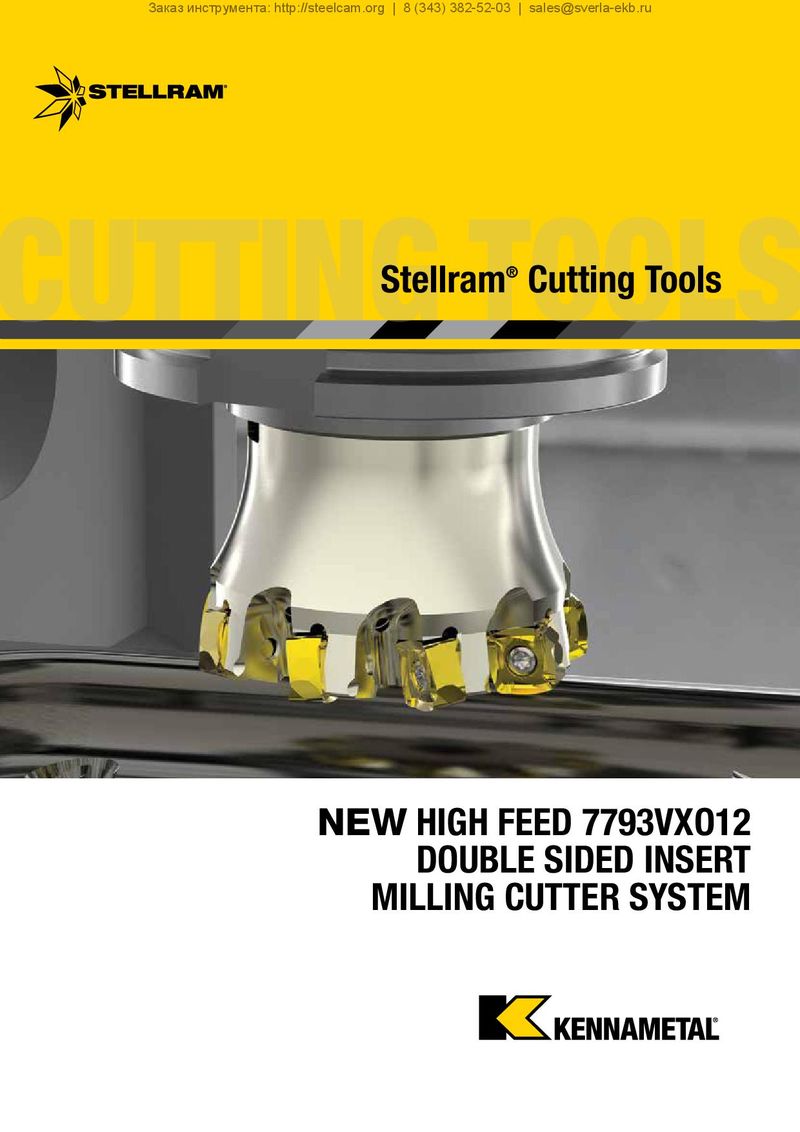 Каталог Stellram системы со сменными пластинами для фрезерования с высокими подачами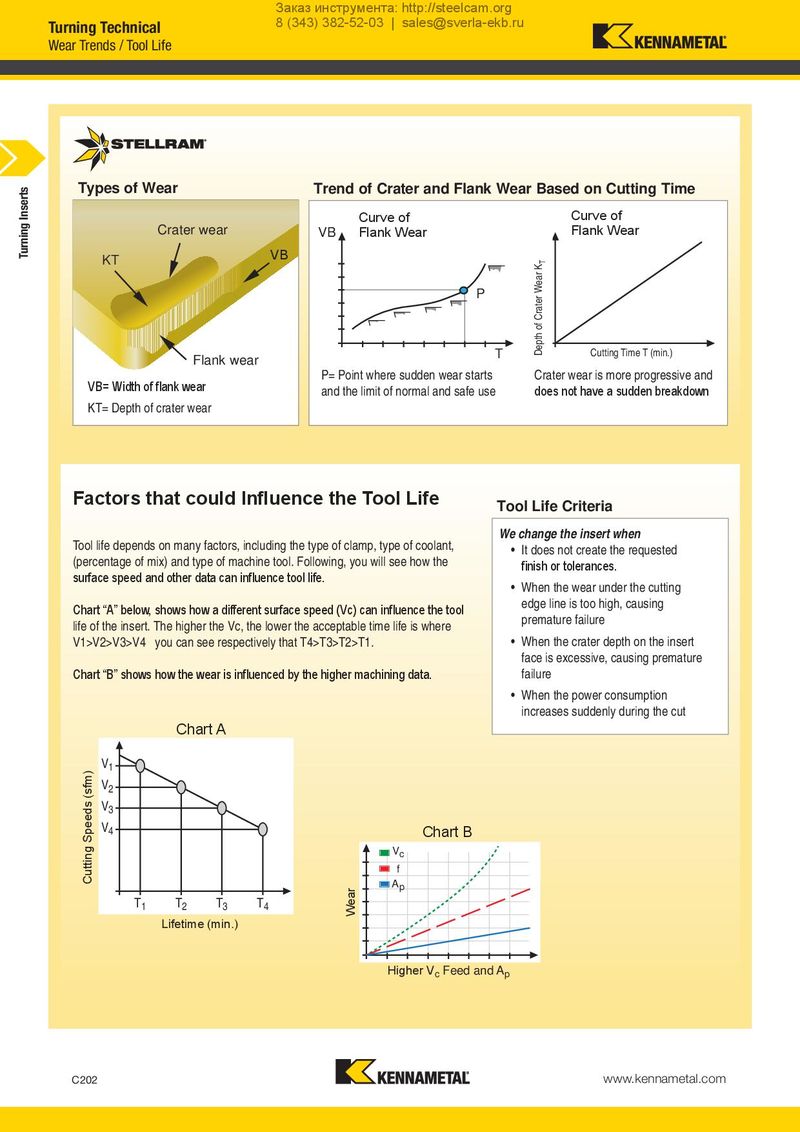
Wear Trends / Tool Life
Types of Wear Trend of Crater and Flank Wear Based on Cutting Time Curve of Curve of Curve of Flank WearCurve of
Crater wear VB Flank WearFlank Wear Crater Wear
VB KT P
Flank wear VB= Width of flank wear KT= Depth of crater wear
T Cutting Time T (min.)Cutting Time T (min.) P= Point where sudden wear starts Crater wear is more progressive and and the limit of normal and safe use does not have a sudden breakdown
Factors that could Influence the Tool Life
Tool Life Criteria We change the insert when Tool life depends on many factors, including the type of clamp, type of coolant, It does not create the requested (percentage of mix) and type of machine tool. Following, you will see how the finish or tolerances. surface speed and other data can influence tool life.
- When the wear under the cutting
Chart “A” below, shows how a different surface speed (Vc) can influence the tool edge line is too high, causing life of the insert. The higher the Vc, the lower the acceptable time life is where premature failure V1>V2>V3>V4 you can see respectively that T4>T3>T2>T1. When the crater depth on the insert face is excessive, causing premature Chart “B” shows how the wear is influenced by the higher machining data. failure
- When the power consumption increases suddenly during the cut
Chart A Chart A V1 V2 V3 V4 Chart B Chart B Vc f Ap
| T | T | T | T |
| 1 | 2 | 3 | 4 |
Lifetime (min.)Lifetime (min.)
Higher VHigher V Feed and A Feed and A cc pp