Цельные твердосплавные микросверла линейки KenDrill Micro Kennametal 2025 - страница 12
Навигация
 Инструментальные патроны системы SAFE-LOCK Kennametal 2024
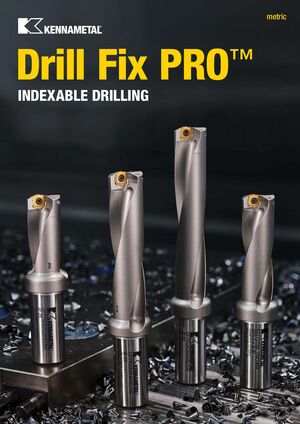 Сверла со сменными пластинами линейки Drill Fix PRO Kennametal 2024
 Инновационные токарные пластины с покрытиями KENGold CVD и PVD Kennametal 2025
 Каталог Kennametal инновации 2020.2
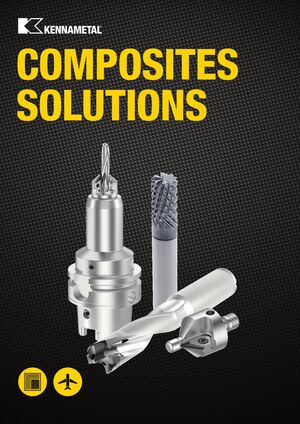 Решения Kennametal для обработки композитов 2024
 Токарные пластины серии KCU10B с технологией покрытия KENGold PVD Kennametal 2023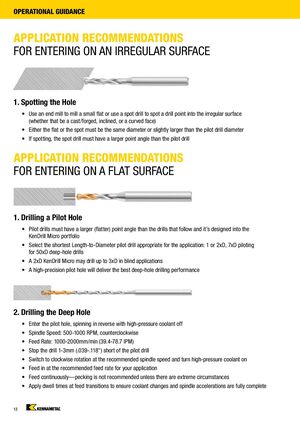
Руководство по эксплуатации
Рекомендации по применению для входа на неровную поверхность
Разметка отверстия
- Используйте концевую фрезу для фрезерования небольшой плоской поверхности или используйте центровочное сверло для разметки точки входа на неровной поверхности (будь то литая/кованая, наклонная или изогнутая поверхность)
- Плоская поверхность или разметка должны быть того же диаметра или немного больше диаметра пилотного сверла
- При разметке центровочное сверло должно иметь больший угол вершины, чем пилотное сверло
Рекомендации по применению для входа на плоскую поверхность
Сверление пилотного отверстия
- Пилотные сверла должны иметь больший (более плоский) угол вершины, чем последующие сверла, и это заложено в портфель KenDrill Micro
- Выберите кратчайшее пилотное сверло с наиболее благоприятным соотношением длина-диаметр для вашего применения: пилотирование 1x или 2xD, 7xD для глубоких сверл 50xD
- Сверло KenDrill Micro 2xD может сверлить глубину до 3xD в слепых отверстиях
- Высокоточное пилотное отверстие обеспечит лучшую производительность глубокого сверления
Сверление глубокого отверстия
- Введите сверло в пилотное отверстие, вращаясь в обратном направлении с выключенной подачей СОЖ под давлением
- Скорость шпинделя: 500–1000 об/мин, против часовой стрелки
- Подача: 1000–2000 мм/мин (39,4–78,7 дюйм/мин)
- Остановите сверло на 1–3 мм (0,039–0,118 дюйма) перед кончиком пилотного сверла
- Переключитесь на вращение по часовой стрелке при рекомендуемой скорости шпинделя и включите подачу СОЖ под давлением
- Подавайте со скоростью подачи, рекомендуемой для вашего применения
- Подавайте непрерывно — пульсирующее сверление не рекомендуется, если нет крайних обстоятельств
- Применяйте паузы при переходах подачи, чтобы убедиться, что изменение СОЖ и разгон шпинделя полностью завершены