Каталог Iscar вращающийся инструмент 2017 - страница 667
Навигация
 Каталог Iscar токарные пластины ISO 2022
 Каталог Iscar инструмент для фрезерования
 Каталог Iscar решения для глубокого сверления
 Каталог Iscar полирующие фрезы
 Каталог Iscar новые продукты 2018
 Каталог Iscar концевые фрезы со сменными пластинами 2022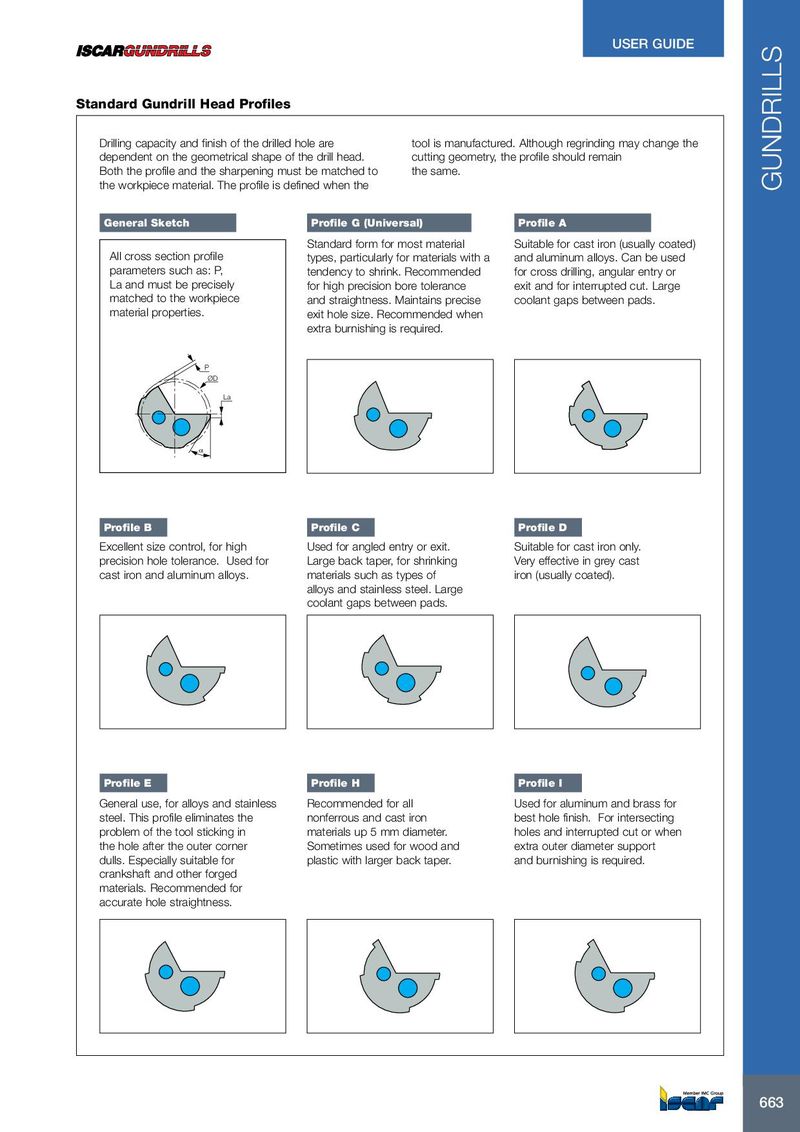
USER GUIDE Standard Gundrill Head Profiles Drilling capacity and finish of the drilled hole are tool is manufactured. Although regrinding may change the dependent on the geometrical shape of the drill head. cutting geometry, the profile should remain Both the profile and the sharpening must be matched to the same. the workpiece material. The profile is defined when the General Sketch Profile G (Universal) Profile A Standard form for most material Suitable for cast iron (usually coated) All cross section profile types, particularly for materials with a and aluminum alloys. Can be used parameters such as: P, tendency to shrink. Recommended for cross drilling, angular entry or La and must be precisely for high precision bore tolerance exit and for interrupted cut. Large matched to the workpiece and straightness. Maintains precise coolant gaps between pads. material properties. exit hole size. Recommended when extra burnishing is required. P ØD La α Profile B Profile C Profile D Excellent size control, for high Used for angled entry or exit. Suitable for cast iron only. precision hole tolerance. Used for Large back taper, for shrinking Very effective in grey cast cast iron and aluminum alloys. materials such as types of iron (usually coated). alloys and stainless steel. Large coolant gaps between pads. GUNDRILLS Profile E Profile H Profile I General use, for alloys and stainless Recommended for all Used for aluminum and brass for steel. This profile eliminates the nonferrous and cast iron best hole finish. For intersecting problem of the tool sticking in materials up 5 mm diameter. holes and interrupted cut or when the hole after the outer corner Sometimes used for wood and extra outer diameter support dulls. Especially suitable for plastic with larger back taper. and burnishing is required. crankshaft and other forged materials. Recommended for accurate hole straightness. 663