Каталог Iscar токарный инструмент 2017 - страница 423
Навигация
 Каталог Iscar резьбонарезные фрезы
 Каталог Iscar инструмент для обработки алюминиевых колёс
 Каталог Iscar державки и пластины для нарезания резьбы 2022
 Каталог Iscar расточные системы 2022
 Каталог Iscar высокоточные развертки и метчики 2022
 Токарные инструменты Iscar (часть 2) 2026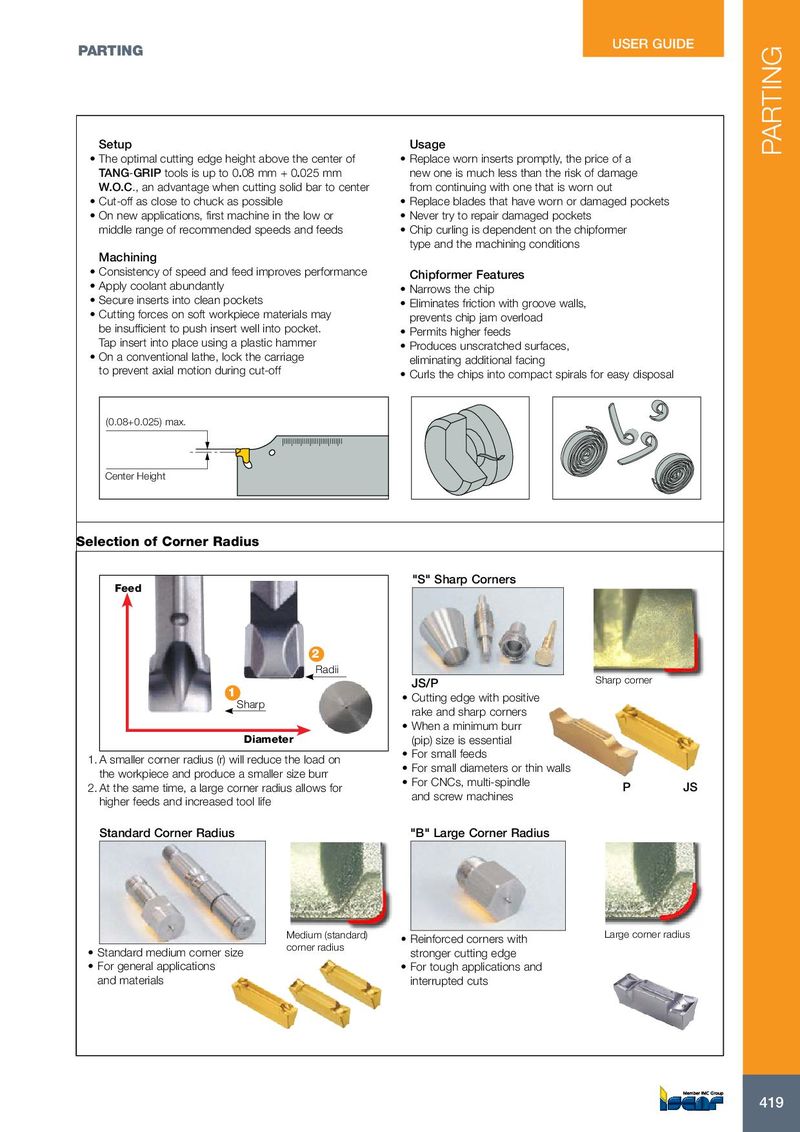
Setup Usage
- The optimal cutting edge height above the center of
- Replace worn inserts promptly, the price of a
TANG-GRIP tools is up to 0.08 mm + 0.025 mm new one is much less than the risk of damage W.O.C., an advantage when cutting solid bar to center from continuing with one that is worn out
- Cut-off as close to chuck as possible
- Replace blades that have worn or damaged pockets
- On new applications, first machine in the low or
- Never try to repair damaged pockets
middle range of recommended speeds and feeds Chip curling is dependent on the chipformer type and the machining conditions Machining
- Consistency of speed and feed improves performance Chipformer Features
- Apply coolant abundantly
- Narrows the chip
- Secure inserts into clean pockets
- Eliminates friction with groove walls,
- Cutting forces on soft workpiece materials may prevents chip jam overload be insufficient to push insert well into pocket. Permits higher feeds Tap insert into place using a plastic hammer Produces unscratched surfaces,
- On a conventional lathe, lock the carriage eliminating additional facing to prevent axial motion during cut-off Curls the chips into compact spirals for easy disposal
(0.08+0.025) max.
Center Height
Selection of Corner Radius
"S" Sharp Corners Feed
2 Radii JS/P Sharp corner 1 Cutting edge with positive Sharp rake and sharp corners
- When a minimum burr
Diameter (pip) size is essential 1. A smaller corner radius (r) will reduce the load on For small feeds the workpiece and produce a smaller size burr For small diameters or thin walls
2. At the same time, a large corner radius allows for For CNCs, multi-spindle P JS
higher feeds and increased tool life and screw machines Standard Corner Radius "B" Large Corner Radius
Medium (standard) Reinforced corners with Large corner radius
- Standard medium corner size corner radius stronger cutting edge
- For general applications
- For tough applications and
and materials interrupted cuts