Средства индивидуальной защиты Hoffmann Group 2026 - страница 171
Навигация
 Новые режущие инструменты, производственная мебель и средства защиты Hoffmann Group 2027
 Каталог Hoffmann Group запасные части, оснастка и СИЗ
 Каталог Hoffmann Group ручной и измерительный инструмент
 Каталог Hoffmann Group режущий и вспомогательный инструмент
 Производственная мебель и системы хранения Hoffmann Group 2026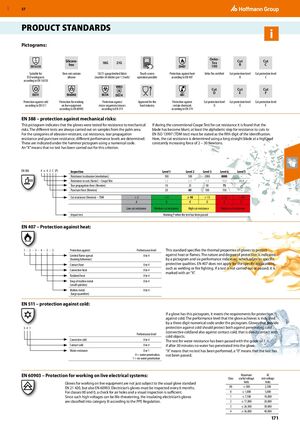
Стандарты изделий
Пиктограммы:
| EN16350 Подходит для рабочих мест с электростатической безопасностью согласно EN 16350 |
Не содержит силикона | 18G и 21G Трикотажная ткань калибра 18/21 (количество стежков на 1,5 дюйма) |
Возможна работа с сенсорным экраном | EN407 Защита от тепла согласно EN 407 |
Oeko-Tex 100 Сертификат Oeko-Tex |
Класс защиты от разрезов B, C, D, E, F Уровни защиты от разрезов B, C, D, E, F |
| EN511 Защита от холода согласно EN 511 |
EN60903 Защита при работе с находящимся под напряжением оборудованием согласно EN 60903 |
EN374 Защита от микроорганизмов и вирусов согласно EN 374 |
EN374 Одобрено для пищевой промышленности |
ABC Защита от определённых химических веществ согласно EN 374 |
||
EN 388 – защита от механических рисков:
Данный пиктограмм указывает на то, что перчатки прошли испытания на устойчивость к механическим рискам. Различные испытания всегда проводятся на образцах из области ладони. Для категорий устойчивости к истиранию, сопротивления разрезам, сопротивления распространению разрыва и сопротивления прокалыванию определяются различные уровни производительности. Они указываются под пиктограммом молота с использованием численного кода.
Буква «X» означает, что испытания по данному критерию не проводились.
Если при обычном испытании Coupe Test на сопротивление разрезам обнаружено, что лезвие затупилось, в качестве пятой цифры идентификации должна быть указана по крайней мере буквенная ступень сопротивления разрезам согласно EN ISO 13997 (тест TDM). При этом сопротивление разрезам определяется с помощью длинного прямого лезвия с высокой и постоянно возрастающей силой 2–30 ньютонов.
| EN 388 | Испытание | Уровень 1 | Уровень 2 | Уровень 3 | Уровень 4 | Уровень 5 |
|---|---|---|---|---|---|---|
| 4 × 4 2 C (P) | Сопротивление истиранию (обороты) | 100 | 500 | 2000 | 8000 | – |
| Сопротивление разрезам (коэффициент) – тест Coupe | 1,2 | 2,5 | 5,0 | 10,0 | 20,0 | |
| Сила распространения разрыва (ньютоны) | 10 | 25 | 50 | 75 | – | |
| Сила прокалывания (ньютоны) | 20 | 60 | 100 | 150 | – | |
| Сопротивление разрезам (ньютоны) – TDM | >2, A | >5, B | >10, C | >15, D | >22, E | |
| Испытание на удар | Маркировка P при успешном прохождении испытания | |||||
| Низкое сопротивление разрезам | Среднее сопротивление разрезам | Высокое сопротивление разрезам | Наивысшее сопротивление разрезам | |||
EN 407 – защита от тепла:
1 - 2 - 3 - 4 - 3 - 2
| Защита от: | Уровень производительности |
|---|---|
| Ограниченное распространение пламени (поведение при горении) | 0 до 4 |
| Контактное тепло | 0 до 4 |
| Конвективное тепло | 0 до 4 |
| Лучистое тепло | 0 до 4 |
| Брызги расплавленного металла (небольшие количества) | 0 до 4 |
| Расплавленный металл (большие количества) | 0 до 4 |
Данный стандарт определяет термические свойства перчаток для защиты от тепла или пламени. Характер и степень защиты указаны пиктограммой и шестью показателями производительности, которые относятся к конкретным защитным качествам. EN 407 не применяется для специфических применений, таких как сварка или пожаротушение. Если испытание не проводилось или не пройдено, это помечается буквой «X».
EN 511 – защита от холода:
3 4 1
Если перчатка имеет данный пиктограмм, она соответствует требованиям защиты от холода. Уровень производительности, достигаемый перчаткой, указывается трёхзначным числовым кодом под пиктограммом. Перчатки, обеспечивающие защиту от холода, должны защищать как от проникающего холода (конвективного холода), так и от контактного холода, то есть прямого контакта с холодными предметами.
Испытание на водостойкость считается пройденным с оценкой 1, если через 30 минут вода не проникла в перчатку. «X» означает, что испытание не проводилось; «0» означает, что испытание не пройдено.
| Характеристика | Уровень производительности |
|---|---|
| Конвективный холод | 0 до 4 |
| Контактный холод | 0 до 4 |
| Водостойкость | 0 или 1 (0 = проникновение воды; 1 = без проникновения воды) |
EN 60903 – защита при работе с находящимся под напряжением оборудованием:
Перчатки для работы с находящимся под напряжением оборудованием подчиняются не только обычному стандарту перчаток EN 21 420, но и EN 60903. Электрозащитные перчатки должны проверяться каждые 6 месяцев. Для классов 00 и 0 достаточно проверки на наличие отверстий и визуального осмотра. Поскольку такие высокие напряжения могут быть опасны для жизни, изолирующие электрозащитные перчатки классифицируются в категорию III согласно Регламенту СИЗ.
| Класс | Максимальное рабочее напряжение, В | Испытательное напряжение переменного тока, В |
|---|---|---|
| 00 | ≤ 500 | 2 500 |
| 0 | ≤ 1 000 | 5 000 |
| 1 | ≤ 7 500 | 10 000 |
| 2 | ≤ 17 000 | 20 000 |
| 3 | ≤ 26 500 | 30 000 |
| 4 | ≤ 36 000 | 40 000 |