Режущие и зажимные инструменты Hoffmann Group 2026 - страница 255
Навигация
 Каталог Hoffmann Group ручной и измерительный инструмент
 Каталог Hoffmann Group режущий и вспомогательный инструмент
 Производственная мебель и системы хранения Hoffmann Group 2026
 Каталог Hoffmann Group токарный инструмент
 Каталог Hoffmann Group запасные части, оснастка и СИЗ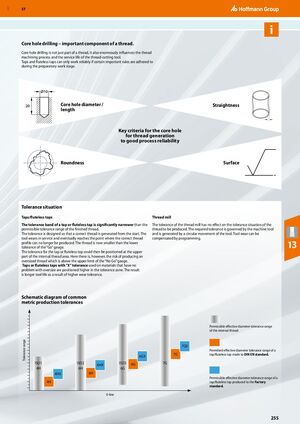
Сверление отверстия под нарезание – важный компонент резьбы
Сверление отверстия под нарезание – это не просто часть резьбы, оно также огромно влияет на процесс нарезания резьбы и срок службы инструмента, нарезающего резьбу. Метчики и безэвольвентные метчики могут работать надежно только если соблюдаются определенные важные правила на этапе подготовительных работ.
Ключевые критерии отверстия под нарезание для нарезания резьбы с обеспечением надежности процесса
- Диаметр отверстия / длина
- Круглость
- Прямолинейность
- Поверхность
Ситуация с допусками
Метчики/безэвольвентные метчики
Поле допуска метчика или безэвольвентного метчика значительно уже, чем допускаемый диапазон допусков готовой резьбы. Допуск разработан таким образом, чтобы правильная резьба создавалась с самого начала. Инструмент изнашивается в процессе работы и в конечном итоге достигает точки, где правильный профиль резьбы больше не может быть создан: резьба теперь меньше, чем нижний допуск эталона "Go".
Допуск для метчика или безэвольвентного метчика можно расположить в верхней части области внутренней резьбы. Однако здесь существует риск создания резьбы увеличенного размера, которая выше верхнего предела эталона "No Go".
Метчики или безэвольвентные метчики с допуском "X", используемые на материалах, у которых нет проблем с увеличенным размером, расположены выше в поле допуска. Результатом является увеличенный срок службы инструмента благодаря более высокому допуску на износ.
Фреза для нарезания резьбы
Допуск фрезы для нарезания резьбы не влияет на ситуацию с допусками создаваемой резьбы. Требуемый допуск определяется станком и создается круговым движением инструмента. Износ инструмента может быть компенсирован программированием.
Схематическая диаграмма типичных метрических допусков производства
| Концепция | Описание |
|---|---|
| Поле допуска | Диапазон от нижней к верхней границе |
| Нулевая линия | Базовая линия для отсчета допусков |
| ISO1 4H | Соответствует нижнему пределу допуска |
| ISO2 6H / 4HX 6H | Стандартные поля допусков |
| ISO3 6G / 6GX 7G / 7GX | Верхние поля допусков |
Допускаемый диапазон допусков эффективного диаметра внутренней резьбы.
Разрешенный диапазон допусков эффективного диаметра метчика/безэвольвентного метчика, изготовленного по стандарту DIN EN.
Допускаемый диапазон допусков эффективного диаметра метчика/безэвольвентного метчика, изготовленного по заводскому стандарту.