Производственная мебель и системы хранения Hoffmann Group 2026 - страница 630
Навигация
 Каталог Hoffmann Group ручной и измерительный инструмент
 Каталог Hoffmann Group режущий и вспомогательный инструмент
 Режущие и зажимные инструменты Hoffmann Group 2026
 Новые режущие инструменты, производственная мебель и средства защиты Hoffmann Group 2027
 Средства индивидуальной защиты Hoffmann Group 2026
 - Table of contents
- Transport systems
- Workstation systems
- Tool cabinets
- Cabinets, computer workstations,lockers
- GARANT GridLine accessories
- Completing the range
- GARANT Tool24 and HOLEX 24seven industrialvending solutions, CNC, ESD, office
- Environmental technology
- Storage technology, spatial systemsand containers
- Index, care instructions, overview of colours
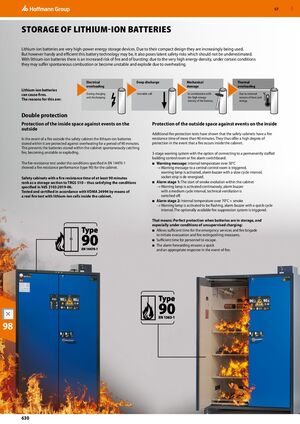
Хранение литий-ионных батарей
Литий-ионные батареи являются очень мощными устройствами накопления энергии. Благодаря своей компактной конструкции они все чаще используются. Однако как бы удобны и эффективны ни были батареи этого типа, они также представляют скрытые риски безопасности, которые не следует недооценивать.
В отношении литий-ионных батарей существует повышенный риск пожара и взрыва: из-за очень высокой плотности энергии при определенных условиях они могут самопроизвольно загораться или становиться нестабильными и взрываться из-за перегрева.
Литий-ионные батареи могут вызвать пожары. Причины:
| Электрическая перегрузка | Глубокий разряд | Механическое повреждение | Тепловая перегрузка |
|---|---|---|---|
| При зарядке и разрядке. | Нестабильная ячейка. | В сочетании с высокой плотностью энергии батареи. | Из-за внешних источников тепла и энергии. |
Двойная защита
Защита внутреннего пространства от внешних событий
В случае пожара вне шкафа безопасности литий-ионные батареи, хранящиеся в нем, защищены от перегрева в течение 90 минут. Это предотвращает самопроизвольное возгорание, нестабильность или взрыв батарей, хранящихся в шкафу.
Испытание огнеустойчивости в условиях, указанных в EN 14470-1, показало огнеустойчивость (тип 90) шкафа.
Шкафы безопасности с временем огнеустойчивости не менее 90 минут классифицируются как хранилище согласно TRGS 510, таким образом удовлетворяя условиям, указанным в VdS 3103:2019-06.
Протестирована и сертифицирована в соответствии с VDMA 24994 на основе реального пожарного теста с литий-ионными элементами внутри шкафа.
Защита внешнего пространства от внутренних событий
Дополнительные испытания пожаростойкости показали, что шкафы имеют время огнеустойчивости более 90 минут. Таким образом, они обеспечивают высокую степень защиты в случае возникновения пожара внутри шкафа.
Трехуровневая система предупреждения с возможностью подключения к постоянно укомплектованному диспетчерскому центру здания или пожарной сигнализации:
- Предупредительное сообщение: Внутренняя температура выше 50°C → Предупредительное сообщение в центральный диспетчерский центр активируется, активируется предупредительная лампа, звуковой сигнал тревоги с низкочастотным интервалом, силовая розетка отключается.
- Сигнал тревоги 1-го уровня: Начало выделения дыма внутри шкафа → Предупредительная лампа активируется постоянно, звуковой сигнал тревоги со среднечастотным интервалом, техническая вентиляция отключается.
- Сигнал тревоги 2-го уровня: Внутренняя температура выше 70°C + дым → Предупредительная лампа мигает, звуковой сигнал тревоги с высокочастотным интервалом. При наличии система пожаротушения активируется.
Это означает: Идеальная защита при хранении батарей, особенно при условиях без присмотра:
- Достаточно времени для служб экстренной помощи и пожарной бригады для проведения эвакуации и мер пожаротушения.
- Достаточно времени для персонала эвакуации.
- Передача сигнала тревоги обеспечивает быстрый и надлежащий ответ в случае пожара.