Каталог Iscar высокоточные развертки и метчики 2022 - страница 62
Навигация
 Токарные инструменты Iscar (часть 2) 2026
 Каталог Iscar инструмент для обработки отверстий
 Каталог Iscar державки и пластины для нарезания резьбы 2022
 Каталог Iscar крепление инструмента
 Каталог Iscar токарные пластины ISO 2022
 Руководство Iscar режущий инструмент в производстве штампов и пресс-форм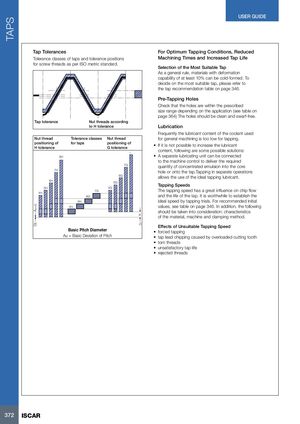
Tap Tolerances For Optimum Tapping Conditions, Reduced
Tolerance classes of taps and tolerance positions Machining Times and Increased Tap Life for screw threads as per ISO metric standard. Selection of the Most Suitable Tap As a general rule, materials with deformation capability of at least 10% can be cold-formed. To decide on the most suitable tap, please refer to the tap recommendation table on page 346.
Pre-Tapping Holes
Check that the holes are within the prescribed size range depending on the application (see table on page 364) The holes should be clean and swarf-free. Tap tolerance Nut threads according to H tolerance Lubrication Frequently the lubricant content of the coolant used
| Nut thread | Tolerance classes | Nut thread | for general machining is too low for tapping. | |
| positioning of | for taps | positioning of | • If it is not possible to increase the lubricant |
H tolerance G tolerance content, following are some possible solutions:
- A separate Iubricating unit can be connected
8H to the machine control to deliver the required
| 7G quantity of concentrated emulsion into the core |
| 7H hole or onto the tap.Tapping in separate operations |
| 6G allows the use of the ideal tapping lubricant. |
| 6H |
| 5G Tapping Speeds |
| 4G 5H The tapping speed has a great influence on chip flow |
7G 4H and the life of the tap. It is worthwhile to establish the 6G 6H ideal speed by tapping trials. For recommended initial
4H values, see table on page 346. In addition, the following should be taken into consideration: characteristics of the material, machine and clamping method. Effects of Unsuitable Tapping Speed Basic Pitch Diameter forced tapping Au = Basic Deviation of Pitch tap lead chipping caused by overloaded cutting tooth
- torn threads
- unsatisfactory tap life
- rejected threads