Средства индивидуальной защиты Hoffmann Group 2026 - страница 507
Навигация
 Новые режущие инструменты, производственная мебель и средства защиты Hoffmann Group 2027
 Каталог Hoffmann Group запасные части, оснастка и СИЗ
 Каталог Hoffmann Group ручной и измерительный инструмент
 Каталог Hoffmann Group режущий и вспомогательный инструмент
 Производственная мебель и системы хранения Hoffmann Group 2026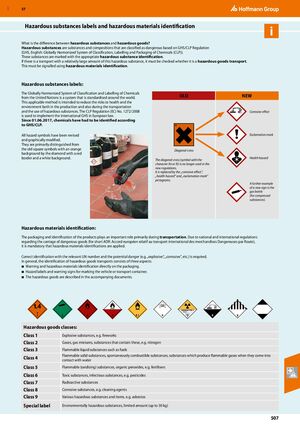
Маркировка опасных веществ и идентификация опасных материалов
Какова разница между опасными веществами и опасными грузами?
Опасные вещества — это вещества и смеси, классифицируемые как опасные в соответствии с Регламентом ГХС/CLP (Глобальная согласованная система классификации, маркировки и упаковки химических веществ). Эти вещества отмечены соответствующей маркировкой опасных веществ. Если транспортировка производится с относительно большим количеством этого опасного вещества, необходимо проверить, является ли это транспортировкой опасных грузов. Это должно быть обозначено с помощью идентификации опасных материалов.
Маркировка опасных веществ:
Глобальная согласованная система классификации и маркировки химических веществ Организации Объединённых Наций — это система, стандартизированная во всём мире. Этот применяемый метод предназначен для снижения рисков для здоровья и окружающей среды как при производстве, так и при транспортировке и использовании опасных веществ. Регламент CLP (ЕС) № 1272/2008 используется для внедрения международной ГХС в законодательство Европейского Союза. С 01.06.2017 химические вещества должны быть идентифицированы в соответствии с ГХС/CLP.
Все символы опасности были пересмотрены и графически модифицированы. Они в основном отличаются от старых квадратных символов с оранжевым фоном ромбом с красной границей и белым фоном.
Диагональный крест (символ с буквой Xn или Xi) больше не используется в новых нормативных актах. Он заменяется пиктограммами «коррозионное действие», «опасность для здоровья» и «восклицательный знак». Дополнительный пример нового знака — баллон с газом (для сжатых веществ).
Идентификация опасных материалов:
Упаковка и идентификация продуктов играют важную роль, в основном, при транспортировке. Из-за национальных и международных нормативных актов, касающихся перевозки опасных грузов (сокращенно ADR), обязательно применение идентификации опасных материалов. Правильная идентификация с соответствующим номером ООН и указанием потенциальной опасности (например, «взрывчатое вещество», «коррозионное» и т. д.) является требуемой. В целом идентификация транспортировки опасных грузов состоит из трёх аспектов:
- Предупреждение и идентификация опасных материалов непосредственно на упаковке
- Ярлыки опасности и предупреждающие знаки для обозначения транспортного средства или контейнера для перевозки
- Опасные грузы описываются в сопроводительных документах
Классы опасных грузов:
| Класс 1 | Взрывчатые вещества, например фейерверки |
| Класс 2 | Газы, газовые смеси, вещества, их содержащие, например азот |
| Класс 3 | Горючие жидкие вещества, такие как топливо |
| Класс 4 | Горючие твёрдые вещества, самовозгораемые вещества, вещества, которые при контакте с водой выделяют горючие газы |
| Класс 5 | Горючие (окисляющие) вещества, органические пероксиды, например удобрения |
| Класс 6 | Токсичные вещества, инфекционные вещества, например пестициды |
| Класс 7 | Радиоактивные вещества |
| Класс 8 | Коррозионные вещества, например чистящие средства |
| Класс 9 | Различные опасные вещества и предметы, например асбест |
| Специальный ярлык | Экологически опасные вещества, ограниченное количество (до 30 кг) |