Средства индивидуальной защиты Hoffmann Group 2026 - страница 369
Навигация
 Новые режущие инструменты, производственная мебель и средства защиты Hoffmann Group 2027
 Каталог Hoffmann Group запасные части, оснастка и СИЗ
 Каталог Hoffmann Group ручной и измерительный инструмент
 Каталог Hoffmann Group режущий и вспомогательный инструмент
 Производственная мебель и системы хранения Hoffmann Group 2026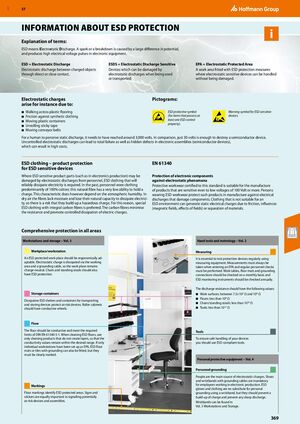
Информация о защите от электростатического разряда
Пояснение терминов:
ЭСР означает электростатический разряд. Искра или пробой вызывается большой разностью потенциалов и создаёт импульсы высокого электрического напряжения в электронном оборудовании.
| ЭСР = Электростатический разряд | Электростатический разряд между заряженными предметами при прямом контакте или вблизи. |
| ЭСР-ЧУ = Устройства, чувствительные к электростатическому разряду | Устройства, которые могут быть повреждены электростатическими разрядами при использовании или транспортировке. |
| ЭЗЗ = Электростатически защищённая зона | Рабочая зона, оснащённая мерами защиты от электростатического разряда, где можно безопасно обращаться с устройствами, чувствительными к электростатическому разряду. |
Электростатические заряды возникают, например, из-за:
- Ходьбы по пластиковому полу
- Трения о синтетическую одежду
- Перемещения пластиковых контейнеров
- Разворачивания липкой ленты
- Движения конвейерных лент
Чтобы человек мог воспринять статический разряд, он должен достичь примерно 3000 вольт. Для сравнения: всего 30 вольт достаточно, чтобы повредить полупроводниковое устройство.
Неконтролируемые электростатические разряды могут привести к полному отказу, а также к скрытым дефектам электронных узлов (полупроводниковые устройства), что может привести к высоким затратам.
Пиктограммы:
| Символ защиты от ЭСР | Для изделий, обладающих по крайней мере одним свойством контроля ЭСР. |
| Символ предупреждения об устройствах, чувствительных к ЭСР |
Защитная одежда — защита продукции для устройств, чувствительных к электростатическому разряду
Если части продукции, чувствительные к ЭСР (такие как в электронном производстве), могут быть повреждены электростатическими разрядами от персонала, требуется защитная одежда от ЭСР, которая надёжно рассеивает электричество. В прошлом персонал носил одежду преимущественно из 100% хлопка; это природное волокно имеет очень низкую способность накапливать заряд. Однако эта характеристика зависит от влажности воздуха. В сухом воздухе волокна теряют влагу и теряют свою естественную способность рассеивать электричество, поэтому существует риск накопления опасного заряда. По этой причине предпочтительна специальная защитная одежда от ЭСР с интегрированными углеродными волокнами. Углеродные волокна минимизируют сопротивление и способствуют контролируемому рассеиванию электрических зарядов.
EN 61340
Защита электронных компонентов от электростатических явлений
Защитная рабочая одежда, сертифицированная по этому стандарту, пригодна для производства продукции, чувствительной даже к низким напряжениям 100 вольт и выше. Лица, носящие защитную одежду от ЭСР, защищают такую продукцию при производстве от электрических разрядов, повреждающих компоненты. Одежда, непригодная для среды ЭСР, может генерировать статические электрические заряды из-за трения, влияния (магнитные поля, воздействие полей) или разделения материалов.
Комплексная защита на всех участках
Рабочие места и хранение — Том 3
Рабочее место/рабочая станция
Защищённое от ЭСР рабочее место должно быть эргономично адаптируемым. Электростатический заряд рассеивается через рабочую зону и заземляющий кабель, так что рабочее место остаётся электронейтральным. Кресла и стоящие табуреты должны также иметь защиту от ЭСР.
Контейнеры для хранения
Рассеивающие ЭСР полки и контейнеры для транспортировки и хранения устройств защищают подверженные риску устройства. Прокатные шкафы должны иметь токопроводящие колёса.
Пол
Пол должен быть проводящим и соответствовать требуемым пределам DIN EN 61340-5-1. При очистке полов ЭСР используйте только чистящие средства, которые не создают слоев, чтобы значения проводимости оставались в желаемом диапазоне. Если были установлены только отдельные рабочие станции как ЭЗЗ, можно также использовать коврики ЭСР для пола или плитки с заземлением, но они должны быть чётко обозначены.
Разметка
Напольная разметка определяет области, защищённые от ЭСР. Знаки и наклейки одинаково важны для обозначения потенциально подверженных риску устройств и узлов.
Инструменты и метрология — Том 2
Измерение
Крайне важно регулярно проверять устройства защиты с помощью измерительного оборудования. Измерения всегда должны проводиться при входе в ЭЗЗ, и должны проводиться регулярные проверки персонала. Рабочие столы, напольные коврики и заземляющие соединения должны проверяться ежемесячно, а мониторы ЭСР должны проверяться ежегодно. Сопротивление разряда должно иметь следующие значения:
- Рабочие поверхности: между 7,5×10⁵ Ω и 10⁹ Ω
- Полы: менее 10⁹ Ω
- Кресла/стоящие табуреты: менее 10¹⁰ Ω
- Инструменты: менее 10¹² Ω
Инструменты
Для обеспечения безопасного обращения с вашими устройствами следует использовать инструменты, соответствующие требованиям ЭСР.
Средства индивидуальной защиты — Том 4
Заземление персонала
Люди являются основным источником электростатических зарядов. Обувь и браслеты заземления с заземляющими кабелями являются обязательными для сотрудников, работающих в электронном производстве. Перчатки и одежда от ЭСР не являются заменой личного заземления браслетом, но должны предотвращать накопление заряда и предотвращать любой резкий разряд. Браслеты заземления можно найти в Том 3 «Рабочие места и хранение».