Средства индивидуальной защиты Hoffmann Group 2026 - страница 332
Навигация
 Новые режущие инструменты, производственная мебель и средства защиты Hoffmann Group 2027
 Каталог Hoffmann Group запасные части, оснастка и СИЗ
 Каталог Hoffmann Group ручной и измерительный инструмент
 Каталог Hoffmann Group режущий и вспомогательный инструмент
 Производственная мебель и системы хранения Hoffmann Group 2026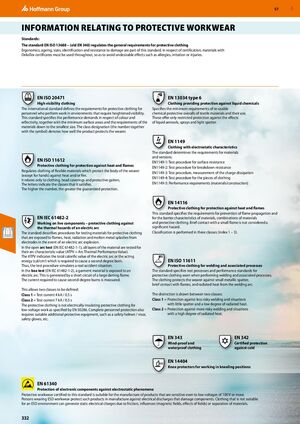
ИНФОРМАЦИЯ ПО ЗАЩИТНОЙ РАБОЧЕЙ ОДЕЖДЕ
Стандарты
EN ISO 13688 (ранее EN 340) регулирует общие требования к защитной одежде. Эргономика, старение, размеры, идентификация и устойчивость к повреждениям являются частью этого стандарта. Что касается сертификации, на протяжении всей продукции должны использоваться материалы с сертификатами OekoTex, чтобы избежать нежелательных эффектов, таких как аллергия, раздражение или травмы.
EN ISO 20471 — Одежда высокой видимости
Международный стандарт определяет требования к защитной одежде для персонала, выполняющего работы в условиях, требующих повышенной видимости. Этот стандарт определяет требования к производительности в отношении цвета и светоотражения, а также минимальные площади поверхности и требования к материалам вплоть до наименьшего размера. Обозначение класса (число вместе с символом) указывает на уровень защиты изделия.
EN ISO 11612 — Защитная одежда для защиты от тепла и пламени
Регулирует одежду из гибких материалов, защищающую тело владельца (кроме рук) от тепла и/или огня. Относится только к одежде, головным уборам и защитным чулкам. Буквы указывают на классы, которые он удовлетворяет. Чем выше цифра, тем больше гарантированная защита.
EN IEC 61482-2 — Работа на живых компонентах – защитная одежда от тепловых опасностей электрической дуги
Стандарт описывает процедуры тестирования материалов для защитной одежды, подвергающихся воздействию пламени, тепла, радиации и расплавленных металлических брызг от электродов при взрыве электрической дуги. В открытом тесте дуги (EN IEC 61482-1-1) все слои материала тестируются на их значение дуговой характеристики (ATPV = значение дуговой тепловой производительности). ATPV указывает общую калорийность электрической дуги или действующей энергии (кал/см²), необходимой для возникновения ожога второй степени. Таким образом, процедура тестирования имитирует реальную ситуацию аварии. В боксовом тесте (EN IEC 61482-1-2) материал гарнитуры подвергается электрической дуге. Это создаётся коротким замыканием большого летящего пламени. Измеряется ток, необходимый для возникновения ожогов второй степени. Это позволяет определить два класса:
- Класс 1 = Ток испытания 4 кА / 0,5 с
- Класс 2 = Ток испытания 7 кА / 0,5 с
Защитная одежда не является электрически изолирующей защитной одеждой для низковольтных работ, как указано в EN 50286. Полная защита персонала также требует подходящего дополнительного защитного оборудования, такого как защитный шлем/козырьки, защитные перчатки и т.д.
EN 13034 типа 6 — Одежда, обеспечивающая защиту от жидких химических веществ
Определяет минимальные требования к переиспользуемым химическим защитным комбинезонам из текстильных материалов и их использованию. Они обеспечивают только ограниченную защиту от воздействия жидких аэрозолей, распылений и лёгких брызг.
EN 1149 — Одежда с электростатическими характеристиками
Стандарт определяет требования к материалам и исполнению.
- EN1149-1: Процедура тестирования поверхностного сопротивления
- EN1149-2: Процедура тестирования пробивного сопротивления
- EN1149-3: Процедура тестирования, измерение диссипации заряда
- EN1149-4: Процедура тестирования отдельных элементов одежды
- EN1149-5: Требования к производительности (материалы/конструкция)
EN 14116 — Защитная одежда для защиты от тепла и пламени
Этот стандарт определяет требования к предотвращению распространения пламени и барьерные характеристики материалов, комбинации материалов и защитной одежды. Кратковременный контакт с маленьким пламенем не считается значительной опасностью. Классификация проводится по трём классам (индекс 1–3).
EN ISO 11611 — Защитная одежда для сварки и сопутствующих процессов
Стандарт определяет процедуры испытания и стандарты производительности для защитной одежды, используемой при выполнении сварки и сопутствующих процессов. Одежда защищает владельца от мелких металлических брызг, кратковременного контакта с пламенем и радиационного тепла от сварочной дуги. Проводится различие между двумя классами:
- Класс 1 = Защита от менее опасной сварки и ситуаций с малым количеством брызг и низкой степенью радиационного тепла.
- Класс 2 = Защита от более опасной сварки и ситуаций с высокой степенью радиационного тепла.
EN 343 — Ветро- и водонепроницаемая одежда
EN 342 — Сертифицированная защита от холода
EN 14404 — Наколенники для работы в положении на коленях
EN 61340 — Защита электронных компонентов от электростатических явлений
Защитная рабочая одежда, сертифицированная в соответствии с этим стандартом, подходит для производства продуктов, чувствительных даже к низким напряжениям 100 В и выше. Лица, носящие электростатическую защитную одежду, защищают такие продукты при производстве от электрических разрядов, повреждающих компоненты. Одежда, не подходящая для электростатической среды, может генерировать статические электрические заряды из-за трения, влияния (магнитные поля, влияние полей) или разделения материалов.