Каталог Stellram токарный инструмент - страница 193
Навигация
 Каталог Stellram материалы и сплавы
 Каталог Stellram твердосплавные цельные фрезы
 Каталог Stellram фрез со сменными пластинами
 Каталог Stellram высокопроизводительные фрезерные системы
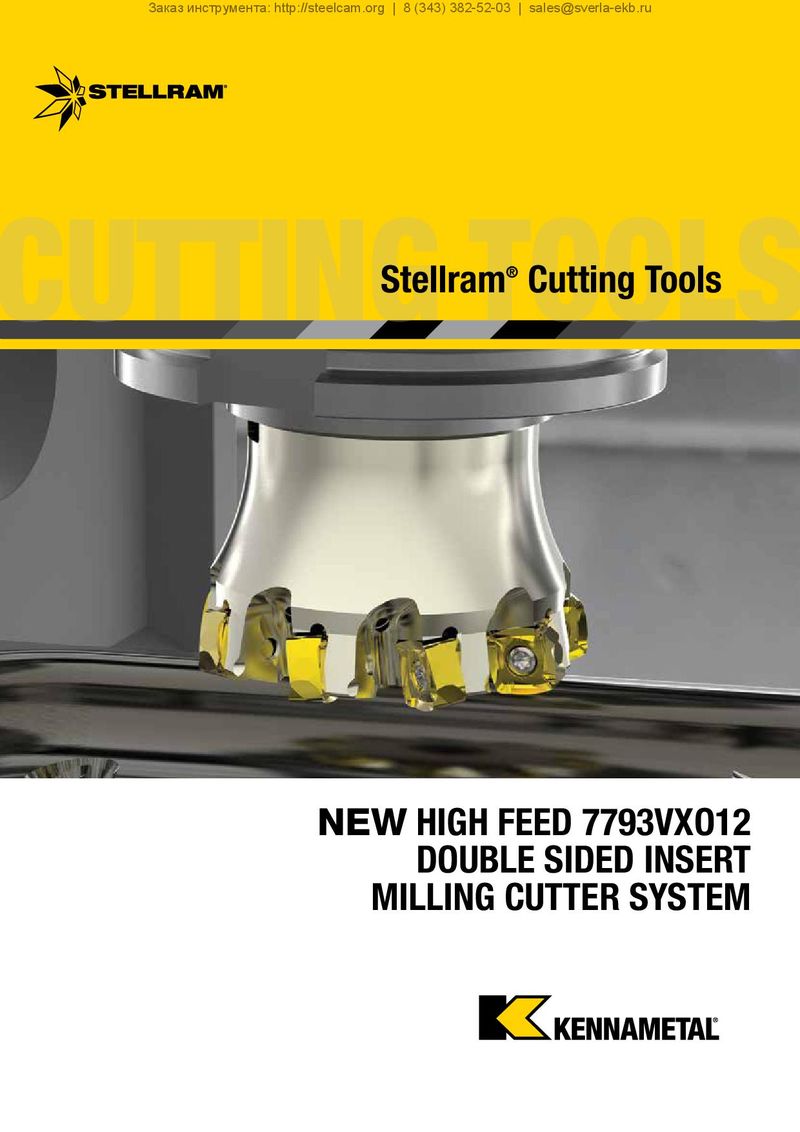 Каталог Stellram системы со сменными пластинами для фрезерования с высокими подачами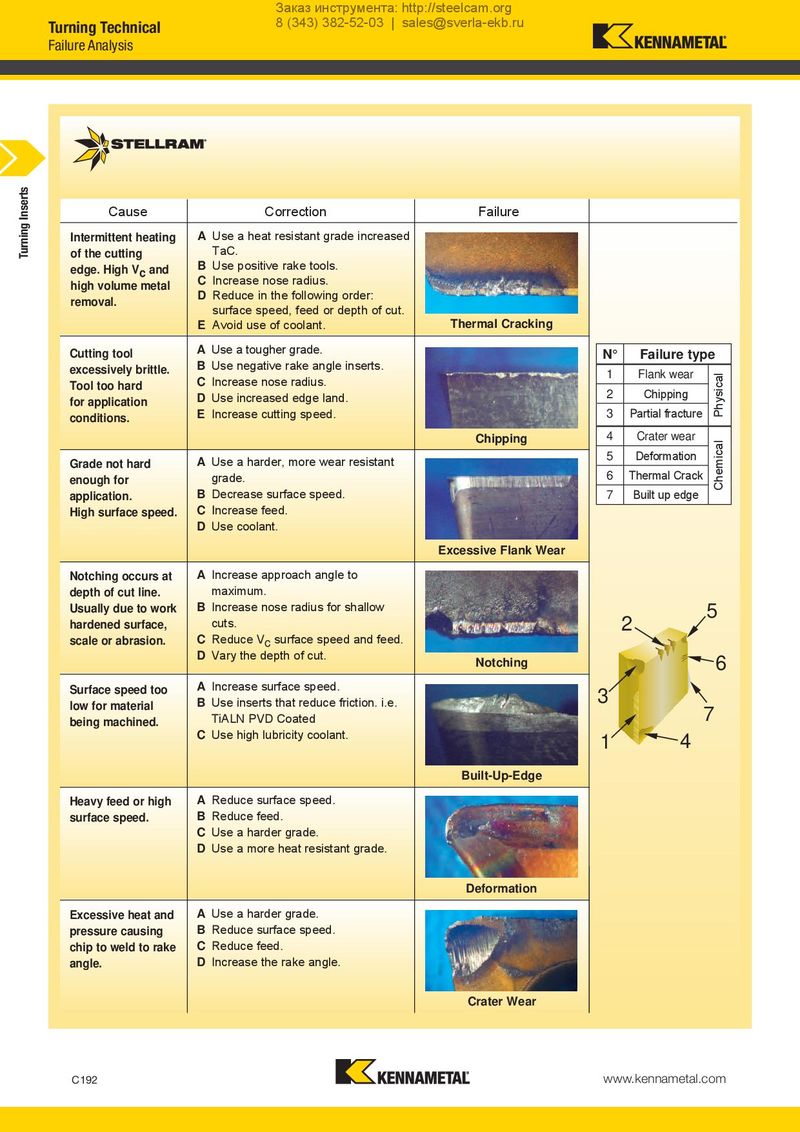
Заказ инструмента: http://steelcam.org Turning Technical 8 (343) 382-52-03 | sales@sverla-ekb.ru Failure Analysis Turning Inserts Cause Correction Failure Intermittent heating A Use a heat resistant grade increased of the cutting TaC. edge. High Vc and B Use positive rake tools. high volume metal C Increase nose radius. removal. D Reduce in the following order: surface speed, feed or depth of cut. E Avoid use of coolant. Thermal Cracking Cutting tool A Use a tougher grade. N° Failure type excessively brittle. B Use negative rake angle inserts. 1 Flank wear Tool too hard C Increase nose radius. Physical for application D Use increased edge land. 2 Chipping conditions. E Increase cutting speed. 3 Partial fracture Chipping 4 Crater wear Chemical Grade not hard A Use a harder, more wear resistant 5 Deformation enough for grade. 6 Thermal Crack application. B Decrease surface speed. 7 Built up edge High surface speed. C Increase feed. D Use coolant. Excessive Flank Wear Notching occurs at A Increase approach angle to depth of cut line. maximum. Usually due to work B Increase nose radius for shallow 5 hardened surface, cuts. 2 scale or abrasion. C Reduce Vc surface speed and feed. D Vary the depth of cut. Notching 6 Surface speed too A Increase surface speed. 3 low for material B Use inserts that reduce friction. i.e. 7 being machined. TiALN PVD Coated C Use high lubricity coolant. 1 4 Built-Up-Edge Heavy feed or high A Reduce surface speed. surface speed. B Reduce feed. C Use a harder grade. D Use a more heat resistant grade. Deformation Excessive heat and A Use a harder grade. pressure causing B Reduce surface speed. chip to weld to rake C Reduce feed. angle. D Increase the rake angle. Crater Wear C192 www.kennametal.com